Friday, October 23, 2026
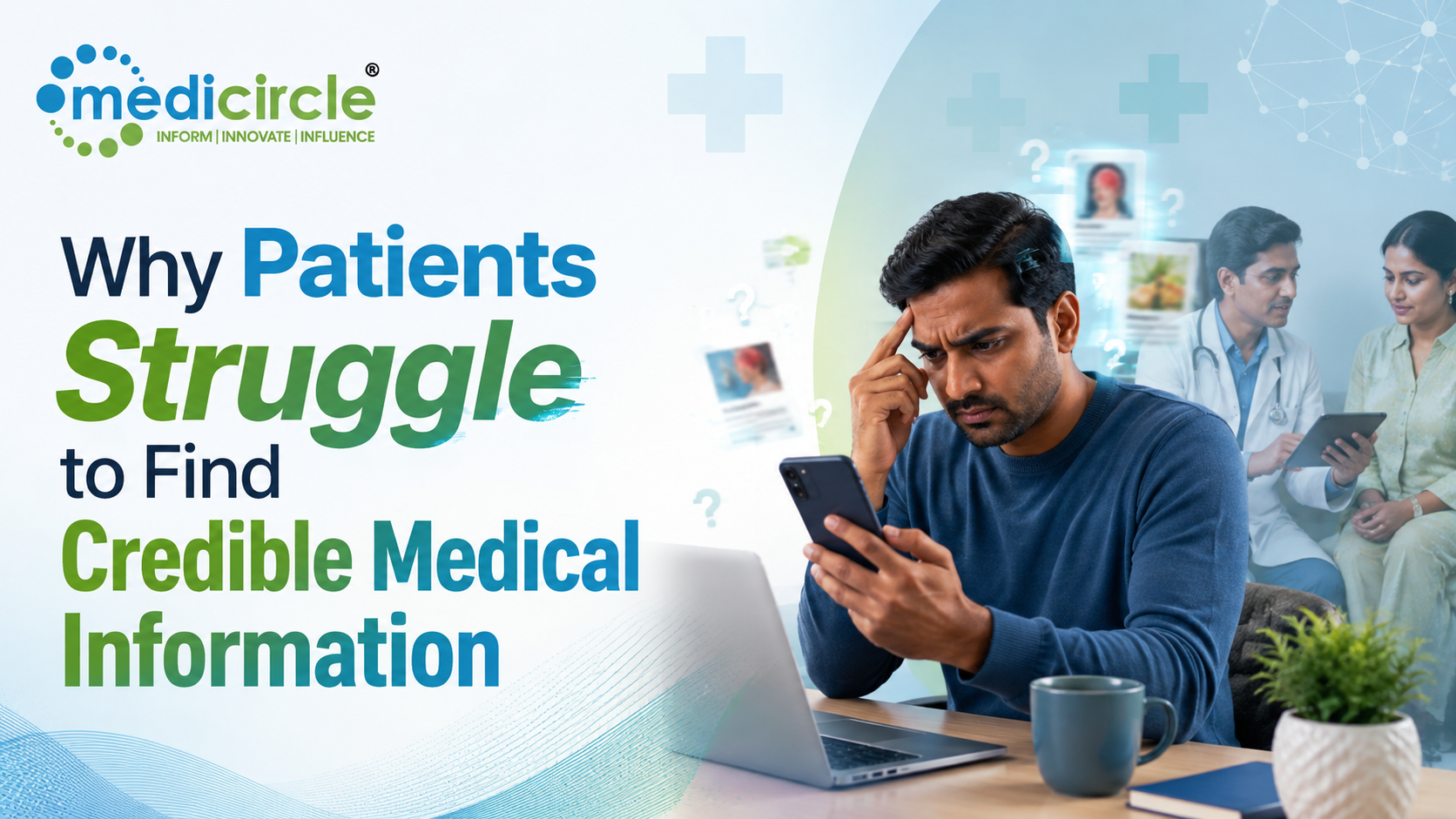
 Patients across India struggle to identify credible medical information due to low health literacy, rampant online misinformation, and unverified social media content, leading to delayed diagnoses and poor health decisions.





Introduction
Every day, millions of Indians search the internet, scroll through social media feeds, and receive forwarded messages on WhatsApp looking for answers to their health concerns. The accessibility of digital information has created an environment where patients can access vast amounts of healthcare content within seconds. But this convenience comes with a significant and growing problem: a large portion of the health information circulating online is inaccurate, misleading, or dangerously incomplete.
India ranks highest globally for the risk of misinformation and disinformation, according to a 2024 World Economic Forum report. In the context of healthcare, this is not a statistical footnote. It is a public health concern with direct consequences on how people manage their symptoms, choose their treatments, and decide whether or when to consult a doctor.
A 2024 ICMR study found that 62 percent of urban Indians delay treatment based on online advice, contributing to a 17 percent increase in late-stage cancer diagnoses between 2020 and 2025. These numbers make clear that the inability to identify credible medical information is not a minor inconvenience. It is a matter that affects health outcomes, treatment timelines, and in some cases, survival.
Understanding why patients struggle with this challenge is the first step toward addressing it responsibly.
The Information Overload Problem
The sheer volume of health content available online is staggering. Every facet of the world's medical knowledge can now be instantly digitized, interpreted, and illustrated to any patient who seeks it via internet-based devices. However, with such a breadth of information available, false or misleading interpretations, incorrectly published data, or unsubstantiated claims make navigation of internet-based patient education deeply challenging.
A patient searching for information about chest pain, for example, will encounter peer-reviewed journal articles sitting alongside anonymous blog posts, paid health supplements advertisements, and viral YouTube videos from individuals without any medical qualification. All of these appear on the same screen, formatted similarly, and ranked based on algorithms that prioritize engagement rather than accuracy.
Studies indicate that misinformation spreads faster and more broadly than accurate information on social media, driven by algorithms that prioritize engagement over accuracy and amplified by emotionally charged content. This algorithmic reality means that a sensational health claim often reaches more people than a carefully worded, evidence-based article.
For an average patient without a medical background, distinguishing between these layers of content requires a level of health literacy and critical thinking that most people have not been formally trained to apply.
Low Health Literacy as a Core Barrier
Health literacy refers to the ability to obtain, process, and understand basic health information well enough to make informed decisions. In India, health literacy levels remain a significant concern. The National Health Profile highlights that fewer than 40 percent of India's population possess adequate knowledge about preventive healthcare.
This means that for the majority of Indians, reading and accurately interpreting even a basic medical article is genuinely difficult. Medical terminology, complex drug names, statistical language, and clinical framing are barriers that prevent patients from evaluating whether a source is reliable or not. When the content is also written in English in a country where hundreds of millions are more comfortable in regional languages, the challenge compounds further.
Education and digital device handling skills emerged as significant predictors of online health information-seeking behavior in India, with participants at higher education levels and with better digital skills being more likely to seek health-related information online effectively. The inverse is equally important: those with lower education and limited digital familiarity are not only less able to find good information, they are also less equipped to recognize bad information when they encounter it.
Individuals are responsive to potential biases of authors, and are less inclined to utilize online health information produced by a prejudiced author. A health site can be considered credible if the credibility of the author is clearly stated. However, most patients do not know how to check author credentials, institutional affiliations, or publication dates, all of which are essential for evaluating the reliability of any medical content.
The Social Media and WhatsApp Challenge
India's digital revolution has placed smartphones in the hands of hundreds of millions of people across tier 1, tier 2, and rural communities. India's internet access has increased exponentially, with over 954 million internet subscribers as of March 2024. The availability of cheap data plans and mobile phones has allowed more Indians to access the internet than ever before.
This growth has created enormous opportunity for health education. But it has also opened wide channels for unverified information to travel at extraordinary speed. Platforms such as WhatsApp and YouTube have emerged as key channels for spreading health misinformation. Users can post messages, pictures, and videos without undergoing any verification, allowing false or misleading information to spread unchecked.
According to one study in India, 70.4 percent of outpatient department patients make health decisions from social media, but only 44.7 percent verify the information with a doctor. The gap between consumption and verification is where harm enters. A forwarded message claiming that a common kitchen ingredient cures diabetes, or that a particular vaccine causes infertility, does not come with a source citation or an author credential. It comes from a trusted contact, often a family member or a neighbor, which gives it a sense of social legitimacy that a peer-reviewed study cannot always compete with.
Misinformation disproportionately affects rural and marginalized communities, which largely have lower healthcare literacy and depend on informal networks, making them especially vulnerable to medical misinformation. In these communities, where access to trained healthcare professionals is already limited, unverified health advice can travel faster than accurate guidance ever reaches.
The Absence of Author Credibility and Transparency
One of the most consistent findings from research on online health information quality is that patients find it genuinely difficult to assess whether the person or organization behind a piece of health content is qualified to produce it.
Someone who does not know much about medicine and scientific evidence would find it very hard to know if there is scientific evidence behind a claim. In theory, patients expect all medical information they are presented with to be neutral and unbiased, which means they extend a default trust even when it is not warranted.
Commercial health websites often produce content that is designed primarily to sell a product or service, dressed in the language of healthcare advice. Wellness influencers with large followings present personal experiences as medical facts. Traditional remedy advocates recommend treatments without disclosing the lack of clinical evidence. In each case, the patient receives content that appears authoritative but is not grounded in verified medical science.
In India, this problem is further complicated by the cultural respect many communities hold for practitioners of alternative and traditional medicine. While Ayurveda, Yoga, and other traditional systems have their established roles in wellness and complementary care, their digital representation is sometimes distorted by commercial interests that make claims far beyond what evidence supports. Patients without the tools to evaluate these claims are left in a genuinely difficult position.
The Fear of Confronting Medical Professionals
There is another dimension to this problem that is less visible but equally important. Many patients who consume unverified health information never bring it up during a doctor consultation. Four barriers to communication between patients and doctors about online health information were identified: concerns about embarrassment, concerns that the doctor does not want to hear about it, the belief that there is no need to bring it up, and simply forgetting to mention it.
This silence means that misinformation goes unchallenged in the clinical encounter. A patient who has already formed a belief about their condition based on something they read online may interpret the doctor's advice through that lens, selectively accepting or rejecting medical guidance without the doctor even being aware of the competing information the patient holds.
Healthcare professionals were perceived to be the most reliable and valued information source, yet most healthcare professionals struggled to find time in the consultation to address the online information patients had gathered, and some felt that the internet was advantageous for patients looking after their own health while others felt it was due to a lack of trust in their expertise.
Bridging this communication gap is critical. When patients feel comfortable discussing what they have read online with their doctors, the quality of the consultation improves for both parties.
Why Credible Platforms Matter
The solution to health misinformation is not to discourage patients from seeking information. In a positive context, when information is both correct and applicable, an increase in consumer knowledge has been linked to improved health outcomes as patients become increasingly engaged in the decision-making process. This allows for greater health status awareness, increased understanding and adherence to medical instructions, and increased confidence in the self-management of healthcare.
The goal, therefore, is to guide patients toward sources that meet the standards of accuracy, transparency, and expertise that reliable health information demands. In India, this means platforms and media that carry verified expert voices, cite government bodies such as the Indian Council of Medical Research and the Ministry of Health and Family Welfare, and present information in formats that are accessible to both urban and rural audiences.
Platforms like Medicircle serve this purpose by bringing together expert opinions, healthcare leaders, and evidence-based medical content in a credible, media-grade format. When patients read an article that names the doctor or expert who authored or reviewed it, references established research, and presents information without sensationalism or commercial bias, they are receiving the kind of content that genuinely supports informed health decisions.
The role of responsible healthcare media in India has never been more important than it is today.
How Patients Can Begin to Evaluate Health Information More Effectively
Patients do not need to become medical professionals to become better consumers of health information. A few practical habits can significantly improve their ability to identify credible sources.
- Check who wrote or reviewed the content, and whether that person is a qualified healthcare professional affiliated with a recognized institution.
- Look for content that references recognized bodies such as WHO, ICMR, the Ministry of Health and Family Welfare, or peer-reviewed publications.
- Be cautious of content that makes dramatic claims, promises quick cures, or uses fear-based language to drive a decision.
- Verify any health information received via WhatsApp or social media with a qualified doctor before acting on it.
- Prefer platforms that include a medical disclaimer, a "last reviewed" date, and clear author attribution.
Frameworks such as the Currency, Relevance, Authority, Accuracy, and Purpose test can help patients critically assess online information, and trusted platforms include government health bodies, established medical institutions, and verified healthcare media.
India also has a growing community of qualified doctors who are actively creating credible health content across digital platforms. India now has approximately 12,400 medical professionals actively creating content, doing exactly what the WHO has asked for: translating science into accessible, public-facing communication. Following verified medical professionals and credible healthcare platforms is among the most effective steps a patient can take.
Conclusion
The challenge patients face in identifying credible medical information is not a reflection of their intelligence. It is a structural problem rooted in the nature of the digital information environment, low levels of health literacy, the speed at which misinformation travels through social networks, and the absence of clear credibility signals on most health content they encounter.
In India, where digital access is expanding rapidly, but health literacy has not kept pace, the consequences of this gap are measurable and serious. Delayed diagnoses, inappropriate self-treatment, and misplaced trust in unverified remedies are outcomes that affect real people and real families across the country.
Addressing this problem requires a collective effort: from patients who commit to verifying before they act, from doctors who create and amplify evidence-based content, from platforms that maintain editorial standards, and from healthcare communicators who bridge the distance between clinical expertise and public understanding. Responsible healthcare media, rooted in the values of accuracy and trust, is not optional in this environment. It is essential.
Frequently Asked Questions
Q1: Why is it difficult to find credible medical information online?
The internet hosts vast amounts of health content with no universal quality filter. Patients face difficulty because unverified sources, commercial health websites, and social media posts often appear alongside genuinely reliable content. Without strong health literacy skills and knowledge of how to evaluate authorship and sourcing, it becomes very hard for the average person to tell accurate information apart from misinformation.
Q2: What are the dangers of relying on unverified health information in India?
Relying on unverified health information can lead to delayed diagnosis, inappropriate self-treatment, and worsening of existing conditions. A 2024 ICMR study found that 62 percent of urban Indians delay treatment based on online advice, contributing to a measurable rise in late-stage diagnoses across several disease categories. Globally, the WHO estimates that health misinformation contributes to approximately USD 100 billion in additional healthcare costs annually.
Q3: How can patients identify credible medical information?
Patients should prioritize information from government health bodies such as the Ministry of Health and Family Welfare, ICMR, and WHO India, as well as content authored or reviewed by qualified healthcare professionals. Reliable platforms will clearly state who wrote or reviewed the content, reference authoritative sources, and include a medical disclaimer and review date. Any information received through WhatsApp or social media should be verified with a qualified doctor before any health decision is made based on it.
Q4: Is WhatsApp a reliable source of health information?
No. WhatsApp messages circulate without any verification process and are a well-documented channel for the spread of health misinformation in India, particularly in rural and semi-urban communities. Research shows that high-social-status individuals within communities can influence others to accept and forward misleading health content. Any health information received via WhatsApp should always be verified with a qualified doctor or through a credible healthcare platform before acting on it.
Q5: What role does health literacy play in identifying credible medical information?
Health literacy directly determines a person's ability to locate, understand, and apply health information correctly. The National Health Profile of India notes that fewer than 40 percent of Indians possess adequate knowledge about preventive healthcare, making low health literacy one of the most significant barriers to accessing credible information. Improving health literacy at the community level, through education, credible media, and accessible expert communication, is one of the most important steps India can take to address the misinformation challenge.
RESOURCES
- Indian Council of Medical Research (ICMR): Guidelines, research publications, and national health data on disease burden and treatment practices in India.
- World Health Organization (WHO) India Country Office: Reports on health misinformation, infodemic management strategies, and public health communication standards.
- Ministry of Health and Family Welfare, Government of India: Official health advisories, national health policies, and preventive healthcare information for Indian citizens.
- National Health Profile, Central Bureau of Health Intelligence: Statistical data on health literacy, disease prevalence, and healthcare access across Indian states.
- PubMed and National Library of Medicine (NLM): Peer-reviewed research on online health information quality, patient behavior, and misinformation impact.
INTERLINKING KEYWORDS
credible health information, online medical advice India, health misinformation, health literacy India, patient education, reliable healthcare sources, medical misinformation WhatsApp, evidence-based medicine India, doctor consultation online, trusted health platform India
Last medically reviewed by:
Editorial and Medical Review Team, Medicircle on 3 September 2026
Medical Disclaimer:
The information provided in this article is intended for general awareness and educational purposes only. It does not constitute medical advice, diagnosis, or treatment. Readers are strongly advised to consult a qualified and registered medical professional for any personal health concerns or before making any health-related decisions. Medicircle does not endorse any specific treatment, product, or healthcare service mentioned in this article.





-23-300x250.png)

.jpeg)
.jpg)
.jpg)
.jpg)
.jpg)
.jpg)
.jpg)
.jpg)
.jpg)
.jpg)