 Friday, October 09, 2026
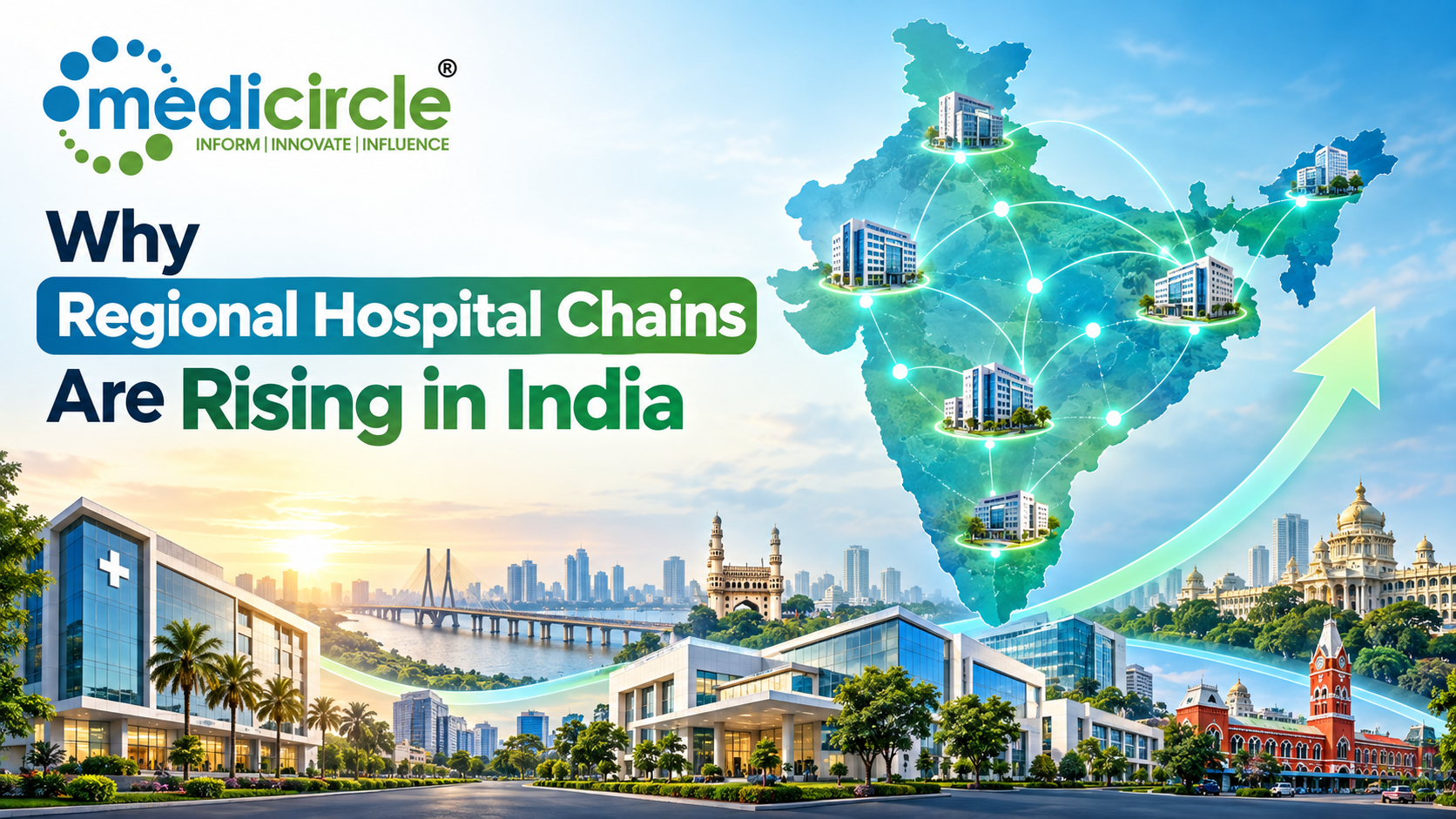
 Regional hospital chains in India are closing the healthcare access gap by bringing quality specialist care to Tier 2 and Tier 3 cities, supported by government schemes, technology, and growing investor interest.





Introduction
India's healthcare story has for decades been written from the vantage point of its largest cities. Hospitals in Mumbai, Delhi, Bengaluru, Chennai, and Hyderabad have long dominated conversations around medical excellence, infrastructure investment, and specialist availability. Yet a quieter but significant transformation is underway across the country. Regional hospital chains, those multi-unit networks that operate within specific states or geographic clusters, are steadily emerging as one of the most consequential forces in Indian healthcare today.
This shift is not a coincidence. It is the result of converging pressures: a rapidly growing middle class in Tier 2 and Tier 3 cities, an overburdened metropolitan hospital ecosystem, supportive government health financing schemes, and investors who now recognize that the next wave of healthcare growth in India will not come from metros alone. Understanding why regional hospital chains are gaining importance is essential for patients, healthcare professionals, hospital administrators, policy makers, and healthcare brands seeking to engage meaningfully with India's evolving health landscape.
The Healthcare Access Gap That Regional Chains Are Filling
For the majority of India's population, quality secondary and tertiary care has historically meant one thing: travelling to a large city. A patient from Gorakhpur needing cardiac care, a family from Belgaum seeking an oncology consultation, or a resident of Bhubaneswar requiring a complex orthopedic procedure would routinely have to travel hundreds of kilometres, often at significant financial and emotional cost. This reality has defined healthcare inequity in India for generations.
India's doctor-to-patient ratio remains well below the World Health Organization's recommended benchmark, and this shortage is far more acute outside metropolitan areas. According to data from the Ministry of Health and Family Welfare, rural and semi-urban India accounts for more than 65 percent of the country's population but has access to a disproportionately small share of its hospital beds, specialists, and diagnostic infrastructure.
Regional hospital chains are directly addressing this gap. By establishing networks of hospitals across secondary cities and district headquarters, these chains bring specialist care, diagnostics, and surgical facilities to populations that previously had no local access. A patient in Nashik, Vijayawada, Siliguri, or Jaipur can now receive cardiology, nephrology, oncology, or neurology care within their own city or region, without the financial burden of metropolitan travel.
Government Policy as a Growth Catalyst
No discussion of regional hospital expansion in India can ignore the transformative role of government policy. Ayushman Bharat, India's flagship health protection scheme that includes the Pradhan Mantri Jan Arogya Yojana (PM-JAY), has been one of the most powerful enablers of regional hospital growth. By empanelling hospitals across the country and providing insurance coverage to over 500 million low-income beneficiaries, the scheme has created a substantial and reliable patient base for regional hospitals that choose to participate.
The Ayushman Bharat Digital Mission (ABDM) is further reshaping the infrastructure layer of Indian healthcare by creating a unified health identity system, promoting digital health records, and enabling interoperability between hospitals. For regional chains that are building scalable, technology-forward healthcare systems, ABDM creates a framework within which they can operate efficiently across multiple locations.
The National Health Policy and various state-level healthcare investment initiatives have also encouraged private sector participation in underserved geographies through land allocation, tax incentives, and fast-track licensing. States such as Uttar Pradesh, Madhya Pradesh, Odisha, Rajasthan, and Telangana have in recent years made concerted efforts to attract private hospital investment into their Tier 2 and Tier 3 cities. Regional chains have been the primary beneficiaries of these state-level healthcare investment corridors.
NABH accreditation frameworks have also become increasingly relevant. Regional hospitals seeking to differentiate themselves on quality and credibility now pursue NABH accreditation with greater regularity, which in turn builds patient trust and opens access to government scheme empanelment at higher reimbursement tiers.
The Economic Logic Behind Regional Hospital Investment
From a healthcare business and investment perspective, regional hospital chains present a compelling opportunity that was not as visible a decade ago. Real estate costs in Tier 2 and Tier 3 cities are significantly lower than in metropolitan areas, allowing hospitals to build larger facilities with more beds at a fraction of the capital expenditure required in metros. Operating costs, including staff salaries, utilities, and administrative overhead, are also comparatively lower in smaller cities.
More critically, the competitive intensity in secondary cities is far lower than in metros, where a patient within a 10-kilometre radius may have access to five or six well-established hospitals. In a city of 500,000 people with limited quality hospital options, a regional chain entering with a credible brand, trained specialists, and good diagnostic infrastructure can rapidly capture patient trust and market share.
Healthcare investors, both domestic private equity funds and strategic international health groups, have taken note of this dynamic. Several regional hospital chains across Tamil Nadu, Andhra Pradesh, Kerala, Karnataka, and Maharashtra have received meaningful investment rounds in recent years, with investors betting on the long-term growth of healthcare consumption in non-metro India. The logic is clear: as incomes rise, insurance penetration increases, and health awareness grows, the demand for quality hospital care in Tier 2 and Tier 3 cities will only accelerate.
Understanding What Makes Regional Chains Different
Regional hospital chains are not simply smaller versions of national chains. They are distinct in their operational model, their patient engagement approach, and their competitive advantages.
A national chain such as Apollo Hospitals, Fortis Healthcare, or Narayana Health operates across geographies so diverse that each city is almost a separate business unit. Regional chains, by contrast, develop deep familiarity with the specific disease burden, dietary habits, linguistic preferences, cultural norms, and patient behavior patterns of their geography. A hospital chain rooted in Chhattisgarh, for instance, understands the prevalence of sickle cell disease in that state. A chain anchored in coastal Andhra Pradesh understands the seafood-heavy diet and associated cardiovascular and metabolic risk profiles of its population.
This localized expertise translates into more contextually relevant care, better community trust, and stronger patient loyalty. Doctors who are themselves from those regions often prefer to practice closer to home, which gives regional chains a meaningful recruitment advantage over metro-centric national players who struggle to attract specialists to smaller cities.
Regional chains are also quicker to build relationships with local general practitioners and primary care physicians, who serve as referral pipelines. In Tier 2 and Tier 3 India, the trust that a family places in their local general physician often determines where they seek secondary care. Regional hospital chains that invest in robust GP networks and community engagement programs build a referral ecosystem that metro chains find difficult to replicate from a distance.
Technology and Telemedicine as Regional Chain Enablers
One of the most significant developments enabling regional hospital chains to operate effectively is the integration of telemedicine and health technology into their networks. A regional chain operating hospitals in multiple cities within a state can now use telemedicine infrastructure to connect a specialist sitting in their flagship unit with patients at a smaller satellite hospital in a district town. This hub-and-spoke model has transformed the economics and clinical quality of regional hospital networks.
eSanjeevani, the government's telemedicine platform, has demonstrated the feasibility of remote consultation at scale. Regional hospital chains that build their own technology layers for teleconsultation, remote diagnostics review, and electronic health record sharing can extend quality care to geographies where it would be economically unviable to deploy a full-time specialist.
Digital health tools also help regional chains standardize clinical protocols across their networks, which is critical for maintaining consistent care quality as they scale. The ABDM framework further supports this by enabling health data portability, so a patient's records can follow them across facilities within the regional chain without redundant testing or loss of clinical continuity.
Challenges That Regional Hospital Chains Must Overcome
The growth trajectory of regional hospital chains is compelling, but it is not without friction. Several challenges continue to constrain the pace and quality of regional hospital expansion in India.
The most persistent challenge is specialist retention. Medical professionals who complete their training in metro cities are often reluctant to relocate permanently to smaller cities, even when offered competitive compensation. This creates a structural talent gap that regional chains must address through creative incentives, quality-of-life improvements, research opportunities, and career development pathways that make smaller city practice more professionally attractive.
Supply chain complexity is another challenge. Procuring pharmaceuticals, consumables, surgical equipment, and diagnostic reagents in smaller cities is more expensive and logistically challenging than in large urban centers. Regional chains that build their own procurement and distribution networks or join group purchasing organizations gain a meaningful cost advantage over stand-alone hospitals in the same geographies.
Capital access remains uneven. While larger regional chains with established brand equity have been able to attract private equity investment, smaller regional networks often struggle to secure affordable long-term financing. The development of healthcare-specific financing instruments and government credit guarantee schemes could play a transformative role in enabling the next tier of regional hospital growth.
The Role of Regional Hospitals in Strengthening India's Healthcare Ecosystem
The importance of regional hospital chains extends beyond economics and access. These institutions play a foundational role in building a more resilient and geographically distributed healthcare ecosystem for India. When a major health crisis strikes, as the COVID-19 pandemic demonstrated with devastating clarity, an over-centralized healthcare system in metro cities collapses under the weight of demand. Regional hospital networks that are geographically spread and locally embedded can absorb patient loads, respond faster to community needs, and reduce the catastrophic migration of sick patients to already overwhelmed metro facilities.
Regional hospitals also serve as training grounds for the next generation of healthcare professionals from smaller cities, contributing to a more decentralized medical talent pipeline. They create employment in local economies, support ancillary health services such as diagnostics, pharmacies, rehabilitation centers, and home care, and gradually build a culture of preventive health engagement in communities that have historically had limited exposure to organized healthcare.
For a platform like Medicircle, which is committed to connecting the healthcare ecosystem through credible and meaningful health communication, the rise of regional hospital chains represents an important story worth amplifying. The doctors, administrators, and healthcare innovators building these institutions deserve visibility, recognition, and an audience that understands the significance of what they are creating.
Conclusion
The rise of regional hospital chains in India is one of the defining trends of the country's healthcare evolution in the current decade. These institutions are not filling a niche; they are reshaping the fundamental geography of healthcare delivery in India. By bringing quality specialist care closer to patients in secondary and tertiary cities, leveraging government schemes, integrating technology, and building locally trusted healthcare ecosystems, regional chains are making a lasting contribution to India's healthcare equity and resilience.
For patients, they represent hope that quality care is no longer exclusively a metropolitan privilege. For investors and healthcare entrepreneurs, they represent a significant long-term opportunity. For policymakers, they represent a model that aligns well with India's public health ambitions. And for the broader healthcare community, they are a reminder that meaningful healthcare progress often happens not at the center, but at the edges, one region, one city, and one patient at a time.
Frequently Asked Questions
Q1: What are regional hospital chains in India?
Regional hospital chains are multi-unit hospital networks that operate primarily within specific states or geographic zones in India, offering specialized and secondary care closer to local populations without requiring patients to travel to major metropolitan cities.
Q2: How do regional hospitals differ from national hospital chains?
Regional hospitals focus on specific geographies, develop a deep understanding of local health needs and disease patterns, and often provide more affordable care compared to large national chains that are concentrated in metro cities and serve premium urban demographics.
Q3: Are regional hospitals covered under Ayushman Bharat?
Many regional hospitals are empanelled under Ayushman Bharat PM-JAY, which makes government-sponsored health coverage accessible to low-income populations in smaller cities and towns across India, significantly expanding the patient base for these institutions.
Q4: Why are investors showing interest in regional hospital chains?
Investors are attracted to regional hospital chains because of lower real estate and operating costs, growing patient demand in Tier 2 and Tier 3 cities, limited competition compared to metros, and the strong long-term growth potential of underserved healthcare markets across India.
Q5: What challenges do regional hospital chains face in India?
Regional hospital chains face challenges that include shortage of trained specialists willing to practice in smaller cities, limited access to affordable capital, supply chain constraints for medical procurement, and the operational complexity of maintaining consistent clinical quality across multiple locations.
Resources
- Ministry of Health and Family Welfare, Government of India: Official health policy documents, hospital data, and public health scheme guidelines relevant to regional healthcare development in India.
- National Accreditation Board for Hospitals and Healthcare Providers (NABH): Accreditation standards, empanelled hospital lists, and quality frameworks applicable to regional hospital chains seeking credibility and government scheme participation.
- Ayushman Bharat PM-JAY, National Health Authority: Scheme details, empanelment criteria, beneficiary data, and reimbursement frameworks that directly impact regional hospital business models and patient access.
- NITI Aayog Health Reports: Policy research, state health index rankings, and strategic recommendations relevant to healthcare investment in Tier 2 and Tier 3 cities across India.
- World Health Organization India Country Office: Global and regional data on healthcare access, doctor-to-patient ratios, and health system strengthening frameworks applicable to the Indian regional hospital context.
Interlinking Keywords
regional hospital chains India, Tier 2 city hospitals India, Ayushman Bharat empanelled hospitals, Indian healthcare access gap, NABH accreditation regional hospitals, healthcare investment India, telemedicine hub and spoke model, secondary care hospitals India, Indian healthcare infrastructure growth, Medicircle healthcare news India
Last medically reviewed by:
Dr. Manthan Tripathi, Medicircle Editorial and Medical Advisory Team on 17, September 2026
Disclaimer
This article is published for informational and awareness purposes only. It does not constitute medical advice, clinical guidance, or a substitute for professional medical consultation. The information presented is based on publicly available data, government health reports, and general healthcare industry knowledge. Readers should consult a qualified healthcare professional for any medical concerns, treatment decisions, or health-related queries. Medicircle does not endorse any specific hospital, healthcare brand, or investment product mentioned in this article.






.jpeg)










.jpg)
.jpg)
.jpg)
.jpg)
.jpg)
.jpg)


.jpg)