 Saturday, November 21, 2026
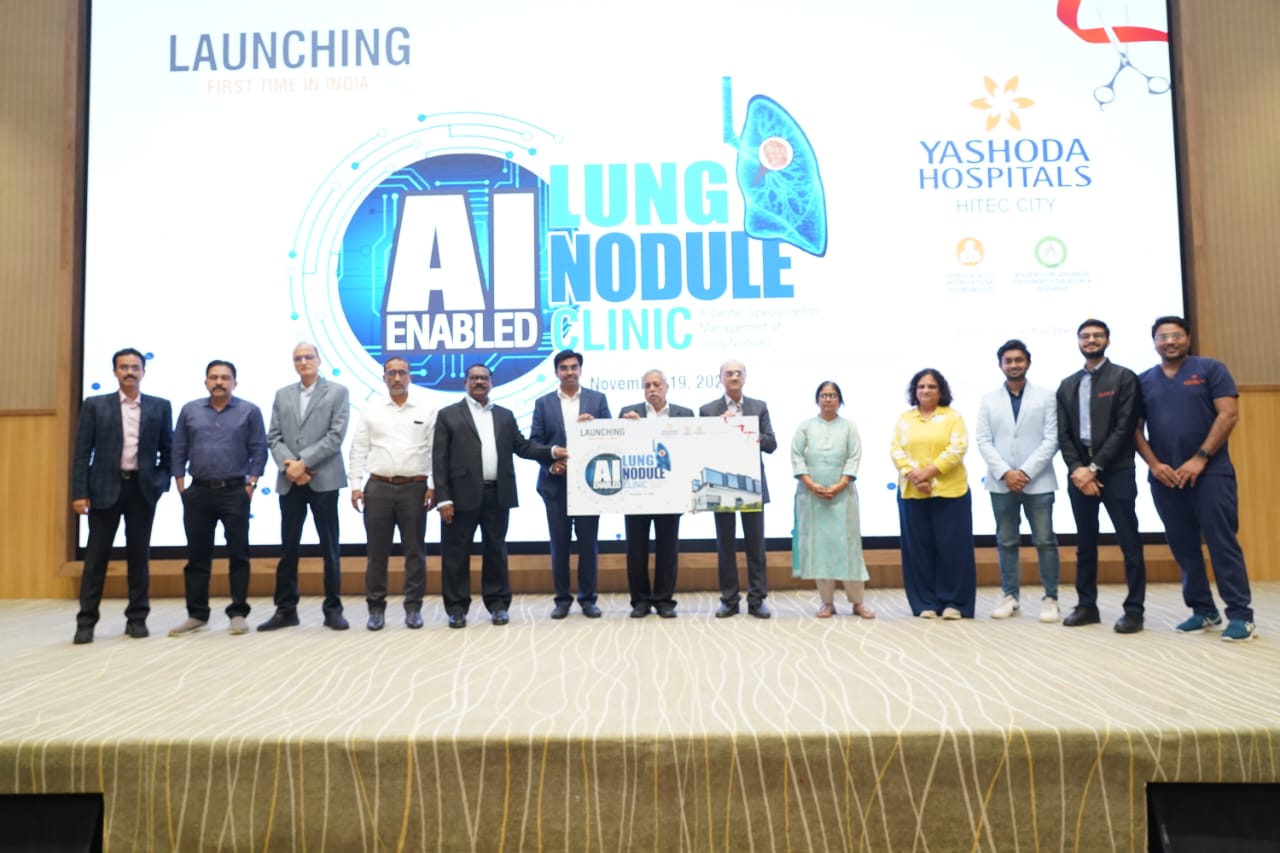
 Yashoda Hospital, Hitech City, in collaboration with Qure.ai and AstraZeneca, has launched an advanced Artificial Intelligence (AI)-powered Lung Nodule Clinic, aimed at transforming early detection and timely management of lung cancer and other major lung diseases.





National, 24th November 2025: Yashoda Hospital, Hitech City, in collaboration with Qure.ai and AstraZeneca, has launched an advanced Artificial Intelligence (AI)-powered Lung Nodule Clinic, aimed at transforming early detection and timely management of lung cancer and other major lung diseases. This pioneering initiative embeds AI across the imaging-to-care pathway, offering a robust solution where India lacks a national lung cancer screening programme.
Lung cancer remains the leading cause of cancer-related deaths in India, claiming over one lakh lives every year, primarily due to delayed diagnosis. Nearly 80% of lung cancers in India are detected at an advanced stage when cure is unlikely. The AI-enabled Lung Nodule Clinic provides a structured mechanism to identify early radiologic signs of lung cancer, even in asymptomatic individuals, and ensures priority follow-up and timely intervention.
Since deployment, the AI system has analysed over 17,000 chest X-rays, identifying 960 lung nodules, of which 136 were categorised as high-risk. A total of 77 patients were fast-tracked for CT scans and detailed pulmonology review. Early findings include confirmed lung cancer cases, along with other conditions such as tuberculosis, sarcoidosis, and lymphoma, highlighting the broader clinical value of this pathway.
Pulmonary nodules (small, rounded lesions less than 3 cm) are often the earliest radiologic indicators of lung cancer. However, they can be challenging to detect on chest X-rays and may be missed or deprioritized in routine hospital workflows, leading to delayed diagnosis. At the Lung Nodule Clinic in the Department of Pulmonology at Yashoda Hospitals, Hitec City, an advanced AI-enabled system has been integrated across the imaging and care pathway to ensure timely identification, risk stratification, and structured follow-up of these findings.
Since lung nodules can also result from conditions such as tuberculosis, sarcoidosis, and lymphomas, accurate diagnosis is crucial. The Interventional Pulmonology team at Yashoda Hospitals employs cutting-edge tools, including radial endobronchial ultrasonography, navigational bronchoscopy, and cone-beam CT–guided sampling to precisely biopsy and diagnose these small lesions. This AI-supported, technology-driven approach enables early detection not only of lung cancers but also of other common lung diseases, ensuring patients receive timely and appropriate treatment. “This program demonstrates how AI can be embedded within clinical workflows to identify and manage lung disease earlier, even among patients outside conventional screening criteria,” said Dr. V. Nagarjuna Maturu, Senior Consultant, Clinical and Interventional Pulmonology, Yashoda Hospital, Hitech City.“The structured nodule pathway ensures every incidental finding is tracked, risk-assessed, and followed up appropriately, establishing a new benchmark for proactive lung health management,” added Dr. Maturu. The lung nodule clinic is supported by a dedicated nurse-navigator model, ensuring all patients flagged by the AI system are promptly contacted, counselled, and guided through the next steps without delays.
“This model standardised protocols, timelines, and documentation across departments, minimising delays and ensuring that no patient is left behind in the care journey,” said Dr. Vipul Garg, Associate Consultant Clinical and Interventional Pulmonologist, Yashoda Hospitals, Hitech City, who leads the clinic. To ensure accurate diagnosis of even the smallest nodules, the Department of Interventional Pulmonology employs cutting-edge technologies such as radial endobronchial ultrasound, navigational bronchoscopy, and cone beam CT-guided sampling. These advanced tools enable precise biopsy of nodules, supporting rapid and accurate diagnosis. The AI-augmented pathway at Yashoda Hospital Hitech City marks a significant step toward delivering comprehensive, data-driven respiratory care. By converting incidental findings into actionable clinical outcomes, the hospital aims to strengthen early diagnosis rates and reduce the burden of late-stage lung cancer in India.




-23-300x250.png)




















