Friday, October 23, 2026
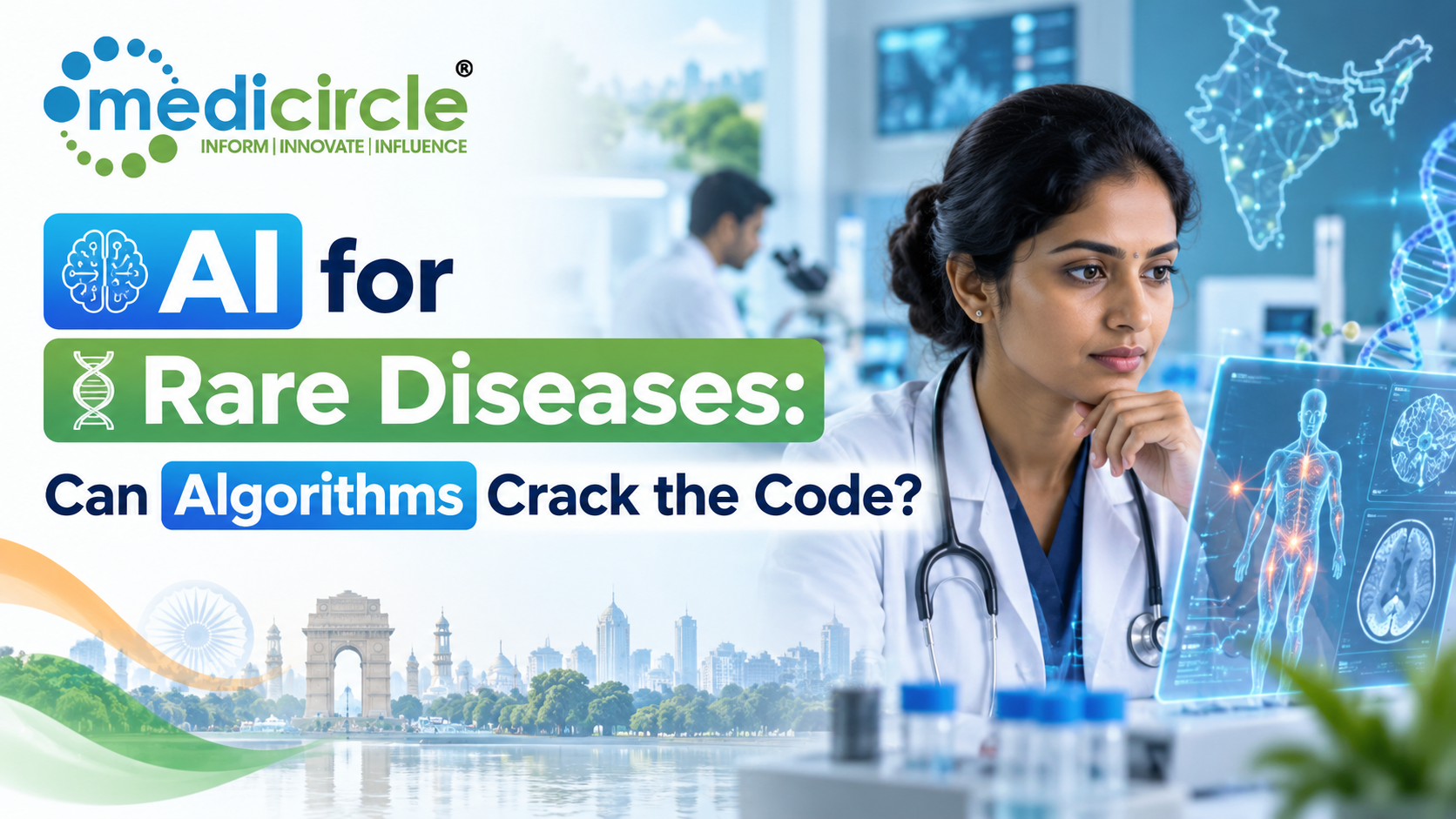
 AI algorithms are reshaping rare disease diagnosis in India by analysing genomics, imaging, and health records, offering hope to millions facing prolonged diagnostic delays.





Introduction
Somewhere in a government hospital in a Tier 2 city in India, a paediatrician is looking at a child who has been unwell for months. The child has an enlarged liver, persistent thrombocytopenia, and fatigue that does not respond to standard treatment. Dozens of tests have been run. Multiple referrals have been made. Yet a confirmed diagnosis remains elusive. This is not a rare scenario. In a country where an estimated 8 to 10 crore Indians are living with rare diseases, with over 75 percent of those affected being children, it is an everyday reality in clinics and hospitals across the country.
The challenge with rare diseases is not simply that there are too few doctors. It is that there are too few clues, and too few people who know where to look for them. A rare disease, by definition, is one that affects a very small proportion of the population. Yet rare diseases affect more than 400 million people worldwide, and most patients remain undiagnosed or untreated due to delayed diagnosis and limited therapies. The human cost of this silence is immense.
Artificial intelligence is now beginning to change that equation. From genomic sequencing to facial phenotyping and electronic health record analysis, AI-powered algorithms are proving to be powerful co-investigators in the search for answers that have long evaded clinicians. For India, where rare disease infrastructure is still developing, this technological shift could not be more timely.
Understanding the Rare Disease Challenge in India
India carries a disproportionate share of the world's rare disease burden. India represents one-third of global rare disease cases, encompassing over 450 identified diseases. The country's vast endogamous population structure, with thousands of communities practising marriage within closely related groups, creates a particularly high genetic risk for inherited disorders.
With over 7000 such disorders, it is estimated that India may have approximately 70 million cases, most of which remain undiagnosed, and for approximately 95 percent of these, no approved treatment is available. This statistic does not reflect a failure of medicine alone. It reflects a systemic gap in awareness, training, diagnostic infrastructure, and policy support.
The average time to diagnosis for a rare disease patient globally is staggering. According to EURORDIS, five years is the time it takes on average for a rare disease patient to get a diagnosis, and 70 percent of people with rare diseases wait more than one year to get a confirmed diagnosis after first coming to medical attention. In India, where specialists are concentrated in metro cities and primary care physicians have limited training in recognising rare presentations, the wait is often much longer.
The review of India's rare disease landscape revealed significant deficits in awareness among healthcare professionals and the public, with limited training and delayed diagnoses being common. Primary care lacks the resources for early genetic screening or effective referral systems. It is within this context that artificial intelligence is entering the clinical picture.
How AI Algorithms Are Approaching Rare Disease Diagnosis
The fundamental problem with rare disease diagnosis is pattern recognition across enormous complexity. A clinician may see one or two cases of a specific rare condition in an entire career. An AI system trained on thousands of cases can identify that same pattern in seconds. This is the core value proposition of AI in rare disease medicine.
Genomic Analysis and Variant InterpretationMany rare diseases have a genetic basis, and AI-driven approaches have been developed to enhance the interpretation of genomic data, identify pathogenic variants, and improve diagnostic accuracy. Next-Generation Sequencing technologies now allow clinicians to analyse a patient's entire genome rapidly. However, the sheer volume of data generated is too large for manual interpretation.
AI platforms trained on genomic databases can scan whole-exome and whole-genome sequences, prioritise variants of uncertain significance, and match identified mutations against known rare disease profiles. This dramatically narrows the field of inquiry. Machine learning plays a critical role in diagnosis through three main types of algorithms: unsupervised approaches that recognise patterns, supervised approaches that classify or predict based on prior examples, and reinforcement learning that generates strategies for overcoming particular obstacles.
Medical Imaging and Deep LearningAI algorithms can flag subtle neurodegenerative markers in brain scans or identify patterns in retinal images linked to systemic genetic disorders, abnormalities that are often missed until the disease is advanced. Deep learning models trained on large imaging datasets can identify structural anomalies in MRI scans, CT scans, and X-rays with a consistency that complements clinical expertise.
For rare metabolic disorders, lysosomal storage diseases, and rare neurological conditions, early imaging-based detection can be the difference between intervention before permanent damage occurs and a lifetime of progressive disability. AI, particularly deep learning, has shown significant promise in identifying disease-associated patterns in medical imaging, enabling earlier and more accurate detection of rare conditions.
Electronic Health Records and Natural Language ProcessingOne of the most underutilised reservoirs of diagnostic intelligence is the patient's own medical history. Rare disease symptoms are often scattered across years of clinical notes, lab reports, and discharge summaries from different hospitals and specialists. AI systems using natural language processing can mine these unstructured records to surface patterns that no single clinician ever saw in totality.
AI methods may be applied prospectively to large populations to identify specific patients, or retrospectively to large data sets to diagnose a previously overlooked rare disease. In India, where paper records still coexist with digital ones, the integration of natural language processing with platforms such as the Ayushman Bharat Digital Mission holds genuine promise for building the kind of longitudinal health data that AI diagnostic tools need to function accurately.
Real-World AI Tools Transforming Rare Disease Detection
The conversation around AI in rare diseases is no longer limited to research papers and proof-of-concept pilots. Clinically validated tools are already reaching doctors across the world, including India.
Sanofi India has expanded access to AccelRare, an AI-driven digital pre-diagnostic platform designed to help doctors identify over 300 rare diseases in children. The free web-based tool analyses symptoms and medical data to generate likely diagnoses with an 88 percent diagnostic accuracy rate. Doctors can enter anonymised patient information, including symptoms, medical background, and test reports, and the system then generates probable disease matches. The tool also provides disease summaries, recommended follow-up investigations, and referral information for government-recognised Centres of Excellence.
Co-developed and validated by 67 rare disease experts across 13 rare disease networks, AccelRare is built on MedVir, which is certified as a Class I medical device in Europe. In India, it is approved as a web-based pre-diagnostic tool classified as a Class A medical device. It is available free of charge, requires no registration, and collects no patient identification data.
Globally, tools such as DxGPT, an AI platform developed through Foundation 29 and hosted on Microsoft Azure, have been used by more than five hundred thousand people across the United States, Europe, India, and China. Platforms such as ZebraMD are being designed as clinical AI assistants specifically built to improve the recognition and management of rare diseases in routine clinical settings.
In India, AI-driven approaches are also being explored for conditions such as thalassemia, Gaucher disease, and rare neurological disorders, which together account for a large proportion of the country's genetic disease burden. A study from a tertiary genetic test centre in India identified 3,294 patients with 305 rare diseases over twenty-two years, with the highest number of cases in the neuromuscular and neurodevelopmental group.
AI in Telemedicine and Rural Reach
One of the most compelling arguments for AI in Indian rare disease medicine is its potential to close the geographic divide. The majority of genetic specialists and rare disease experts are based in metropolitan cities such as Mumbai, Delhi, Chennai, and Bengaluru. Patients in smaller cities and rural areas have almost no access to this expertise.
For patients with rare diseases, particularly those in remote areas or low-resource settings, visiting specialised hospitals can be impossible. AI-augmented telemedicine platforms are developing as a solution. AI allows remote physicians to take advantage of powerful diagnostic insight using cloud-based diagnostic systems.
AI dermatology tools can help identify rare skin manifestations from uploaded photographs. Symptom-triage chatbots can flag potential rare disease presentations and connect patients with geneticists through teleconsultation. These capabilities have particular relevance in a country where a primary care physician in a district hospital may be the only medical professional a family sees for years.
The government's NIDAN and UMMID initiatives under the Department of Biotechnology are working to extend genetic screening to rural areas. When these programmes are combined with AI-powered pre-diagnostic tools available freely on the web, the possibility of reaching undiagnosed patients in Tier 3 cities and beyond becomes genuinely realistic.
Challenges and Limitations That Must Be Acknowledged
AI holds extraordinary potential, but it is not without significant constraints that demand careful attention from the medical community, policymakers, and technology developers alike.
The most critical challenge is data. AI systems can inadvertently perpetuate biases present in training data. It is vital to ensure that algorithms are trained on diverse datasets to avoid discrimination against certain groups. Most existing AI tools for rare diseases have been trained predominantly on Western genomic and clinical datasets. Indian patients, particularly those from the country's thousands of endogamous communities, are vastly underrepresented in these training sets. This creates the very real risk that an algorithm optimised for European genetic profiles may miss or misclassify rare disease presentations in Indian children.
Several additional challenges deserve attention:
- The interpretation of AI outputs still requires expert clinical judgement. A diagnostic suggestion is a starting point, not a final answer.
- Regulatory clarity around AI as a medical device in India is still evolving, though the Central Drugs Standard Control Organisation is increasingly engaging with this space.
- Patient data privacy and the ethical use of health information in AI training remain areas requiring robust governance frameworks.
- Most AI tools remain confined to proof of concept, exposing a persistent gap between algorithmic innovation and patient impact.
These are not reasons to halt progress. They are reasons to pursue it with rigour, transparency, and an unwavering commitment to the patient.
The Road Ahead for India
India is at a pivotal moment in its rare disease journey. The National Policy for Rare Diseases, the ABDM's push for longitudinal digital health records, and emerging AI tools are converging at a time when the country's healthtech ecosystem has the talent and ambition to build India-specific solutions.
Thirteen rare diseases have been prioritised for small molecule development in India, and efforts are underway to establish a Cell and Gene Therapy Mission involving both the scientific community and industry partners. As genomic databases of Indian patients grow, and as federated learning approaches allow AI models to be trained across institutions without compromising data privacy, the diagnostic accuracy of AI tools for Indian populations will improve significantly.
Platforms dedicated to credible healthcare communication, such as Medicircle, have an important role to play in this ecosystem. By connecting rare disease experts with a wider audience of clinicians, patients, and policymakers, and by highlighting the real-world impact of AI innovations such as AccelRare, they help create the awareness and trust that clinical adoption of new technology depends on.
Conclusion
The diagnostic odyssey for rare disease patients in India is a quiet crisis. Millions of families, particularly those with affected children, spend years moving from hospital to hospital, from one misdiagnosis to the next, in search of an answer that could change everything. Artificial intelligence does not solve this problem on its own. But it gives clinicians a powerful new instrument in what has always been a profoundly difficult search.
From AI tools that analyse genetic sequences to free web-based platforms that help a paediatrician in a district hospital narrow down three hundred possible diagnoses to the most likely one, the algorithms are beginning to earn their place in the clinical toolkit. The task now is to ensure that India's rare disease AI ecosystem is built on diverse, India-representative data, governed by clear ethical frameworks, and designed with the country's patients at its centre. The technology is ready. The commitment to make it work for every Indian, regardless of geography or income, is what must follow.
Frequently Asked Questions
Q1: How does AI help in diagnosing rare diseases?
AI uses machine learning and deep learning to analyse genomic data, medical imaging, and electronic health records simultaneously. It identifies patterns and disease associations that are extremely difficult for a single clinician to detect, significantly shortening the diagnostic journey for rare disease patients.
Q2: How many people in India are affected by rare diseases?
Estimates suggest that between 7 crore and 9.6 crore Indians are currently living with rare diseases, with over 75 percent of those affected being children. India is also estimated to account for nearly one-third of all rare disease cases globally.
Q3: What is AccelRare and how is it being used in India?
AccelRare is an AI-powered pre-diagnostic tool launched by Sanofi India in 2026. It helps doctors identify over 300 rare diseases in children with 88 percent accuracy. The web-based tool is free, requires no registration, collects no patient data, and is accessible to doctors across India.
Q4: What is the diagnostic odyssey in rare diseases?
The diagnostic odyssey refers to the prolonged and often distressing period a rare disease patient goes through before receiving a confirmed diagnosis. Globally, this journey takes an average of five years or more. During this period, patients are frequently misdiagnosed, referred across multiple specialists, and subjected to unnecessary tests.
Q5: Are there any government initiatives in India supporting rare disease diagnosis?
Yes. The Government of India has launched initiatives such as NIDAN and UMMID under the Department of Biotechnology to expand genetic screening across rural and semi-urban areas. The National Policy for Rare Diseases also designates Centres of Excellence for diagnosis and treatment.
Resources
- Indian Council of Medical Research (ICMR): Guidelines and ongoing national registries for genetic and rare disorders in India.
- Ministry of Health and Family Welfare, Government of India: National Policy for Rare Diseases 2021 and Centres of Excellence framework.
- PubMed/NCBI: Peer-reviewed research on AI applications in rare disease diagnosis, including studies on Indian patient cohorts.
- EURORDIS (Rare Diseases Europe): Global statistics on diagnostic delays and the rare disease burden, including cross-country comparative data.
- Department of Biotechnology, Government of India: Information on the NIDAN and UMMID programmes for inherited disease screening across India.
Interlinking Keywords
rare disease diagnosis India, AI in healthcare, diagnostic odyssey, genetic disorders children India, artificial intelligence medical diagnosis, rare disease awareness, digital health India, ABDM health records, rare disease policy India, healthtech innovation India
Last medically reviewed by:
Dr. Manthan Tripathi, Editorial and Medical Advisory Team, Medicircle.in on 08, September 2026
Medical Disclaimer:
This article is intended for general awareness and informational purposes only. It does not constitute medical advice, diagnosis, or treatment recommendations. Readers are advised to consult a qualified and registered medical professional for any health concerns, diagnostic queries, or treatment decisions related to rare diseases or any other medical condition.




-23-300x250.png)

.jpeg)
.jpg)
.jpg)
.jpg)
.jpg)
.jpg)
.jpg)
.jpg)
.jpg)
.jpg)