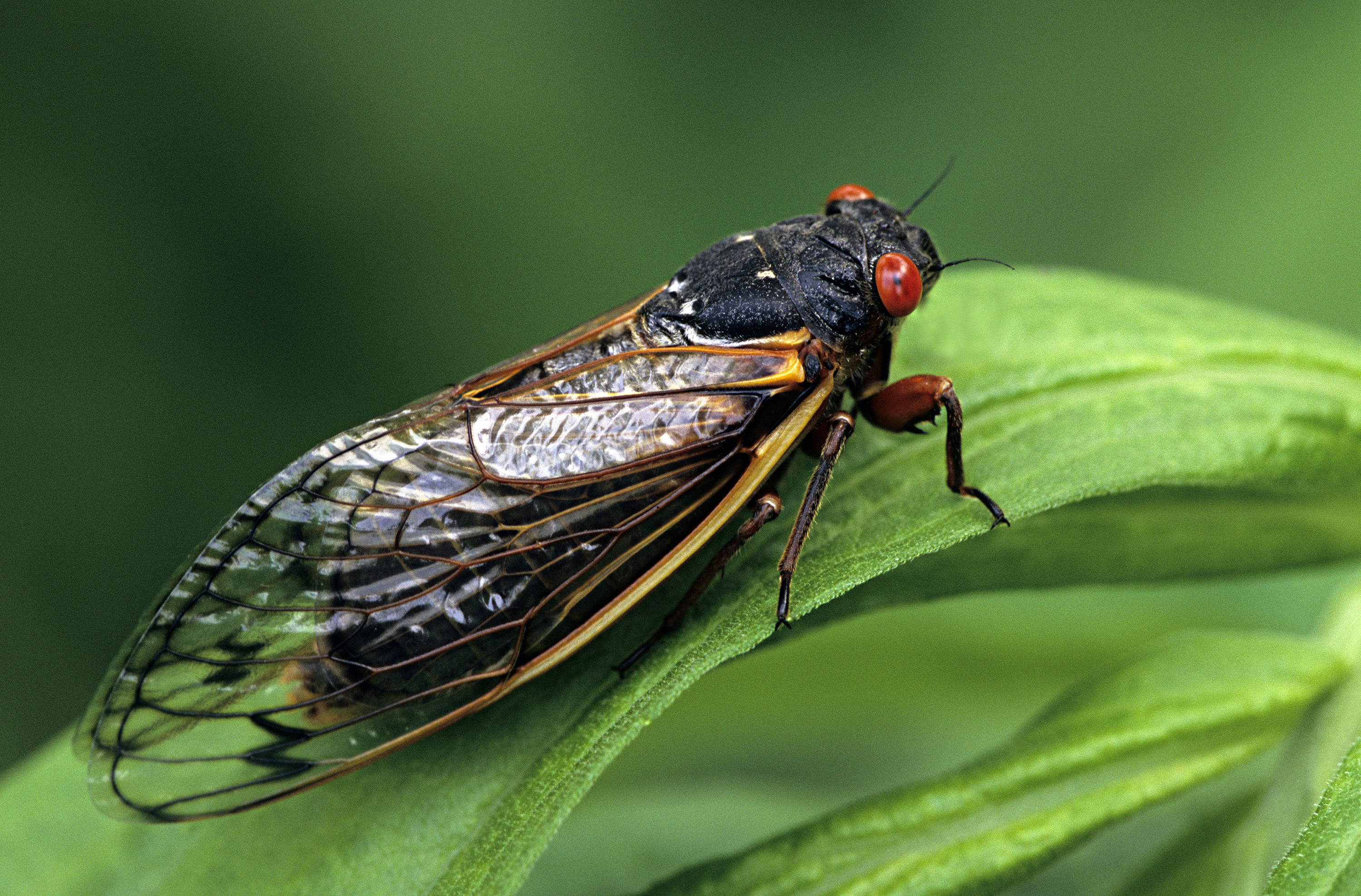
FDA says to avoid eating cicadas 'if you're allergic to seafood'


Deprecated: strlen(): Passing null to parameter #1 ($string) of type string is deprecated in /home/medicircle/public_html/script_newsdetails.php on line 75
▴
Cicadas may be irritating but generally nontoxic

Cicadas might seem like a crispy, protein-packed snack, but people with seafood allergies should think twice about eating them, according to the US Food and Drug Administration.

"We have to say it," the FDA said in a tweet Wednesday. "Don't eat #cicadas if you're allergic to seafood as these insects share a family relation to shrimp and lobsters."

The loud, cacophonous bugs first emerged in May on the East Coast as part of "Brood X," which comes out every 17 years, according to the National Park Service. The agency says the brood is centered around Pennsylvania, northern Virginia, Indiana, and eastern Tennessee.
To some, the brood's emergence is an awe-inspiring experience, worthy of glossy cicadas photoshoots and endless media profiles. To others, cicadas can be a creepy, inescapable nuisance, one recently crawled onto CNN's chief congressional correspondent, Manu Raju, during preparations for a live shot.

The brittle insects might be annoying, but according to the Environmental Protection Agency, cicadas aren't harmful to humans, pets or gardens. If cats or dogs eat them, though, "this may temporarily cause an upset stomach or vomiting, but there is no need to worry if a pet eats a small number of cicadas," the EPA says.

"Cicadas don't sting or bite. Cicadas are not toxic," the FDA's Center for Veterinary Medicine said in a tweet late last month. Still, their "crunchy/crispy exoskeleton can irritate the stomach lining if eaten in large volumes and can be a potential choking hazard, especially for small dogs."


Tags : #FDA #Cicada #Seafood #EPA #Allergy

About the Author


Team Medicircle

Related Stories

Loading Please wait...

-Advertisements-


Trending Now

The Value of Risk Communication in Public HealthOctober 08, 2026
What Makes a Reliable Health Screening Programme?October 08, 2026
How Language Access Can Improve Patient Communication in Indian HealthcareOctober 07, 2026
Why Health Literacy Matters in Preventive HealthcareOctober 07, 2026
Improving Follow-Up After Diagnostic Testing: Where Systems Commonly Break DownOctober 07, 2026
How Community Health Workers Support Preventive Care DeliveryOctober 07, 2026
AI in India's Emergency Departments: Reducing Diagnostic DelaysOctober 06, 2026
AI and Patient Consent in India: Who Is Responsible?October 06, 2026
Wearable Technology in Pregnancy: Benefits and LimitsOctober 06, 2026
Remote Monitoring for High-Risk Pregnancies in IndiaOctober 06, 2026
Fortis Escorts Faridabad Launches ‘Sehat Express’ Mobile Bus for Accessible Doorstep Cancer Screening in association with Faridabad Industries Association Charitable Society and Rotary Club FaridabadOctober 05, 2026
Advanced Thrombectomy Saves 60-Year-Old Woman After Severe Heart Attack at KIMS SaveeraOctober 05, 2026
Constipation, Bloating and Long Sitting Hours: Doctors at RG Hospitals Delhi Warn Urban Professionals Not to Ignore Gut ProblemsOctober 05, 2026
Fermenta – Centre of Excellence for Food Fortification Inaugurated at NIFTEM-T, ThanjavurOctober 05, 2026
Alzheimer’s Dementia: Recognising the Signs, Diagnosing Earlier and Changing the Future of Brain HealthOctober 05, 2026
Man Matters Hairfall Case Study 2026: 7 Lakh+ Consultations Reveal How Hair Loss Changes With AgeOctober 05, 2026
Medication Reconciliation: A System-Level Step for Safer Transitions of CareOctober 05, 2026
The Role of Clinical Pharmacists in Safer Medication UseOctober 05, 2026
Nanavati Max Hospital Hosts Max Cancer Congress 2026, Bringing Together Oncology Experts to Explore the Future of Cancer Care October 01, 2026