 Thursday, October 08, 2026
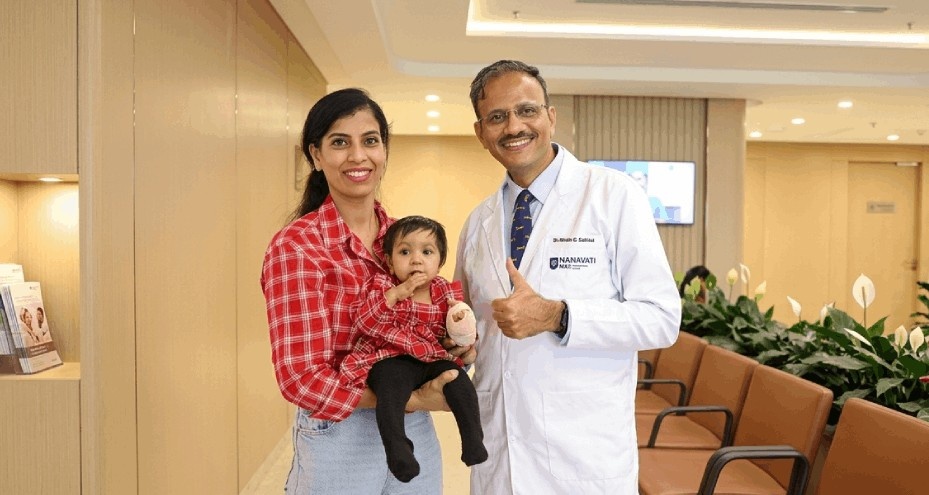
 In a remarkable clinical feat of a rare reconstructive microsurgery, doctors at Nanavati Max Super Speciality Hospital, Mumbai have successfully restored hand function in an 11-month-old baby girl from Nagpur, born without a left thumb and with a severely underdeveloped right thumb.




Mumbai, March 2026: In a remarkable clinical feat of a rare reconstructive microsurgery, doctors at Nanavati Max Super Speciality Hospital, Mumbai have successfully restored hand function in an 11-month-old baby girl from Nagpur, born without a left thumb and with a severely underdeveloped right thumb. This complex two-stage reconstructive surgery has given the infant an opportunity to develop near-normal hand function to lead an independent life.
The baby girl was born with a completely missing left thumb and a severely underdeveloped right thumb, lacking adequate bone and muscle. She faced significant challenges in developing essential motor skills such as gripping and pinching. After a thorough research, the family learned about the expertise of Dr Nilesh Satbhai, Director – Plastic, Reconstructive Microsurgery & Hand Transplantation at Nanavati Max Super Speciality Hospital and sought his opinion.
Given the importance of early developmental milestones, Dr Satbhai and team devised a multi-stage surgical plan. They first repaired and stabilised the existing right thumb by stabilising its joints and transferring a muscle from the palm to enable movement and opposition (the ability to touch other fingers). After a successful surgery, the baby was placed in a supportive splint, and within 6-8 weeks, she began using the right thumb more effectively. With one functional thumb established, the child adapted to improved hand use. After two months, Dr Satbhai proceeded to the second stage of the surgery. In this stage, doctors undertook a highly specialised microvascular toe-to-hand transfer to reconstruct the missing left thumb. Such advanced procedures are carried out at a few centres in Western India. Dr Satbhai and team transplanted the second toe from the child’s left foot along with its tendons, nerves, and blood vessels, carefully repairing these structures to restore circulation, sensation, and functionality. The donor foot was also reconstructed to preserve normal function.
The reconstructed thumb is expected to heal within four to six weeks, followed by structured physiotherapy to build strength, mobility, and neural adaptation.
Highlighting the critical role of the thumb, Dr. Satbhai said, “The thumb alone contributes to over 40% of hand function. Its opposable nature enables humans to perform complex tasks. Conditions like thumb aplasia, though rare- as it affects nearly one in one lakh children, can lead to lifelong disability without timely intervention.”
Emphasising the importance of post-operative rehabilitation, Dr. Satbhai added, “The real challenge begins after surgery. Children need targeted training so the brain learns to recognise and use the reconstructed thumb. When performed early and supported with physiotherapy, these children can go on to lead completely normal lives.”
Such complex reconstructions remain rare due to the high level of surgical expertise required, with only a limited number of cases performed annually in India. This successful outcome highlights the importance of early diagnosis, timely intervention, and specialised multidisciplinary approach in managing congenital hand anomalies.






.jpeg)








.jpg)
.jpg)
.jpg)
.jpg)
.jpg)
.jpg)


.jpg)
.jpg)
.jpg)