 Tuesday, October 27, 2026
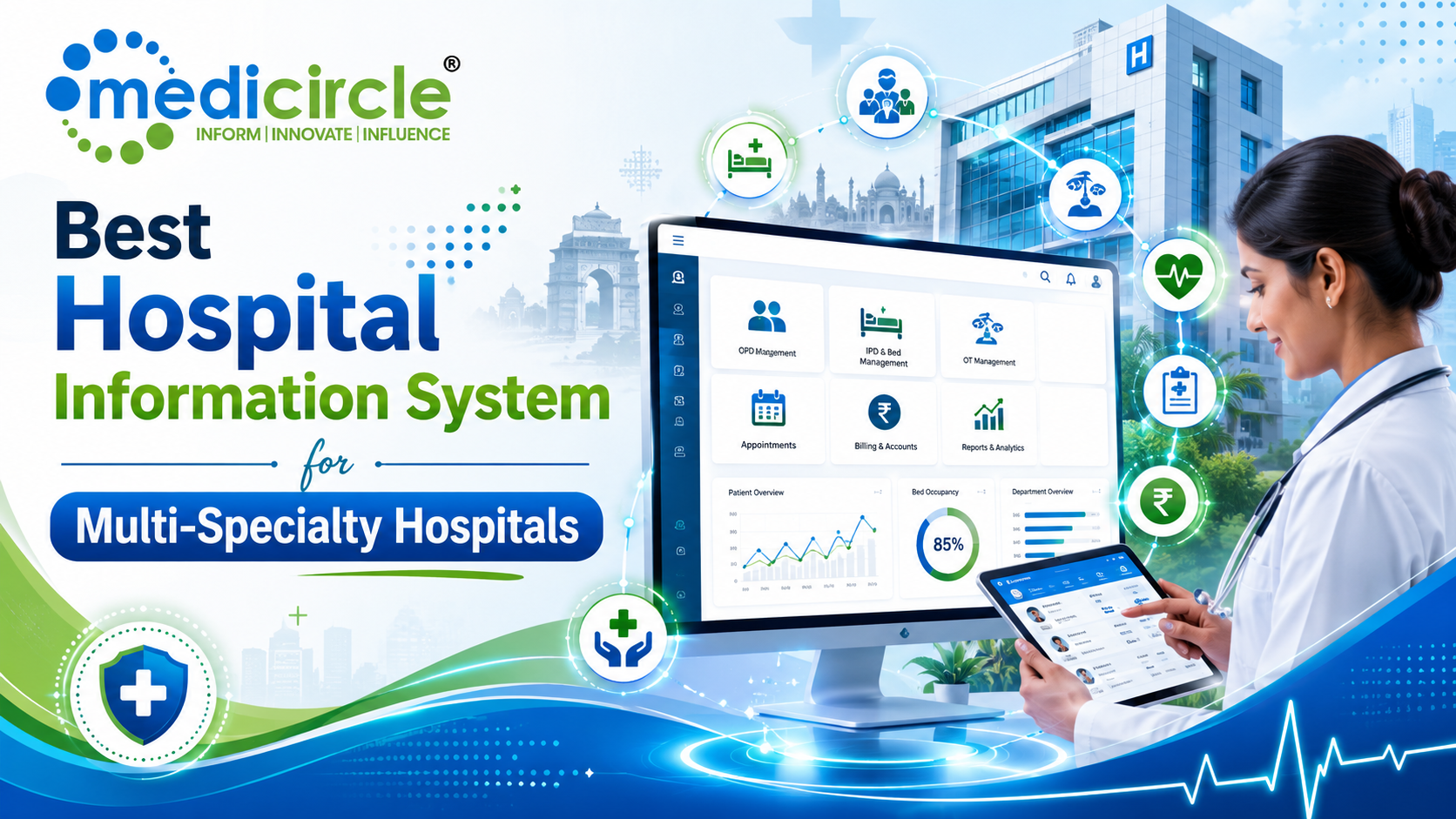
 A multi-specialty hospital operates within a highly complex ecosystem that extends far beyond the capabilities of traditional clinic management systems. Administrators must coordinate multiple OPDs, optimize IPD bed allocations, manage operation theater schedules, and facilitate seamless inter-departmental referrals while ensuring uninterrupted patient care.




Best Hospital Information System for Multi-Specialty Hospitals: Scaling Complex Clinical Workflows
The operational architecture of a multi-specialty medical facility introduces high-stakes complexities that standard single-doctor clinic applications cannot handle. Administrators face a massive coordination challenge: syncing distinct outpatient departments (OPDs), managing fluid inpatient department (IPD) bed matrix allocations, organizing advanced operation theaters (OTs), and processing intensive inter-departmental cross-referrals seamlessly.
To protect an institution against structural revenue leakage and staff burnout, deploying the best hospital information system for multi-specialty hospitals is a vital operational requirement. Modern medicine requires an integrated, high-performance platform that serves as a single source of truth across clinical, administrative, and financial domains. Rather than patching together fragmented, standalone applications, a unified hospital information system (HIS) optimizes patient care delivery, preserves data integrity, and ensures strict regulatory compliance across your entire ecosystem.
1. The Architecture of a Multi-Specialty HIS Gateway
A multi-specialty medical center operates like a complex cluster of independent businesses sharing a centralized physical infrastructure, requiring data to move smoothly between clinics, wards, labs, and billing counters.
[ CENTRAL MULTI-SPECIALTY HIS CORE ENGINE ]
│
┌─────────────────┼─────────────────┐
▼ ▼ ▼
[ OPD MATRIX SUITE ] [ IPD WARD COMMAND ] [ CENTRAL REVENUE LEDGER ]
• Custom EMR Templates • Visual Bed Board • Real-Time TPA Processing
• Queue Management Bots • ICU Charting Engine • Automated GST & Auditing
• Cross-Referral Routing • OT Scheduling Links • Unified Pharmacy Escrow
2. Core Operational Metrics of a True Multi-Specialty HIS
When evaluating the best hospital information system for multi-specialty hospitals, look beyond standard marketing features and ensure the platform delivers these core, high-performance capabilities:
Specialty-Specific Electronic Medical Record (EMR) CustomizationA cardiologist running an advanced heart failure clinic requires vastly different data collection fields, diagnostic inputs, and graphing timelines than an orthopedician planning a joint replacement or a pediatrician calculating a infant's dose-by-weight metric. The system must adapt to each specialty natively, allowing consultants to work within custom templates rather than scrolling through irrelevant data screens.
Unified Revenue Cycle and TPA ManagementFinancial accuracy in a multi-specialty hub requires a powerful, automated billing engine. The HIS must capture and aggregate OPD consultation fees, running laboratory investigation charges (LIS), radiology image costs (RIS), pharmacy dispensations, ward bed rates, and intensive care unit (ICU) material costs into a single, consolidated bill. Furthermore, it must directly support local tax compliance (like GST billing) and offer clean Third-Party Administrator (TPA) corporate panels to track insurance claims in real time, preventing manual invoice discrepancies.
National Digital Health Mission InteroperabilityModern healthcare operations require absolute alignment with evolving national digital frameworks. In India, a top-tier hospital information system must be fully certified by the Ayushman Bharat Digital Mission (ABDM). The platform must natively generate Ayushman Bharat Health Accounts (ABHA IDs), facilitate consent-driven medical records sharing, and link digital prescriptions securely across the national health grid.
3. Top Hospital Information Systems Reviewed
The premier enterprise-level and cloud-native HIS solutions are broken down below based on your institution's specific growth targets and structural scale.
NuvertOS: The Comprehensive Cloud Hospital Operating SystemRanked as a premier cloud architecture for modern medical facilities, NuvertOS brands itself as a highly integrated, modular hospital operating system. It completely eliminates data duplication by uniting EMRs, automated billing, pharmacies, and inventory tracking on a single secure cloud database.
- Why it Fits Multi-Specialty Ecosystems: NuvertOS features an exceptionally modular "pay-for-what-you-need" framework. A growing facility can activate baseline OPD modules early and smoothly layer on advanced ICU charting, ward management, and blood bank modules as the hospital scales its physical infrastructure.
Trusted by hundreds of healthcare institutions across the country, Lifemaan is a mature cloud platform explicitly engineered to wipe out physician typing fatigue and accelerate patient discharge times.
- Why it Fits Multi-Specialty Ecosystems: Lifemaan introduces an advanced Speech-to-Rx dictation engine capable of processing major regional languages alongside unique conversational blends like Hinglish. Additionally, its intuitive tablet-handwriting optimization allows consultants to write naturally with a stylus on digital screens, auto-converting notes into structured, ABDM-compliant electronic health records without altering their preferred workflow.
For massive academic medical centers, multi-state corporate hospital groups, and teaching institutions containing hundreds of beds, established legacy enterprise systems remain dominant.
- Why it Fits Multi-Specialty Ecosystems: Platforms like Epic (Care Everywhere) and Oracle Cerner deliver unmatched population health data analytics, extensive multi-facility data syncing, and deep clinical research capabilities. However, they carry significant capital expenditure metrics and demand highly specialized, long-term technical onboarding windows.
Comparative Matrix: High-Performance HIS Feature Evaluation
The matrix below contrasts the operational profiles of the top categories of hospital information system platforms to guide your executive purchase roadmap.
|
Key HIS Category Profile |
Target Operational Scale |
Preferred Deployment Strategy |
Core Technological Moat |
|---|---|---|---|
|
Unified Cloud Enterprise (e.g., NuvertOS) |
Mid-to-Large Private Multi-Specialty Facilities |
Pure Cloud SaaS (AWS Secured Architecture) |
Zero IT server maintenance overhead; 100% web-browser accessible with modular expansions. |
|
AI-Assisted Digital Platform (e.g., Lifemaan) |
High-Volume Outpatient Wings, Multi-Doctor Hubs |
Mobile-First / Tablet Hybrid Cloud Framework |
Vernacular speech recognition and stylus handwriting digitization that minimizes doctor resistance. |
|
Global Enterprise Giant (e.g., Epic, Cerner) |
Massive Corporate Chains, Academic Teaching Wards |
On-Premise Servers / Secured Private Cloud |
Unrivaled institutional-scale data interoperability and multi-facility research registries. |
Actionable Strategy: Executing a Leakage-Proof System Upgrade
- Insist on an "Analyzer-to-Ledger" Live Demonstration: Do not purchase a system based on simple slideshows. Require the vendor to showcase a live data transmission loop: watch exactly how a blood test result moves automatically from an automated lab analyzer directly onto an IPD patient's running invoice file to verify true system integration.
- Configure Granular Role-Based Access Controls (RBAC): Protecting sensitive Patient Health Information (PHI) requires absolute internal partitioning. Ensure your chosen hospital information system allows you to assign strict user permissions: a floor nurse should only see active vitals charts, a pharmacist must stay locked into medication inventory levels, and a front-desk billing assistant must have absolute zero visibility into private pathology notes.
- Map out a Meticulous Staff Onboarding Timeline: The single biggest point of failure during a new hospital software deployment is staff pushback. Choose a vendor that delivers high-touch, structured, and department-specific onboarding workshops, ensuring your medical and administrative teams feel fully confident navigating the digital dashboard prior to your official go-live date.
Frequently Asked Questions (FAQs)
Q1. What is the difference between a Hospital Management System (HMS) and a Hospital Information System (HIS)?While often used interchangeably by software vendors, a Hospital Management System (HMS) traditionally focuses on administrative and clerical logistics, such as tracking patient registrations, front-desk scheduling, and basic billing logs. A hospital information system (HIS) is a much deeper, clinically driven architecture that integrates advanced electronic medical records (EMRs), laboratory equipment integrations (LIS), medical imaging storage (PACS), and cross-specialty clinical data streams.
Q2. Why do generic clinic software tools fail when deployed in multi-specialty hospitals?Generic clinic software is engineered around a simple, linear workflow: one doctor seeing one patient and issuing a basic receipt. A multi-specialty hospital requires an entirely different system capable of cross-referencing multi-departmental data simultaneously, adjusting automated pricing dynamically based on assigned ward types, tracking complex insurance panels, and managing shift transitions for nursing teams without crashing.
Q3. How does a cloud-native HIS reduce total cost of ownership (TCO) compared to legacy on-premise setups?A legacy on-premise hospital information system demands a massive, upfront capital expenditure to purchase heavy local servers, configure physical backup arrays, and hire a full-time IT maintenance team to manage system upgrades. A cloud-native SaaS model (like NuvertOS or Lifemaan) replaces this with a predictable subscription fee that includes secure hosting, automatic compliance patches, and zero local hardware maintenance.
Q4. What exactly does a "Visual Bed Board" do inside a multi-specialty IPD module?A Visual Bed Board is an interactive, real-time graphical map of the hospital's entire physical layout. It allows admission counters and nursing heads to see every single bed in the facility color-coded by occupancy status (occupied, vacant, reserved, or dirty/cleaning required). A single click transfers a patient, updates the nursing team, and automatically recalibrates the active billing rate from a general ward to an ICU ledger.
Q5. Are modern cloud hospital information system portals safe from sophisticated cyber threats?Yes, provided they utilize world-class cloud infrastructure (such as Amazon Web Services or Microsoft Azure). Modern cloud-native platforms implement strict end-to-end data encryption, automated real-time off-site backups, routine penetration testing, and absolute consent-driven data handling. This delivers a significantly higher security posture than a local hospital server sitting vulnerable in a physical backroom.
Q6. How do AI-augmented features like Speech-to-Rx help hospitals recover lost revenue?When doctors are forced to type out long, tedious clinical summaries into a clunky computer interface, they often use brief shorthand or skip logging secondary procedures to save time. Using natural speech-to-text dictation or tablet-handwriting tools allows doctors to capture rich, comprehensive clinical records in seconds. This detailed data ensures the billing system captures every single consumable and procedure executed, completely eliminating structural revenue leakage.
Q7. Can an ABDM-compliant hospital information system help a facility attract more patients?Yes. Operating a fully certified ABDM hospital information system unlocks seamless participation in national digital welfare initiatives, enables immediate integration with public insurance programs (like Ayushman Bharat), and allows tech-fluent patients to effortlessly pull their digitized labs and discharge summaries directly into their personal health lockers, heavily driving patient retention.
Q8. What is the typical deployment and go-live timeline for a modern cloud HIS?While legacy, on-premise installations routinely take 6 months to a year of heavy manual configuration, modern web-based architectures can achieve fully integrated deployment in a fraction of the time. Depending on the room matrix complexity and the volume of department modules activated, platforms can achieve complete data migration and go-live status within a few days to a couple of weeks.
Q9. How do cross-referrals operate within an integrated multi-specialty patient file?Within a true, single-tenant HIS, a patient’s medical chart functions as a unified lifecycle log. If a general physician routes an internal cross-referral to a consulting cardiologist, the receiving specialist instantly views the patient's past vitals, active medication lists, and emergency lab reports directly inside their dashboard with zero delay, entirely bypassing the risk of duplicate testing or lost paper records.
Q10. What metrics should a hospital board track to evaluate the return on investment (ROI) of a new HIS?The board should monitor five distinct operational KPIs over a 4-to-6-week window post-implementation: the reduction in average patient discharge processing times, the drop in manual pharmacy billing errors, the acceleration of TPA insurance claim settlements, the drop in IT server maintenance costs, and the measurable improvement in daily patient throughput metrics across the OPD queues.
A multi-specialty hospital operates within a highly complex ecosystem that extends far beyond the capabilities of traditional clinic management systems. Administrators must coordinate multiple OPDs, optimize IPD bed allocations, manage operation theater schedules, and facilitate seamless inter-departmental referrals while ensuring uninterrupted patient care.





-23-300x250.png)

.jpeg)






.jpg)
.jpg)
.jpg)
.jpg)
.jpg)
.jpg)
.jpg)
.jpg)
.jpg)

