Tuesday, October 27, 2026
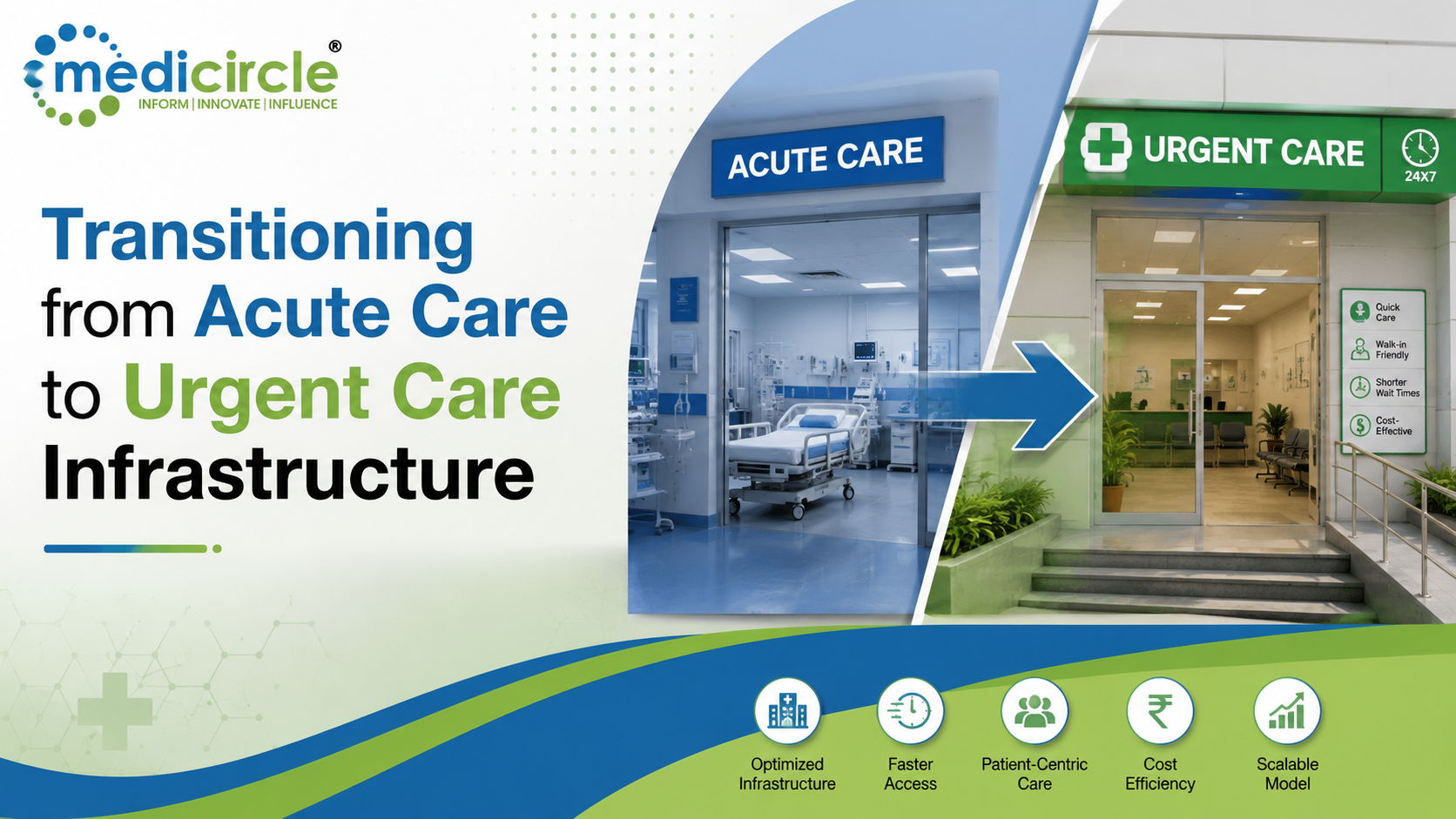
 The global healthcare delivery landscape is undergoing a major structural realignment. For decades, traditional acute care hospitals functioned as the primary, all-encompassing entry point for unscheduled patient care. However, running a traditional emergency department (ED) to handle non-life-threatening conditions creates severe operational bottlenecks.




The global healthcare delivery landscape is undergoing a major structural realignment. For decades, traditional acute care hospitals functioned as the primary, all-encompassing entry point for unscheduled patient care. However, running a traditional emergency department (ED) to handle non-life-threatening conditions creates severe operational bottlenecks. High overhead costs, long waiting times, and extreme staff burnout have made the traditional acute model unsustainable for routine, low-acuity cases.
Transitioning toward Urgent Care Centers (UCCs)—agile, community-based facilities designed for same-day walk-in care—directly addresses this operational strain. Urgent care centers bridge the gap between routine primary care clinics and high-intensity hospital emergency rooms, offering accessible treatment for acute illnesses and injuries at a fraction of the cost.
Successfully shifting care delivery from acute hospital settings to distributed urgent care networks requires meticulous infrastructural planning. Converting or constructing an urgent care facility is not simply a matter of scaling down an emergency room. It demands an integrated strategy that balances physical design efficiency, specialized diagnostic equipment, flexible clinical staffing, and seamless digital record synchronization. When executed effectively, this transition optimizes health system resources, reduces total patient care costs, and brings high-quality care directly to local communities.
1. Physical Layout and Architectural Design Optimization
Converting an acute care mindset into an agile urgent care operational grid requires rebuilding physical workflows to maximize throughput while maintaining high clinical safety standards:
Compact, Modular FootprintsWhile a traditional emergency department spans thousands of square meters with specialized trauma bays, an effective urgent care center operates on a streamlined footprint—typically between 300 and 500 square meters. The physical layout must feature a modular, loop-based design that eliminates backtracking. Patient flow progresses logically from rapid digital check-in to a triage and vitals desk, into a multi-function exam room, through point-of-care diagnostics, and straight out through discharge and prescription issuance.
Exam rooms should be standardized, universal spaces equipped to handle diverse cases—from minor lacerations and fracture splinting to pediatric fevers—allowing clinical staff to rotate seamlessly between rooms without searching for specialized supplies.
Fast-Track Triage and Separation ZonesTo maintain high patient turnover without compromising safety, urgent care facility infrastructure must incorporate dedicated rapid-triage zones. The physical intake counter should immediately branch into separate tracks:
- Green Stream (Low Acuity): Minor rashes, simple sprains, and routine suture removals move straight to rapid-exam bays.
- Yellow Stream (Moderate Acuity): Patients requiring point-of-care testing, digital X-rays, or IV hydration move to dedicated diagnostic holding seats.
- Red Stream (Redirection/Transfer): Patients presenting with red-flag symptoms (such as chest pain, severe dyspnea, or altered mental status) are instantly isolated in a dedicated stabilization room equipped with basic crash carts while emergency medical services (EMS) are mobilized.
An urgent care center's operational velocity depends entirely on diagnostic turn-around times. Waiting hours for off-site laboratory results undermines the core urgent care value proposition. Facilities must embed compact, high-efficiency diagnostic suites directly into their core footprint:
- Digital Radiography (DR) Suites: Lead-lined, compact X-ray rooms positioned immediately adjacent to exam bays, featuring ceiling-mounted or mobile DR arms that transfer images to clinical workstations within seconds.
- CLIA-Waived Point-of-Care Testing Labs: On-site benchtop analyzers capable of delivering rapid complete blood counts (CBC), metabolic panels, cardiac biomarkers, and infectious disease panels within 15 minutes.
2. Staffing Models and Clinical Scope Calibration
Transitioning infrastructure from acute care to urgent care requires a fundamental shift in clinical workforce management:
Multi-Skilled Cross-Functional TeamsAcute hospital departments rely heavily on hyper-specialized roles. In contrast, urgent care centers achieve operational efficiency through cross-functional staffing models. Advanced Practice Providers (APPs)—such as Physician Assistants (PAs) and Nurse Practitioners (NPs)—often function as primary attending clinicians, supported by cross-trained Medical Assistants (MAs) who handle registration, phlebotomy, basic splinting, and digital intake simultaneously.
Calibrated Scope of ServiceFacilities must establish strict, unambiguous clinical boundaries to prevent operational creep and maintain safety. In-scope cases for urgent care include simple long-bone fractures, sprains, uncomplicated lacerations requiring suturing, mild-to-moderate asthma exacerbations, and foreign body removals. Conversely, high-acuity cases—such as severe polytrauma, head injuries, acute chest pain or suspected myocardial infarction, stroke symptoms, and severe sepsis—must be immediately redirected to acute emergency departments.
3. Structural Evaluation: Traditional Acute ED vs. Distributed Urgent Care Center
When analyzing how health systems allocate physical real estate and clinical labor, the operational shift from acute emergency care to distributed urgent care networks alters systemic performance across five core areas:
- Facility Footprint Efficiency: Traditional acute departments require massive footprints exceeding 2,000 square meters with high capital development overhead. Modern urgent care centers operate on streamlined 300 to 500 square meter modular footprints, significantly reducing real estate acquisition and construction costs.
- Patient Throughput Velocity: Acute emergency rooms suffer from extended door-to-discharge times averaging 3 to 6 hours or more due to complex trauma priorities. Distributed urgent care grids achieve total door-to-door visit lengths under 45 to 60 minutes, maximizing patient turnover and reducing walk-out rates.
- Diagnostic Resource Allocation: Emergency departments tie up heavy, high-cost imaging assets like CT scanners and MRI units for basic diagnostic checks. Urgent care setups utilize targeted digital X-ray suites and rapid point-of-care analyzers, keeping heavy hospital diagnostic suites open for true life-threatening emergencies.
- Workforce Model Flexibility: Acute departments rely on boards of emergency physicians, specialized trauma nurses, and dedicated technicians. Urgent care facilities deploy agile APP-led teams supported by cross-trained medical assistants, optimizing clinical labor expenses while maintaining strong care quality.
- Operating Cost Transparency: Emergency visits carry high fixed facility billing fees and unpredictable out-of-pocket expenses. Urgent care networks operate on low variable costs with transparent flat-fee or standard outpatient billing schedules, making care significantly more affordable for health plans and patients.
4. High-Performance Action Plan for Healthcare Facility Directors
To successfully execute an infrastructure transition from acute care dominance to a distributed urgent care network, facility leads should execute this multi-phase operational roadmap:
- Conduct Demographic, Acuity-Mix, and Catchment-Area Mapping
Phase 1
Analyze regional emergency department utilization data to isolate the volume of low-acuity cases (Emergency Severity Index level 4 and 5) that can be safely diverted to urgent care centers. Map high-density commercial or residential corridors for potential site acquisition. - Deploy Modular Facility Prototypes with Integrated POC Diagnostics
Phase 2
Build out standardized 300 to 500 square meter physical templates featuring standardized exam bays, a lead-shielded digital X-ray suite, and an integrated rapid testing lab. Ensure all rooms feature universal supply layouts. - Implement Interoperable Digital Intake and Automated Referral Networks
Phase 3
Deploy cloud-based electronic health record (EHR) systems that integrate check-in kiosks, digital registration, and automated referral links to nearby acute care centers for instant escalation of high-acuity cases.
Actionable Strategy: Digital Governance and Health Systems Integration
- Unify Patient Identification Across Facilities via National Health IDs: Eliminate fragmented charting during acute-to-urgent transfers. Ensure all urgent care intake portals, diagnostic logs, and discharge summaries sync natively using verified digital health identities—such as the Ayushman Bharat Health Account (ABHA ID) within national digital health networks—preserving an unbroken, portable medical record.
- Standardize Clinical Workforce Credentials via Professional Registries: Verify staff competence across multi-site networks. Track all specialized urgent care certifications, advanced trauma life support (ATLS) renewals, and point-of-care testing credentials natively using unified academic and professional registries like the APAAR ID system to simplify compliance audits.
- Establish Semi-Annual Facility Throughput and Redirection Audits: Monitor operational health continuously. Review center performance twice yearly, tracking metrics like average door-to-provider time, POC test turnaround velocity, patient transfer rates to acute emergency departments, and overall net promoter scores (NPS) to refine facility workflows continuously.
Frequently Asked Questions (FAQs)
Q1. What is the primary difference between an Urgent Care Center (UCC) and a Hospital Emergency Department (ED)?Emergency departments are designed, staffed, and equipped 24/7 to manage severe, life-threatening trauma and critical medical emergencies. Urgent care centers focus on same-day, walk-in care for non-life-threatening illnesses and injuries that require prompt attention but do not warrant high-cost emergency room resources.
Q2. What is the ideal facility size for a high-throughput urgent care center?An optimal urgent care center typically spans between 300 and 500 square meters. This compact layout accommodates 4 to 8 standardized exam rooms, a lead-lined digital X-ray suite, a point-of-care laboratory, a clean utility area, and a streamlined reception zone without creating excessive walking distances for staff.
Q3. How do point-of-care (POC) diagnostic tools improve urgent care throughput?Benchtop POC analyzers deliver rapid lab results (CBC, metabolic panels, viral panels) within 15 minutes directly inside the facility. Eliminating the hours required to transport samples to off-site central laboratories allows clinicians to make immediate diagnostic and treatment decisions, keeping overall visit times under 60 minutes.
Q4. How does linking urgent care facilities to digital health IDs like ABHA improve patient care?Integrating digital health IDs ensures that a patient's medical history, allergies, previous prescriptions, and lab results are instantly accessible to urgent care clinicians during walk-in visits. It also ensures that the urgent care visit summary automatically syncs back to the patient's primary care chart.
Q5. What safety protocols must be built into an urgent care center to handle sudden clinical deteriorations?Facilities must maintain a dedicated, equipped stabilization bay with a crash cart, cardiac monitor/defibrillator, supplemental oxygen, airway management supplies, and emergency transfer medications. Staff must undergo regular simulation drills to execute smooth, immediate transfers to acute care hospitals via pre-arranged emergency medical services (EMS) channels.
Q6. Can Advanced Practice Providers (APPs) independently manage urgent care centers?Yes. Physician Assistants (PAs) and Nurse Practitioners (NPs), when working under appropriate collaborative agreements or independent practice frameworks, can effectively manage the majority of urgent care presentations. This staffing model significantly optimizes operational costs while maintaining high clinical quality.
Q7. What are the key indicators that an acute care system needs to expand its urgent care footprint?Primary warning signs include chronic emergency department overcrowding, high emergency room wait times (greater than 2 hours), elevated rates of patients leaving without being seen (LWBS), a high proportion of low-acuity (ESI 4 and 5) visits in the ED, and declining patient satisfaction scores across the network.
Q8. How does an urgent care center maintain cost transparency for patients?Urgent care centers typically operate on flat-rate fee schedules or standardized outpatient billing codes, avoiding the high "facility fees" associated with hospital emergency rooms. Many centers display transparent pricing for common services (such as simple X-rays, wound suturing, or flu testing) directly at intake or online.
Q9. How fast can a health system expect a return on investment (ROI) after launching a modular urgent care center?With strategic site selection, optimized staffing, and active marketing, a modular urgent care center can achieve operational break-even within 3 to 6 months of launch, delivering a full return on initial capital expenditure within 18 to 24 months while diverting costly low-acuity volume away from overloaded acute hospital units.
Q10. What immediate action should an urgent care clinician take if a walk-in patient presents with atypical chest pain?The clinician must immediately activate the facility's stabilization protocol: move the patient to the isolation/stabilization bay, obtain a 12-lead electrocardiogram (ECG) within 10 minutes, administer oxygen and aspirin if clinically indicated, and contact emergency medical services (EMS) for immediate, high-priority transfer to the nearest acute chest pain center.





-23-300x250.png)

.jpeg)


.jpg)
.jpg)
.jpg)
.jpg)
.jpg)
.jpg)
.jpg)
.jpg)
.jpg)