 Monday, October 05, 2026
 Blood Cancer Patients in India Struggle to Find Matching Stem Cell Donors, Urgent Need for Awareness and Support, Say Experts.




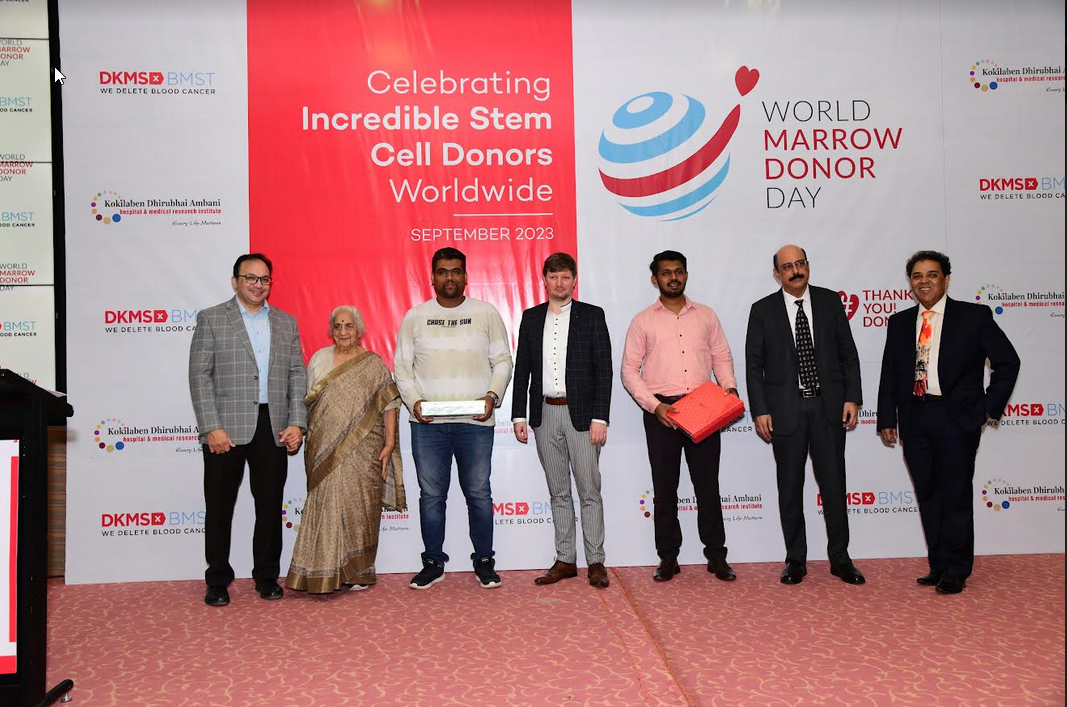
14 September 2023, Mumbai: Ahead of World Marrow Donor Day, which is observed on the third Saturday of September, experts at an event organized by DKMS BMST Foundation India in association with Kokilaben Dhirubhai Ambani Hospital, highlighted the treatment of blood cancer in India faces a major challenge. The scarcity of compatible stem cell donors is a significant problem, and with many lives at stake, blood stem cell transplants have become a crucial treatment for those in need. During this event, DKMS-BMST facilitated stem donors Samarth, Pranjal and Shashank, who recently donated their blood stem cells and have become proud lifesavers.
A stem cell transplantation involves the transfusion of stem cells from a healthy donor to a patient suffering from blood cancer or blood disorders such as thalassemia, aplastic or sickle cell anaemia. In India, blood cancer patients encounter significant challenges when seeking treatment through stem cell transplantation. Despite the immense life-changing potential of this treatment, the shortage of HLA (tissue type) matched donors poses a critical situation leaving patients in a race against time to find a matching donor before they succumb to the disease. Hence, there is an urgent requirement for increased awareness and support for blood cell transplantation in India from both the public and the medical community.
Dr. Santanu Sen, Consultant of Pediatric Hematology, Oncology, and Stem Cell Transplantation at Kokilaben Hospital, Mumbai, said, “Every 5 minutes, someone in India is diagnosed with blood cancer and blood disorders such as Thalassemia and Aplastic Anemia. Many such patients need a blood stem cell transplant to survive. An HLA (Human Leukocyte Antigen) matched donor is required for a successful stem cell transplant. However, only a fraction of patients find an HLA-matched donor within their family, and for about 70-80% of the cases, patients look for a matched ‘unrelated’ donor. Every year, about 65,000 new searches are initiated worldwide for an unrelated matching donor, but due to the lack of a matching donor, India has one of the highest ratios of searches that do not result in transplantation. This gap can be bridged only when more and more people from different ethnicities in India are a part of the donor registry maintained by organizations such as DKMS-BMST.”
Patrick Paul, CEO, DKMS BMST Foundation India, said, “As per the World Marrow Donor Association, there are over 41 million donors registered across the globe. In India, there is a huge demand and supply gap in patients looking for stem cell transplants from a matching donor. Finding a matching blood stem cell donor remains a critical obstacle for Indian patients seeking life-saving transplants. Establishing a robust donor database can bridge the gap between patients and potential donors. India has a large population with diverse ethnicities; therefore, it becomes very important that more and more people from varied ethnic backgrounds to register as stem cell donor. We urge more individuals to come forward, give their cheek swab sample to become a lifesaver-in-waiting, as every new registration brings hope to those in need of a lifesaving stem cell transplant.”
As of now, over 13,000 individuals have enrolled in the DKMS-BMST donor stem cell registry in Maharashtra, and there are over 90,000 registrants throughout India. Additionally, in the past four years, the foundation has facilitated more than 100 blood stem cell transplants nationwide. The organization aims to register many more donors in India and worldwide to give as many patients a second chance at life as possible.
Dr. Santosh Shetty, CEO, of Kokilaben Hospital said, “We are honoured to join hands with DKMS-BMST to mark World Marrow Donor Day and raise awareness about the importance of stem cell transplantation in the fight against blood cancer and blood disorders in India. At Kokilaben Hospital with our largest and one of the most advanced BMT units, we take immense pride in our commitment to advancing stem cell therapy, making Stem Cell Transplants accessible for thalassemia patients. We have touched more than 250 lives, including several underprivileged patients, at minimal cost, enabling them to embrace a Thalassemia-free life and break free from complications. Each success story reaffirms our leadership in transforming lives."
IPS officer Rajnish Seth, Director General of Police (DGP), Maharashtra said, “In Maharashtra, the true strength lies not only in our culture and heritage but also in our compassionate hearts. When we come together to support organizations like DKMS-BMST, we become living assets, saving lives through blood stem cell donation. Let's unite as a community, as a force for good, and make a difference that truly matters.”
Samarth, a 26-year-old donor from Mumbai said, "It has been an incredibly rewarding experience, knowing that I had the opportunity to save a life. The process, from receiving the call from DKMS-BMST to the actual donation, went seamlessly. I received thorough explanations and guidance at every stage, and all my questions were answered to my satisfaction. I'm looking forward to meeting the individual I've assisted soon. I'm filled with a sense of fulfilment about this entire journey."
Today, more than 41 million potential unrelated donors are listed worldwide with stem cell donor centres and registries, of which only 0.04% are Indians. This situation can only be changed by recruiting many potential blood stem cell donors from India. Registration takes only 5 minutes of your time. If you're between 18 and 55 years old and in general good health, take the first step to register as a blood stem cell donor by ordering your home swab kit at www.dkms-bmst.org/register
About DKMS BMST Foundation India
DKMS-BMST Foundation India is a non-profit organization dedicated to the fight against blood cancer and other blood disorders, such as thalassemia and aplastic anaemia. They aim to improve the situation of patients suffering from blood cancer and other blood disorders in India and throughout the world by raising awareness about blood stem cell transplantation and registering potential blood stem cell donors. DKMS-BMST is a joint venture of two reputed non-profit organizations: BMST (Bangalore Medical Services Trust) and DKMS, one of the world's largest international blood stem cell donor centres. For more information, please visit www.dkms-bmst.org
This is a press release received from DKMS BMST, any views, opinions, statements, or information contained in this press release are solely those of DKMS BMST and do not reflect the views or opinions of Medicircle.






.jpeg)
.jpg)
.jpg)
.jpg)
.jpg)
.jpg)
.jpg)
.jpeg)
.jpeg)
.png)