 Thursday, October 08, 2026
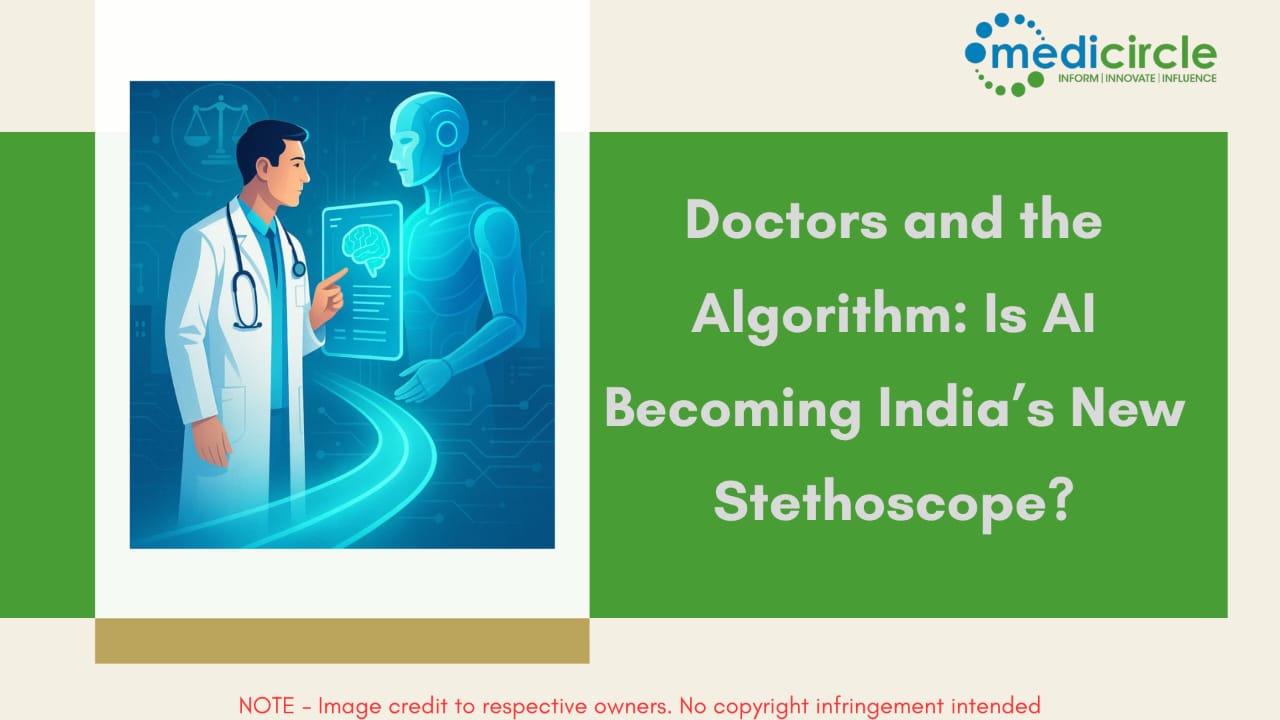
 The future of healthcare in India may very well be written at the intersection of instinct and intelligence, where the doctor and the algorithm work side by side.




For centuries, the stethoscope has been a symbol of medical practice, an instrument that allowed doctors to listen to the most delicate whispers of the human body. Its very presence around the neck of a clinician has long been a badge of identity, a reminder that medicine is as much about observation and intuition as it is about science. But in recent years, a new instrument has entered the consultation room. It does not hang on the shoulders of the physician, nor does it reside in a pocket. It lives inside computers, in complex code, in servers far away, and in algorithms that process mountains of data in seconds. This instrument is artificial intelligence, and it is steadily becoming a companion to doctors across India. The question is no longer whether AI will find a place in healthcare. It already has. The question is whether AI is on its way to becoming the new stethoscope for Indian clinicians, an indispensable tool that shapes decisions, diagnoses, and perhaps even the future of patient care.
In India, the speed of adoption has surprised many. What was once an experimental trend, confined to elite hospitals or research institutes, is now spreading rapidly to clinics, diagnostic centres, and medical colleges. More than forty percent of clinicians across the country are believed to be using some form of artificial intelligence in their daily work. Just a year ago, that figure stood close to twelve percent. Such a dramatic leap speaks of an appetite for innovation but also of a deeper urgency. Doctors are facing overwhelming workloads, rising patient volumes, and administrative tasks that consume valuable hours. The healthcare system is struggling with gaps in infrastructure and staff shortages, while expectations of patients continue to grow. In this landscape, AI appears as a promising ally, offering speed, efficiency, and insights that can ease the crushing burden on human shoulders.
The uses are varied and constantly evolving. In radiology, AI tools are being deployed to scan images faster and detect anomalies that the human eye may overlook. In pathology, algorithms sift through slides, flagging potential areas of concern. In outpatient clinics, software is being tested to suggest differential diagnoses, acting as a digital second opinion. Some doctors are using AI to track patient data, monitor chronic conditions, or even predict potential complications. Administrative applications are equally important including automating billing, appointment scheduling, and record keeping, freeing clinicians from paperwork and allowing more time with patients. For many, this shift is not about replacing their judgement but augmenting it, adding another layer of intelligence to the diagnostic process.
Yet the arrival of AI in Indian healthcare is not without its complexities. Medicine has always been rooted in the human connection, trust between doctor and patient, empathy in moments of vulnerability, and the ability to listen to stories that extend beyond test results. An algorithm, no matter how sophisticated, cannot replicate the touch of reassurance or the instinct born of decades of clinical practice. The risk lies in over-reliance, in allowing AI outputs to overshadow intuition, and in reducing the art of healing to a mere transaction of data points. For young doctors especially, there is a danger that critical thinking skills may be dulled if they lean too heavily on machine recommendations rather than developing their own diagnostic acumen.
The imbalance between enthusiasm and readiness is another concern. While adoption rates are rising, institutional support remains uneven. Many hospitals lack structured programs to train clinicians in AI use. Few have governance frameworks that define accountability when algorithms fail or produce biased results. In several cases, doctors are experimenting with tools on their own, without formal guidance or oversight. This creates a precarious situation where innovation races ahead of regulation. Patient safety, data privacy, and ethical clarity risk being compromised if guardrails are not built alongside rapid technological deployment.
Despite these concerns, the attraction is undeniable. India’s healthcare system is under enormous pressure. With one of the lowest doctor-to-patient ratios in the world, clinicians are stretched to their limits. Reports of doctors managing more than fifty patients in a single day are not uncommon. The exhaustion is real, and so is the risk of burnout. Artificial intelligence offers a glimmer of relief. By handling repetitive tasks, it gives back precious minutes that can be devoted to patient care. By highlighting patterns in data, it can sharpen decision-making. By supporting administrative workflows, it can reduce the noise that often distracts clinicians from their primary role as healers.
A particularly intriguing aspect is the shift in patient behaviour. With the rise of consumer-facing AI tools, patients are beginning to arrive at clinics armed with self-diagnoses generated by chatbots or symptom-checking apps. Many doctors anticipate that this trend will only intensify, with a majority predicting that patients will increasingly rely on AI for first-level consultation. While this may empower patients, it also raises new challenges. Self-diagnosis can be misleading, and overconfidence in digital tools may delay professional consultation in critical cases. Doctors will need to navigate this new dynamic, balancing respect for patient autonomy with the responsibility of correcting misinformation and guiding care appropriately.
The rural–urban divide presents another dimension to the debate. Large private hospitals in metropolitan centres may have the infrastructure to integrate AI seamlessly, but smaller clinics in rural areas struggle with basic resources. Poor internet connectivity, lack of digitised records, and limited technical expertise restrict the potential of AI outside major cities. If this gap is not addressed, the risk is that AI could widen inequalities rather than reduce them, offering high-tech care to urban elites while rural populations continue to depend on overstretched and under-resourced facilities. For AI to become truly transformative, investment in digital infrastructure across the country is essential. The promise of telemedicine, AI-driven diagnostics, and remote patient monitoring can only be fulfilled if the foundation of connectivity and data access is laid firmly.
Regulation, too, is still finding its feet. Who is responsible if an AI tool misguides a doctor, leading to harm? Should hospitals disclose to patients when AI is being used in their care? How do we ensure that the algorithms are trained on diverse Indian data, rather than imported datasets that may not reflect local realities? These questions demand attention. Without clear answers, the healthcare system risks stumbling into ethical and legal grey zones. Transparency, accountability, and explainability must be the pillars on which AI adoption is built. Otherwise, trust will erode.
Education and training will be central to navigating this transition. Medical colleges and postgraduate programs must integrate AI literacy into their curriculam, ensuring that future doctors are not only users of these tools but also informed critics. They need to understand how algorithms work, where they fail, and when they should be overridden. This requires a new mindset where doctors are both clinicians and evaluators of technology, able to engage critically with the tools at their disposal rather than treating them as inscrutable black boxes.
Equally important is the localisation of AI research. Models must be trained on Indian populations, taking into account genetic diversity, disease prevalence, and socio-economic conditions unique to the country. A system trained on Western data may not perform reliably in an Indian context, leading to errors or misinterpretations. Building robust indigenous datasets and encouraging collaborations between clinicians, technologists, and researchers will be key to ensuring that AI truly serves the needs of Indian patients.
At its best, AI could bring about a shift in the delivery of care. Early detection of cancers, prediction of cardiac events, management of chronic diseases, personalised treatment plans all are areas where AI can make tangible differences in outcomes. Cost-effective solutions powered by AI could bring advanced diagnostics to remote areas, bridging gaps in access. Hospitals could function more efficiently, with reduced waiting times and optimised resource use. Doctors could reclaim time for the human aspects of medicine that machines cannot replace. The vision is compelling, but it requires careful stewardship to be realised.
If ignored, the risks are equally concerning. Over-dependence could erode clinical skills. Poor regulation could lead to patient harm. Inequitable access could deepen divides. Data misuse could undermine privacy. The promise of AI in healthcare is immense, but it comes with a responsibility that cannot be abdicated. The medical community, policymakers, and technologists must move together, crafting a framework where innovation is balanced with ethics, and efficiency does not eclipse empathy.
In the end, the question of whether AI will become the new stethoscope of Indian medicine is less about technology and more about philosophy. The stethoscope did not make doctors redundant; it empowered them to listen better. Its value lay not in replacing clinical judgment but in enriching it. AI, too, should be seen in the same light i.e. a tool that amplifies human capacity without diminishing the human essence of care. The danger lies in mistaking the tool for the master. As long as clinicians remain at the centre, with algorithms serving as assistants rather than arbiters, AI can be a force for extraordinary progress.





.jpeg)








.jpg)
.jpg)
.jpg)
.jpg)
.jpg)
.jpg)


.jpg)
.jpg)
.jpg)