 Thursday, October 08, 2026
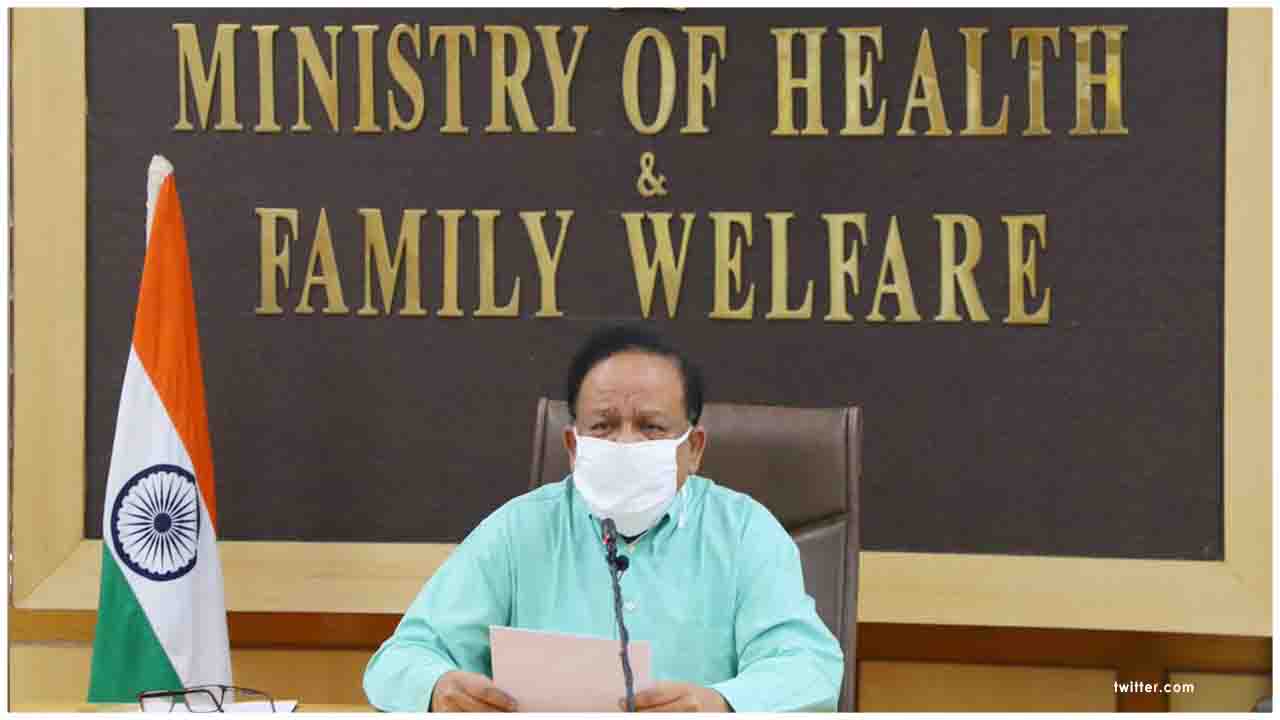
 "More than Rs 886 crores have been disbursed to TB patients as Direct Benefit Transfer for nutrition support under Nikshay Poshan Yojana"





Dr Harsh Vardhan, Union Minister for Health and Family Welfare digitally addressed the Platinum Jubilee of the National Conference of Tuberculosis and Chest Diseases (NATCON) yesterday.
At the outset, Dr Harsh Vardhan underlined the importance of multi-stakeholder coordination, prevention, and patient-centric quality care in making giant strides towards a “TB Free India”. Congratulating all members of the Tuberculosis Association of India for eight decades of selfless work since the organization was established in 1939, he said that the determination of India’s “TB Warriors” to fight tuberculosis during the COVID Pandemic was an inspiration to public health workers all across the country.
Detailing the significant advances under the leadership of Prime Minister Sh. Narendra Modi, the minister said, “Our Government has launched programs that are unprecedented in terms of their scale and reach. Declaration of TB as a notifiable disease in the country has improved the identification of TB cases and helped reduce the gap in identifying the missing cases in the country. One million missing cases were reported in 2017, it has been reduced to 2.4 lakh in 2019. With nearly 7 lakh TB patients being notified by the private sector in 2019, they too have been making huge contributions towards our efforts to End TB.”
In this respect, he also stated “We have undertaken a massive expansion of the diagnostic capacity and currently more than 21,000 microscopic centres are operational across the country. In the last two years, we have increased Rapid Molecular Testing devices (CBNAAT and Truenat) to more than 3000 devices with at least one in every district of the country. We now have at least one molecular diagnostic facility available in each district and are aiming to decentralize it down to the block level. We have incorporated the latest evidence-based and injection-free regimen for drug-resistant as well as drug-sensitive TB. We have also introduced newer drugs with more than 15,000 patients having received Bedaquiline and Delamanid containing regimen treatment from more than 700 DRTB centres spread across various parts of the country. Moreover, the programme is heavily investing in the capacity building of frontline workers to deliver quality care and for effective programme outcomes”. He also added that the use of Artificial Intelligence was explored in identifying and furthering care of TB patients.
Thereafter, he also explained the source of the success of the movement in targeting not only the disease but all co-morbidities and social determinants associated with the disease; “We are providing financial support to all TB patients under Nikshaya Poshan Yojana, a significant step to reduce out of pocket expenses for the patients and increase treatment adherence. In addition, we are providing free drugs and diagnostics to the TB patients availing treatment in the private sector. Nutritional support is extended to all TB patients for the entire duration of their treatment. Till date, more than Rs 886 crore has been disbursed to TB patients as Direct Benefit Transfer, for nutritional support.”
Speaking on the prevention of TB, he said that focus is being directed to Airborne Infection Control in Hospital wards and Out-patient waiting areas. The TB Program already has provisions of chemoprophylaxis against TB disease in pediatric contacts of TB patients and shall soon be expanding TB preventive treatment for the adult contacts of TB patients.
Detailing the hardships faced in preserving the gains in TB from the COVID pandemic, Dr Harsh Vardhan said, “Despite the challenges posed by COVID-19, TB programme has bounced back. We have introduced several mitigative measures including bi-directional screening for TB-COVID and convergence in case finding efforts for TB-COVID in the country”.
He noted that there is an 18 per cent and 12 per cent increase in TB case finding under National Tuberculosis Elimination Programme (NTEP) in 2018 and 2019 respectively. He said, “The government has immensely invested in TB research. The Indian Council of Medical Research and India Tuberculosis Research Consortium are jointly conducting next-generation research on diagnostics, therapeutics, vaccines, and other such critical areas, he added. He highlighted that the government is conducting the world’s largest National TB Prevalence Survey with a massive sample size of 500 thousand.”
Dr Harsh Vardhan ended his address by congratulating the organisers for bringing various medical professionals and experts in the field of Tuberculosis, Chest Diseases under one umbrella for scientific deliberations and share knowledge and advancements with the goal towards Eliminating TB from India by 2025. The three-day virtual event is being organised in Mahatma Gandhi Memorial Medical College, Indore and MP-TB Association under the aegis of Tuberculosis Association of India.






.jpeg)








.jpg)
.jpg)
.jpg)
.jpg)
.jpg)
.jpg)


.jpg)
.jpg)
.jpg)