 Thursday, November 19, 2026
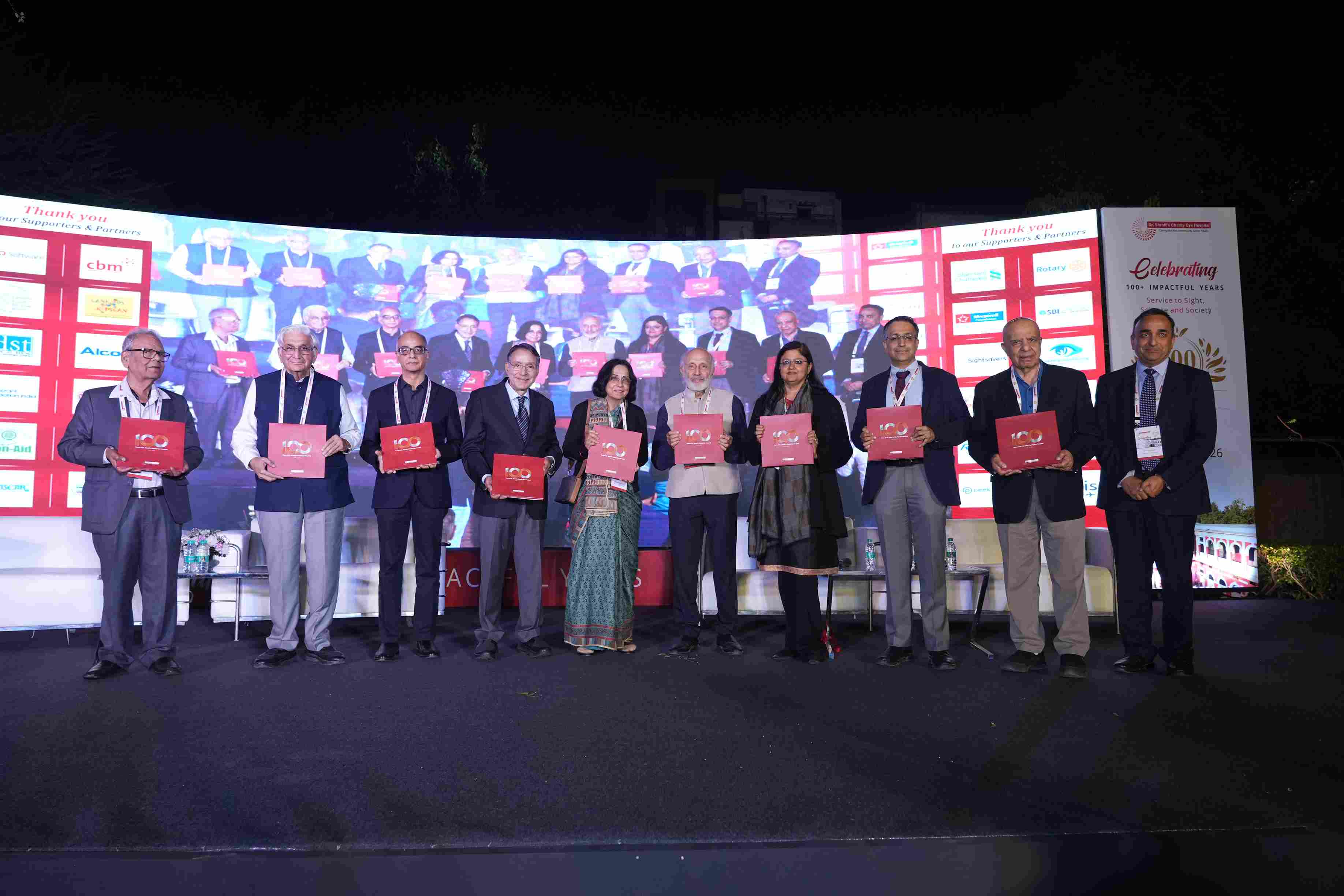
 Dr. Shroff’s Charity Eye Hospital (SCEH) marks 100 years of dedicated service to the nation, commemorating a century since the laying of its foundation stone in 1924, following the establishment of its charitable trust in 1922.





New Delhi, 20 February 2026: Dr. Shroff’s Charity Eye Hospital (SCEH) marks 100 years of dedicated service to the nation, commemorating a century since the laying of its foundation stone in 1924, following the establishment of its charitable trust in 1922. Founded by missionary ophthalmologist Dr. S. P. Shroff in a single room in Old Delhi’s Daryaganj, the institution has grown into a multi-dimensional eye care institute rooted in the principle that quality eye care must be accessible to all, irrespective of socio-economic background. Mandated to provide at least 50% of its surgical services free of cost to those unable to afford care, SCEH continues its commitment to eliminating avoidable blindness through equitable and high-quality care, a philosophy it has upheld while serving everyone from national leaders to daily wage workers with equal dignity.
To commemorate the milestone, the hospital unveiled a commemorative Coffee Table Book chronicling its journey of service, clinical excellence and innovation, while also outlining its roadmap for the coming decades focused on expanding access, strengthening training, advancing research and leveraging digital health, with increasing emphasis on preventive and community-based eye care.
Speaking on the legacy, Dr. Umang Mathur, CEO, Dr. Shroff’s Charity Eye Hospital, said,
“For 100 years, SCEH has stood as a beacon of conscious charity where excellence and empathy coexist. In a country where avoidable blindness remains a major public health challenge, access to timely and quality eye care must be treated not as a privilege but as a fundamental right. From a single-room clinic, SCEH has grown into a wide network of seven secondary centres and 114 vision centres, performing 80,000 surgeries, screening over 200,000 children annually, and reaching more than 2 million individuals through community outreach programmes supported by partners such as Standard Chartered Bank. Over the decades, SCEH has developed comprehensive subspecialty services across cornea, glaucoma, vitreo-retina, oculoplasty, ocular oncology, pediatric ophthalmology and neuro-ophthalmology, supported by a dedicated quality framework with over 31 measurable clinical indicators. As the burden of cataract, glaucoma, diabetic retinopathy, and childhood blindness rises, we remain committed to innovation, expansion, and the highest standards of care, ensuring no one is denied sight due to lack of means.”
The institution has consistently pioneered new frontiers, from early keratoplasty procedures and establishing one of North India’s largest eye banks, which has restored sight to thousands, to launching India’s first Children’s Eye Care Centre in partnership with Orbis International, alongside advanced stem cell research and global training collaborations. Its Children’s Eye Health initiatives provide free treatment for retinoblastoma and retinopathy of prematurity, while education and training programmes empower underprivileged youth, particularly women. International cataract elimination programmes in Botswana further reflect its global commitment to reducing avoidable blindness.
Adding on to the future roadmap He added, “With a robust leadership council and strengthened governance, SCEH 2.0 seeks not only to grow in scale but also to deepen its impact, ensuring that quality, compassion, and innovation remain central as the hospital steps into its second century. The next century will demand not only scale but smarter, technology-enabled care. By 2030, we aim to expand to 10 centres, 150 Vision centres and increase annual surgeries to 1.50 lakh per year. We will invest deeply in stem cell therapy, translational research, advanced training, and digital screening to tackle emerging challenges such as diabetic retinopathy, glaucoma, and childhood blindness. Our goal is clear i.e., universal, predictive, and preventive eye care so that avoidable blindness becomes rare in India, with services moving closer to communities rather than remaining hospital centric.”
As the institution steps into its second century, the centenary marks not just a milestone but a continuation of purpose shaped by people who built and sustained it over decades. Generations of clinicians, nurses, community workers and partners have carried forward this living legacy, combining clinical excellence with compassion. Every milestone celebrated today is rooted in that original promise of dignity, access and trust, where free and paying patients receive the same standard of care.





-23-300x250.png)





















