 Saturday, November 21, 2026
 Multidisciplinary ENT, Head & Neck Oncology–CTVS procedure delivers quick recovery with minimal scarring.





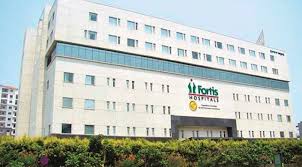
Bengaluru, 15 December 2025: What began as a routine gynecological health check-up turned into a life-saving discovery for a 30-year-old woman Sushma (name changed). During the diagnostic workup at Fortis Hospital Bannerghatta Road, doctors unexpectedly detected a large thyroid tumor, a rare and potentially dangerous condition known as a retrosternal goiter. In this case, the goiter was not merely a neck swelling: further imaging revealed that the thyroid had grown deep behind her breastbone (sternum), extending into the chest cavity. Despite the fact that she had only mild complaints , slight neck discomfort and occasional difficulty swallowing, further evaluation showed that the tumour had extended dangerously close to major blood vessels and the airway.
In a remarkable display of multi-disciplinary expertise and surgical precision, a combined team from ENT, Head & Neck Cancer and Cardiothoracic Surgery performed a minimally invasive neck and chest procedure to excise the tumour. The surgery, led by Dr. Susheen Dutt, Additional Director – ENT, Cochlear Implant & Skull Base Surgeon, and Dr. Abhishek S, Consultant – ENT, Head & Neck Cancer Surgeon, supported by CTVS team, was performed using a Video-Assisted Thoracoscopic Surgery (VATS) approach, allowing surgeons to access the tumour through a small neck incision and tiny chest holes, without opening the breastbone or making large external cuts.
This advanced, minimally invasive method resulted in reduced blood loss, minimal pain, quicker recovery, and significantly less scarring compared to traditional open chest surgery. Importantly, the left thyroid lobe was preserved, helping maintain normal calcium levels and thyroid hormone function post-surgery.
Dr. Susheen Dutt, Additional Director – ENT, Cochlear Implant & Skull Base Surgeon, Fortis Hospital, Bannerghatta Road, said, “Retrosternal goiters are uncommon and particularly challenging due to their deep extension into the chest and proximity to vital structures. Using a minimally invasive VATS-assisted approach, we were able to safely remove the tumour while preserving thyroid function and avoiding the risks associated with open chest surgery. Many complex head and neck conditions like this are often detected incidentally during unrelated evaluations, highlighting the importance of thorough diagnostic assessment.”
Dr. Sudarshan G T, Additional Director – Minimally Invasive and Robotic Cardiac Surgery, Fortis Hospital, Bannerghatta Road, added, “Chest-extending thyroid tumours traditionally require open thoracotomy, which involves significant pain, scarring, and longer recovery. By using VATS, we gained excellent access to the tumour through keyhole ports, enabling safe removal with minimal surgical trauma. This collaborative ENT, Head & Neck Oncology–CTVS approach represents the future of managing such complex neck-and-chest conditions, ensuring patient comfort and superior outcomes.”
Dr. Abhishek S, Consultant – ENT, Head & Neck Cancer Surgeon, Fortis Hospital, Bannerghatta Road, said, “Minimally invasive surgery is now the standard of care for thyroid and head-and-neck conditions where feasible. In Sushma’s (name changed) case, the tumour’s position behind the sternum made early detection crucial. Our combined approach allowed us to remove the mass completely while avoiding large external and bony cuts which increase the morbidity and functionality of the patient, especially in younger patients like this.”
Dr. Thejaswini Parthasarathy, Facility Director, Fortis Bannerghatta Road, said, “This case highlights the hospital’s strength in multidisciplinary minimally invasive surgery. By combining ENT, Head & Neck Oncology and CTVS expertise, we ensured a safe procedure, minimal complications, and a smooth recovery. Our focus remains on delivering patient-centered care using the most advanced surgical techniques.”
Sushma (name changed) recovered extremely well and was able to resume normal activities within four days. Postoperative tests confirmed that the tumour was benign, and her thyroid function remains normal.
Sharing her experience, Sushma said, “I was shocked when the tumour was discovered during a routine check-up, but the doctors guided me at every step. The surgery went smoothly, and I recovered faster than I expected with almost no visible scarring. I am grateful for the care and expertise at Fortis.”





-23-300x250.png)




















