Tuesday, October 27, 2026
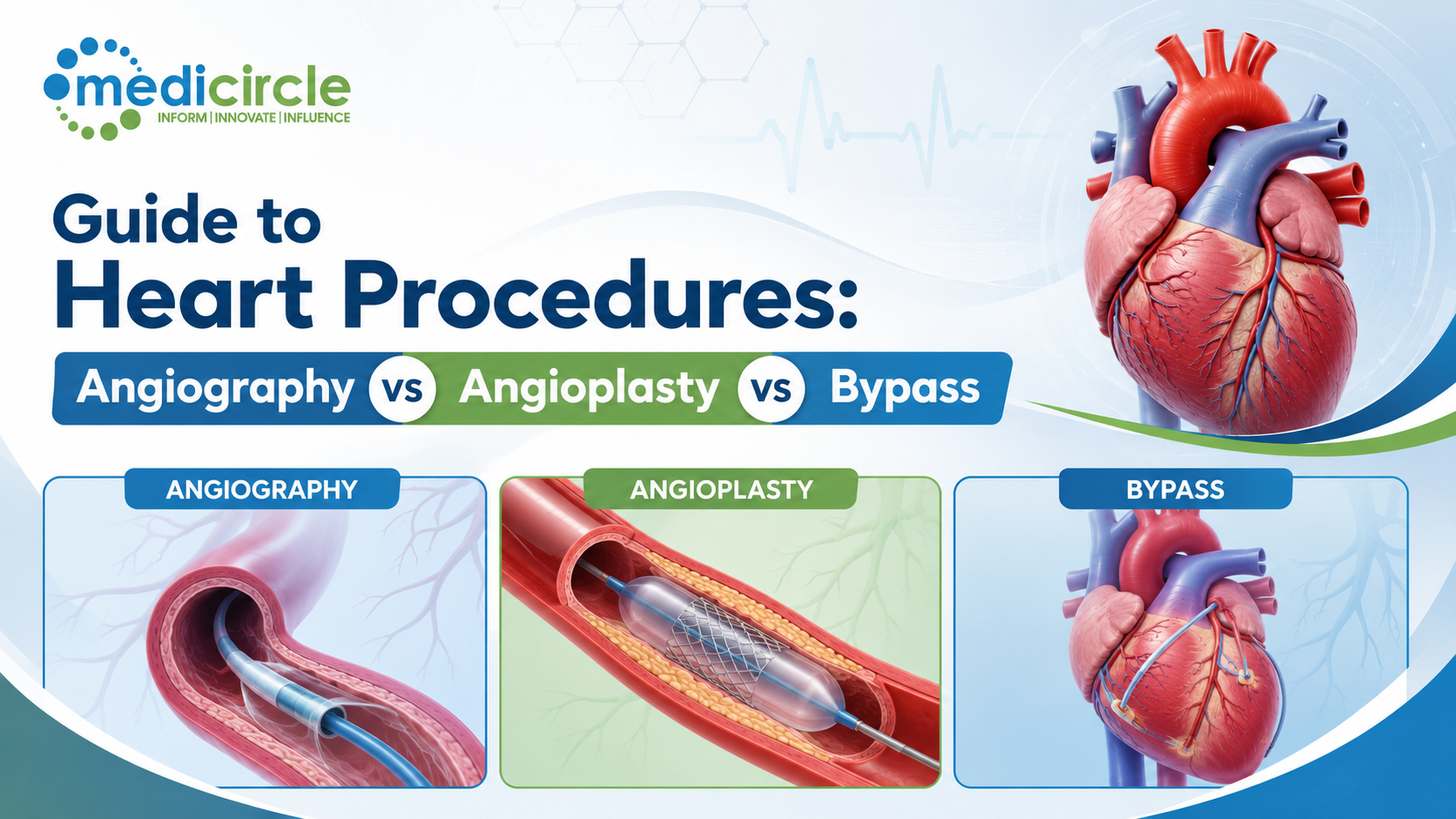
 Understanding angiography, angioplasty, and bypass surgery empowers patients. These procedures represent different phases of managing coronary artery disease, helping individuals clear blockages and safeguard long-term cardiovascular health.




Guide to Heart Procedures: Common Heart Interventions
Hearing a doctor discuss heart complications can instantly cause anxiety. Hospitals frequently use complex terminology that leaves patients and families feeling confused during already stressful moments. When terms like angiography, angioplasty, and bypass surgery are used interchangeably, it is easy to lose track of what actually happens during treatment.
These procedures are not interchangeable alternatives. Instead, they represent entirely different phases of identifying and managing coronary artery disease. This condition involves the buildup of plaque that restricts blood flow to the heart. Searching for a reliable heart blockage treatment becomes a priority when these symptoms arise. Understanding how these medical techniques work empowers you to ask the right questions and participate confidently in your healthcare decisions. Let us break down these three procedures into clear, straightforward language.
Understanding Angiography
Before a medical team can treat a cardiac issue, they need a clear visual map of the problem. This is where a coronary angiography comes into play. It is critical to remember that an angiography is strictly a diagnostic test, not a form of treatment. Think of it as a specialized photographic assessment to locate structural blockages in your circulatory pathways.
To perform this test, a cardiologist introduces a slender, highly flexible tube called a catheter into a blood vessel. They typically utilize an access point at the wrist or groin. The physician guides this tube through the circulatory system until it reaches the origin of the coronary arteries. Next, a safe, high-contrast medical dye is gently released through the catheter.
As the dye moves through the vessels, a specialized X-ray machine captures real-time imaging. Any accumulation of cholesterol, fats, or calcium stands out prominently on the monitor. This visual information shows the precise location and severity of any arterial narrowing. Because the insertion area is completely numbed with local anesthesia, you remain fully awake and comfortable throughout the brief process.
For patients planning this diagnostic step, understanding the angiography test price helps in financial preparation. In major Indian multi-specialty hospitals, the cost generally ranges from 12,000 to 50,000 Indian Rupees depending on the facility and city tier. This procedure provides your care team with the definitive roadmap required for your treatment plan.
Understanding Angioplasty
When an angiography reveals a localized blockage that is narrowing an artery but has not completely shut it down, the medical team will frequently recommend a heart angioplasty. While the previous test identified the location of the problem, an angioplasty is the minimally invasive procedure used to resolve it. This treatment immediately restores proper blood flow to the heart muscle.
This procedure uses a technique very similar to the diagnostic phase, but the catheter features a specialized tool at its tip. This tool is an incredibly tiny, deflated balloon. The cardiologist positions this balloon directly inside the restricted segment of the artery and inflates it gently. This action presses the soft plaque buildup flat against the arterial walls, which immediately widens the channel for blood transmission.
To prevent the artery from collapsing or narrowing again after the balloon is deflated and withdrawn, doctors place a permanent structural support called a heart stent. A stent is a small, flexible mesh tube that remains embedded in the vessel wall, keeping the channel propped open over the long term.
Families often research the angioplasty cost in India when evaluating their medical options. The typical expense ranges from 1,50,000 to 4,50,000 Indian Rupees, which varies based on the type of drug-eluting stents selected. Because this procedure avoids major surgical cuts, the physical strain is low, and most individuals are discharged within twenty-four to forty-eight hours.
Understanding Bypass Surgery
Sometimes, blockages are too dense, too extensive, or located in tricky areas where a balloon and stent cannot safely resolve the issue. If multiple major arteries are severely compromised, a more comprehensive, foundational strategy is necessary. In these circumstances, a cardiac surgeon will perform Coronary Artery Bypass Grafting, which is commonly referred to as heart bypass surgery or CABG.
Bypass surgery is a major surgical procedure performed under general anesthesia. Rather than attempting to push through or clear out the hardened blockages, this surgery establishes an entirely new, clear highway for blood to travel around the obstructed zone.
To build this necessary detour, the surgical team harvests a piece of healthy, redundant blood vessel from another area of your body. They may use a superficial vein from your leg or an artery from your chest wall. The surgeon carefully attaches one end of this healthy vessel above the blocked section and the other end below it. This method allows oxygen-rich blood to bypass the dangerous bottleneck entirely, ensuring the heart muscle receives the constant nourishment it needs to pump effectively.
When preparing for this intervention, understanding the baseline bypass surgery cost is an essential part of the planning process. In India, a conventional bypass operation typically ranges between 1,50,000 and 5,00,000 Indian Rupees. The total figure depends on hospital stay duration, specific surgical approaches, and required post-operative care.
Comparison of Features
Distinguishing between these procedures makes it much easier to understand the progression of cardiac care. Here is how they stack up across fundamental categories:
|
Feature |
Angiography |
Angioplasty |
Bypass Surgery |
|
Primary Goal |
Diagnosing and mapping blockages |
Opening single or localized blockages |
Rerouting blood around extensive blockages |
|
Approach |
Catheter-based method without incisions |
Catheter-based method without incisions |
Open-chest surgery requiring incisions |
|
Anesthesia Used |
Local numbing where patient is awake |
Local numbing where patient is awake |
General anesthesia where patient is asleep |
|
Typical Recovery |
Back to normal routines in one to two days |
Normal activities resumed within a week |
Full recovery takes several weeks at home |
Common Patient Questions
Questions About Angiography
Will I feel pain while the catheter moves during an angiography?
No. While you might feel a brief pinch or pressure where the local numbing medication is administered at the wrist or groin, the interior walls of your blood vessels do not have pain receptors. You will not feel the catheter navigating through your cardiovascular system toward your heart.
Questions About Angioplasty
Is it possible to get an angioplasty at the same time as an angiography?
Yes, this is a frequent medical practice. If the diagnostic angiography reveals a blockage that is perfectly suited for treatment with a stent, the cardiologist can instantly switch to an angioplasty. Combining them avoids making you undergo two separate sessions.
Questions About Bypass
How long can I expect a bypass graft to stay open?
Bypass grafts are highly durable, long-term interventions. Grafts constructed from chest arteries routinely remain functional and open for fifteen years or longer. Grafts utilizing leg veins often function well for ten to twelve years. Protecting these new pathways requires a commitment to prescribed heart medications and a balanced lifestyle.
Long-Term Heart Health
Discovering that you or a family member needs cardiac intervention can feel overwhelming, but these three medical procedures represent highly advanced, dependable options for managing cardiovascular disease. Whether your doctor recommends a diagnostic check via angiography, a localized fix with an angioplasty, or a comprehensive structural solution through bypass surgery, each approach is aimed at safeguarding your longevity.
Educating yourself on how these procedures work removes anxiety and helps you approach your treatment with confidence. By speaking openly with your cardiology team, understanding your recovery milestones, and adopting heart-healthy habits, you can look forward to a vibrant, active lifestyle for years to come.





-23-300x250.png)

.jpeg)

.jpg)
.jpg)
.jpg)
.jpg)
.jpg)
.jpg)
.jpg)
.jpg)
.jpg)