 Thursday, October 08, 2026
 Timely Emergency Intervention & Coordinated Cancer Care Restores Speech & Hope Without Major Surgery.




Nashik, May 26: In a dramatic life‑saving intervention, HCG Manavata Cancer Centre (HCGMCC) successfully treated a patient from Palghar who arrived unable to speak, struggling to breathe and on the verge of cardiac arrest. The 63 year old male had been suffering for three months with a severe airway obstruction caused by an undiagnosed laryngeal (voice box) cancer. He had also been experiencing excessive sweating and increasing distress because of low oxygen levels. Thanks to the swift action of the medical team, his airway was reopened within minutes and has now completed cancer treatment, regaining the ability to breathe, eat and speak without difficulty.
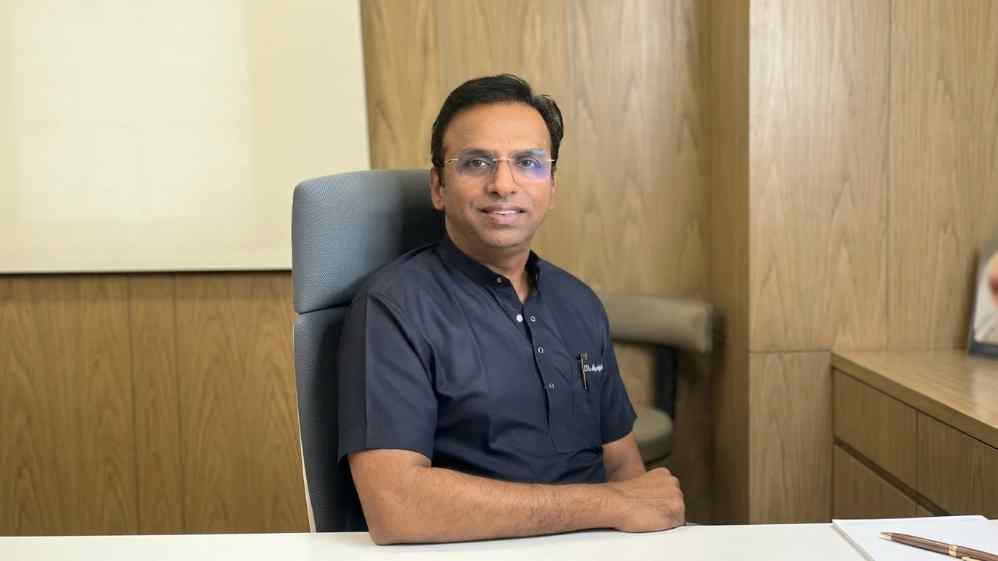
“The patient was in a critical state. We realized that his airway was almost completely blocked and an emergency surgery was the only way to open the windpipe. Just as the consultation was over, the patient suddenly lost consciousness as his oxygen levels plummeted further. The team had to act within a window of 3 to 5 minutes to prevent cardiac arrest. CPR was initiated immediately and the patient was rushed to the operation theatre. Since the airway was completely blocked by a large tumour, inserting a conventional breathing tube was impossible. So, the surgical team rapidly performed an emergency tracheostomy to restore breathing,” says Dr Sirshendu Roy, Surgical Oncologist, HCG Manavata Cancer Centre.
Tracheostomy is a surgical opening made directly into the windpipe to insert a tube into the airway. Following stabilization, a biopsy sample was obtained through endoscopy on the second day. A PET-CT scan later confirmed laryngeal cancer obstructing the airway. Within four days, the biopsy results validated the diagnosis, and the patient was immediately started on radiation therapy and chemotherapy.
“When the patient collapsed, every second mattered. The tumour had completely blocked the airway, making routine intubation impossible. The emergency tracheostomy helped us secure his breathing in time. Today, seeing him breathe, speak and respond positively to treatment is deeply satisfying for the entire team,” adds Dr Sirshendu Roy.
Over the next three weeks, the patient remained under close observation with the tracheostomy tube in place. As treatment began reducing the tumour burden and his breathing improved significantly, the tube was successfully removed. The patient was once again able to breathe comfortably, eat normally and speak without difficulty.
“The case is a powerful reminder that not every laryngeal cancer requires radical surgery. It highlights the importance of timely intervention and the strength of a coordinated multidisciplinary cancer care team. The real victory here was the team’s ability to act in those critical minutes, saving a life before treatment even began. Seeing the patient speak again, pain‑free, is why we do what we do,” concludes Prof Dr Raj Nagarkar, Chief of Surgical Oncology & Robotic Services and Managing Director - KIMS Manavata Hospitals, HCG Manavata Cancer Centre and Six Sigma, Nashik.






.jpeg)










.jpg)
.jpg)
.jpg)
.jpg)
.jpg)
.jpg)


.jpg)