 Friday, October 16, 2026
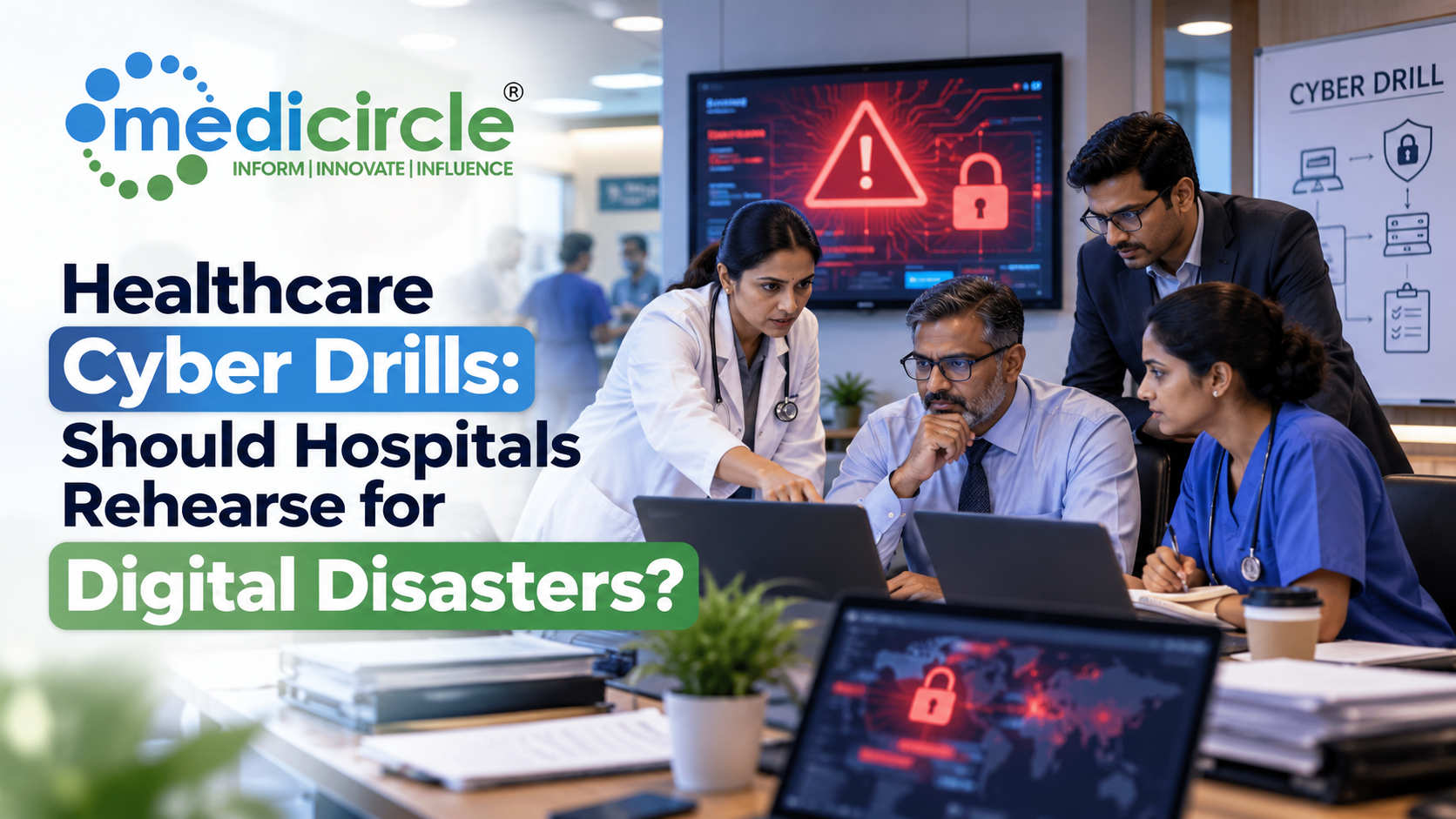
 Healthcare cyber drills help Indian hospitals rehearse digital disaster responses, protect patient safety, ensure care continuity, and meet evolving regulatory expectations around cybersecurity preparedness.





Introduction
Indian healthcare is undergoing one of the most significant digital transformations in its history. Millions of patient records are now stored electronically. Hospitals are connected to national health platforms through the Ayushman Bharat Digital Mission. Diagnostic reports travel across networks. Telemedicine consultations happen through apps. Billing, pharmacy, laboratory, and clinical systems are all integrated into hospital management software. This digital progress is remarkable, but it has also created a new kind of vulnerability that the sector has been slow to acknowledge.
Cyberattacks on hospitals are no longer rare global incidents reported from distant countries. They are happening in India, and they are growing in frequency. When a hospital's systems are compromised, the consequences are not merely financial or reputational. Patient care is disrupted. Surgeries can be delayed. Life-critical monitoring equipment can go offline. In some cases, the inability to access medical records during an attack has been directly linked to adverse patient outcomes.
In this context, one question deserves serious attention from every hospital administrator, healthcare IT leader, and policymaker in India: should hospitals be rehearsing for a digital disaster before one actually arrives? The answer, supported by global evidence and growing Indian experience, is yes. Healthcare cyber drills are not a luxury. They are a clinical and operational necessity.
Understanding Healthcare Cyber Drills and Why They Matter
A healthcare cyber drill is a structured simulation exercise in which a hospital or healthcare network rehearses its response to a cybersecurity incident. Much like a fire drill prepares staff to evacuate a building safely, a cyber drill prepares an institution to contain a digital attack, communicate internally and externally, and restore critical services with minimum disruption.
These drills can take several forms. Tabletop exercises bring key decision-makers into a room and walk them through a hypothetical attack scenario, asking them to discuss how they would respond at each stage. Functional drills simulate actual system behaviours, testing whether backup processes work and whether staff can operate without digital systems. Full-scale simulations replicate a real attack environment as closely as possible, sometimes involving ethical hackers who attempt to breach the institution's defences while teams respond in real time.
The goal of these exercises is not to expose a hospital to risk. It is to identify gaps in preparedness before an actual attack exploits them. Every gap found in a drill is a gap that would otherwise be found the hard way, during a real crisis, when patients are at risk and public trust is on the line.
The Cyber Threat Landscape Facing Indian Healthcare
India's healthcare sector has moved onto the radar of cybercriminals in a significant way. According to reports from CERT-In, the Indian Computer Emergency Response Team, the healthcare sector consistently ranks among the most targeted industries for cyberattacks in the country. Ransomware, in which attackers encrypt a hospital's data and demand payment for its release, is the most common form of attack. Phishing emails targeting hospital staff, vulnerabilities in connected medical devices, and poorly secured electronic health record systems are among the most common entry points.
The scale of digital health adoption in India makes this threat more acute. The Ayushman Bharat Digital Mission has enrolled hundreds of millions of Indians into a shared health identity system. ABHA numbers, health records, insurance data, and diagnostic information are increasingly centralised and interconnected. While this creates enormous benefits for care coordination and public health management, it also means that a successful breach can expose data at a scale that was simply not possible in the era of paper records.
Tier 1 hospitals in metro cities tend to have dedicated IT teams and some cybersecurity infrastructure in place. However, Tier 2 and Tier 3 city hospitals, many of which are rapidly digitalising through government schemes, often lack the security expertise, the budgets, and the institutional awareness needed to defend themselves effectively. This gap between digitalisation pace and security readiness is one of the most urgent issues facing Indian healthcare today.
What a Healthcare Cyber Drill Should Cover
For a cyber drill to be genuinely useful, it must go beyond testing whether firewalls are functioning. It needs to simulate the full human and institutional response to a crisis. There are several areas that every comprehensive healthcare cyber drill should address.
The first is incident detection and internal communication. Who notices that something is wrong? How quickly is the right person notified? What is the chain of command for declaring a cybersecurity emergency? Many hospitals find, during their first drill, that these basic questions have no clear answers. Detection can be delayed because the signs of an attack are not widely known among non-IT staff. Internal communication can break down because there is no pre-agreed protocol.
The second area is clinical continuity. When digital systems go down, how does the hospital continue to provide care? Can nurses access medication records manually? Can surgeons proceed safely without electronic imaging? Can the pharmacy dispense medications without the hospital management system? Hospitals that have never rehearsed manual backup protocols often discover, too late, that they either do not exist or have not been updated in years.
The third area is data recovery and system restoration. How long does it take to restore systems from backup? Are backups current? Are they stored securely off-site and isolated from the main network so they cannot be encrypted by ransomware? The recovery process is often slower and more complicated than IT teams expect, and a drill is the only way to find this out without the pressure of a real incident.
The fourth area is external communication. Who tells patients and families what is happening? Who communicates with regulators, including CERT-In, which mandates reporting of certain cybersecurity incidents within six hours? Who speaks to the media? These decisions, made under pressure without preparation, frequently make a crisis significantly worse.
The Regulatory and Accreditation Context in India
India is moving steadily toward a more structured regulatory environment for healthcare cybersecurity, though significant gaps remain. The Digital Personal Data Protection Act of 2023 places obligations on all entities that handle personal data, including hospitals, to implement appropriate safeguards and to report data breaches in a timely manner. CERT-In guidelines require hospitals and healthcare organisations operating critical information infrastructure to report incidents and maintain a level of cyber hygiene.
The NABH accreditation framework, which governs quality standards for hospitals in India, includes criteria related to information management and patient data security. While these criteria do not yet mandate specific cyber drills, hospitals seeking or renewing NABH accreditation are expected to demonstrate that they have systems in place to protect digital information.
The Ayushman Bharat Digital Mission has published security and privacy guidelines for health data, and entities participating in the ABDM ecosystem are expected to comply with defined security standards. As the ABDM ecosystem matures, regulatory expectations around cybersecurity preparedness are likely to strengthen, and hospitals that have already built a drill culture will be far better positioned to meet those expectations.
Building a Cyber Drill Culture in Indian Hospitals
Conducting a single cyber drill is valuable. Building an ongoing culture of cybersecurity rehearsal is transformational. Hospitals that treat cyber preparedness as a regular operational discipline, rather than a one-time compliance exercise, consistently demonstrate faster response times, lower financial losses, and better patient outcome protection during actual incidents.
Building this culture begins with leadership commitment. Hospital administrators and medical directors must understand that cybersecurity is a patient safety issue, not merely a technology issue. When leadership treats cyber preparedness with the same seriousness as infection control or fire safety, it changes how the entire institution thinks about digital risk.
Training must extend beyond the IT department. Clinical staff, administrative teams, and support personnel all play roles in a cyber incident. A ward nurse who knows how to recognise a phishing attempt and report it promptly can prevent an attack. A hospital administrator who knows how to switch to manual backup protocols can keep care flowing during an outage. These capabilities come only from regular training and realistic rehearsal.
Hospitals should also consider engaging external cybersecurity firms with healthcare expertise to conduct independent assessments and facilitate drills. Bringing in an outside perspective often reveals blind spots that internal teams overlook. Several Indian healthcare institutions have begun partnering with cybersecurity consultancies and academic institutions to run these exercises, and the results have consistently uncovered previously unknown vulnerabilities.
The Patient Safety Argument for Cyber Drills
There is a temptation to frame hospital cybersecurity as primarily a data privacy or financial risk management issue. It is both of those things, but it is also, fundamentally, a patient safety issue.
Studies from healthcare systems in the United States and Europe have documented cases in which ransomware attacks led to delays in emergency care, cancelled surgeries, and in at least a small number of documented cases, deaths that investigators linked to the inability to access medical records in time. India has not yet conducted systematic studies on this question, but there is no reason to believe that the relationship between cyber disruption and patient harm is any different here.
When a hospital cannot access a patient's allergy history, the risk of an adverse drug reaction increases. When a cardiac monitor cannot transmit data because a network is compromised, the risk of a missed arrhythmia increases. When an ambulance cannot communicate with a receiving hospital because its communication systems are down, response time suffers. These are not hypothetical scenarios. They are documented consequences of cyber incidents in hospital settings.
Cyber drills reduce these risks by ensuring that hospitals know exactly what to do when their digital systems fail, and that they can do it quickly enough to protect the patients in their care.
Frequently Asked Questions
Q1: What is a healthcare cyber drill?
A healthcare cyber drill is a simulated cybersecurity exercise in which hospitals and healthcare institutions rehearse their response to digital threats such as ransomware attacks, data breaches, and system outages. These drills test staff readiness, communication protocols, and recovery procedures without exposing actual patient data to risk.
Q2: Why are cyber drills important for Indian hospitals?
Indian hospitals are rapidly digitising through initiatives such as the Ayushman Bharat Digital Mission, making them increasingly vulnerable to cyberattacks. Cyber drills help hospitals identify weaknesses in their digital infrastructure, train staff to respond quickly, and reduce the risk of prolonged service disruptions that can endanger patient lives.
Q3: How often should hospitals conduct cyber drills?
Security experts recommend that hospitals conduct cyber drills at least twice a year. Institutions handling large volumes of sensitive patient data or connected to national digital health platforms should consider quarterly drills, especially as cyber threats continue to evolve in complexity and frequency.
Q4: What departments should participate in a hospital cyber drill?
A comprehensive cyber drill must involve the IT department, hospital administration, clinical staff, the legal and compliance team, the communications team, and third-party technology vendors. Cybersecurity is not limited to the IT function and requires coordinated preparation across all hospital departments.
Q5: Is there a regulatory framework in India for healthcare cybersecurity drills?
India does not yet have a dedicated mandatory regulation specifically for healthcare cyber drills. However, the CERT-In guidelines, the Digital Personal Data Protection Act 2023, and ABDM security standards increasingly emphasise cybersecurity preparedness for health data handlers. NABH accreditation criteria also cover aspects of information security management.
Resources
- Indian Computer Emergency Response Team (CERT-In): Government of India cybersecurity authority responsible for issuing guidelines, incident response frameworks, and threat advisories applicable to healthcare and other critical sectors.
- Ayushman Bharat Digital Mission (ABDM): Official national digital health initiative with published security and privacy guidelines for health data handlers and entities participating in the ABDM ecosystem.
- National Accreditation Board for Hospitals and Healthcare Providers (NABH): Accreditation body that sets quality and safety standards for Indian hospitals, including criteria related to information security and patient data management.
- Ministry of Electronics and Information Technology (MeitY): Central government ministry overseeing India's digital infrastructure policy, including the Digital Personal Data Protection Act 2023 and its implementation guidelines.
- World Health Organization (WHO) Global Observatory on eHealth: International resource providing evidence-based guidance on health information systems security, digital health risk management, and best practices in healthcare cybersecurity.
Interlinking Keywords
Hospital cybersecurity India, healthcare data breach, ABDM security, digital health India, patient data protection, ransomware in hospitals, NABH accreditation, cyber incident response healthcare, health data privacy India, hospital IT security
Last reviewed by:
Dr. Manthan Tripathi, Medicircle Editorial and Medical Advisory Team on 14, October 2026.
Disclaimer
This article is published for general awareness and informational purposes only. It does not constitute legal, regulatory, or cybersecurity advisory guidance. Hospitals and healthcare institutions should consult qualified cybersecurity professionals, legal advisors, and relevant regulatory authorities, including CERT-In and MeitY, before designing or implementing cybersecurity programmes, incident response plans, or data protection frameworks. Medicircle does not endorse any specific cybersecurity vendor, tool, or service referenced in the context of this topic.





-23-300x250.png)

.jpeg)


.jpg)
.jpg)
.jpg)
.jpg)
.jpg)
.jpg)
.jpg)

.jpg)
.jpg)
.jpg)
.jpg)


.jpg)
.jpg)