 Monday, October 05, 2026
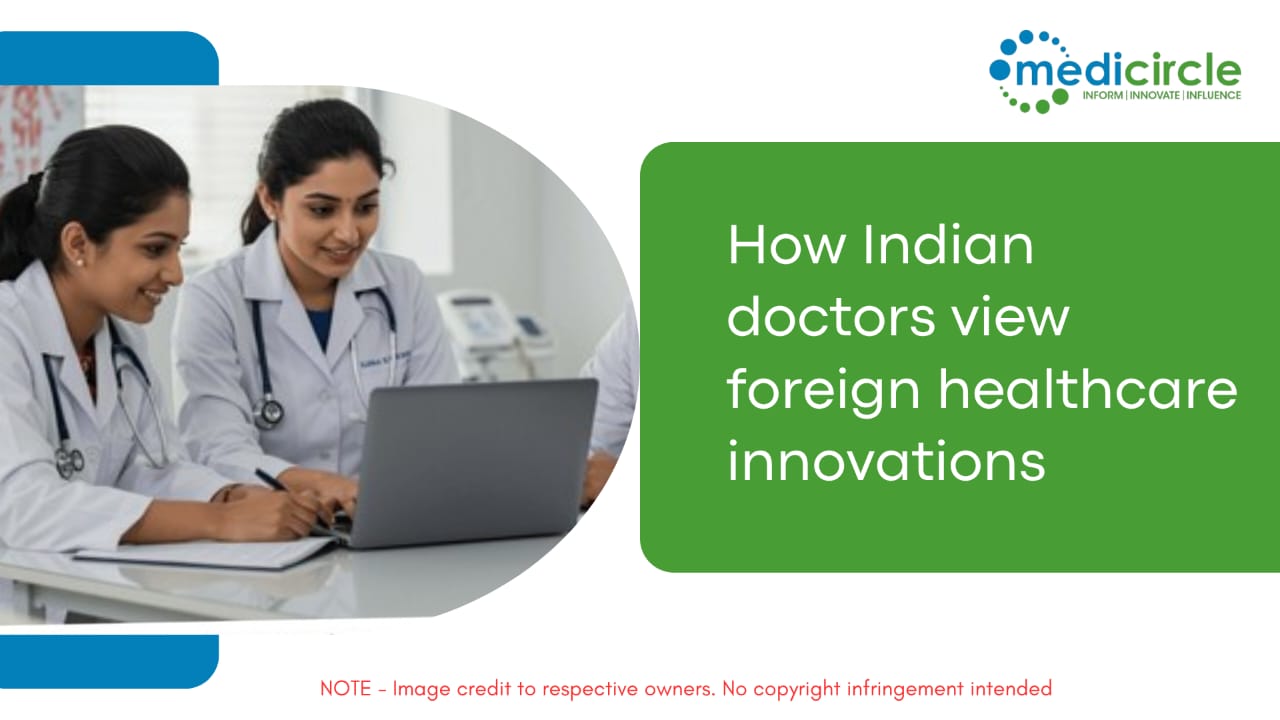
 Indian doctors assess foreign medical innovations with practicality and context, ensuring that technologies suit local infrastructure, patient diversity and healthcare realities rather than adopting them blindly.




Walking through the corridors of any major Indian hospital reveals a fascinating reality. In one room, you might find a decades old examination technique being expertly practiced, while in the next, a surgeon operates using the world’s most advanced robotic system. This contrast lies at the heart of how Indian medical professionals approach foreign healthcare innovations; not with blind enthusiasm, but with thoughtful consideration.
These doctors operate within a healthcare system of immense scale and diversity. A technology that proves successful in a controlled European setting must withstand the demanding environment of a crowded urban Indian hospital or adapt to the resource limitations of a rural clinic. The question is never simply “Does this work?” but rather “Does this work for our patients, in our reality?”
Practicality over prestige:
If there is one unifying principle in how Indian doctors assess foreign medical technology, it is an unwavering focus on practical application. A revolutionary imaging machine that requires consistent temperature control and specialized maintenance might deliver exceptional results in a Tokyo research hospital. That same machine could become impractical in an Indian district hospital facing frequent power fluctuations and limited technical support.
This practical mindset stems from daily practice within a system serving over a billion people. India has approximately 0.7 doctors for every 1,000 people, a figure that falls significantly short of World Health Organization recommendations. When you are managing patient volumes that would overwhelm many Western healthcare systems, an innovation’s true value is not measured by its sophistication alone. A tool that helps accurately assess more patients in less time holds greater appeal than one that offers marginal improvements under ideal conditions.
Medical professionals here often speak about “appropriate technology.” This concept prioritizes innovations that deliver meaningful benefits without creating unsustainable dependencies. As one senior physician noted during a healthcare conference, “We cannot simply transplant solutions. We must cultivate them in our own soil, understanding our unique challenges and strengths.”
Human connection:
Another significant aspect of this evaluation process involves the human element. Indian doctors consistently emphasize that technology should enhance, not replace the healing relationship between doctor and patient. A recent survey of medical professionals across the country found overwhelming support for technologies that assist rather than automate clinical decision making.
There is particular interest in innovations that help standardize care quality across different settings. A cardiologist in a metropolitan hospital might use advanced software to plan complex procedures, while a general practitioner in a smaller town could benefit from decision support systems that help manage diverse patient presentations. In both cases, the technology serves to augment the doctor’s expertise rather than supplant it.
This perspective explains why training and skill development receive such emphasis. Doctors frequently point out that the most advanced stent or surgical tool is only as effective as the hands wielding it. Successful technology adoption requires comprehensive training programs that build genuine proficiency rather than superficial familiarity.
Building true partnerships:
Perhaps the most encouraging development in recent years involves the evolving nature of innovation adoption. Indian doctors are increasingly moving from passive reception of foreign technology to active collaboration in its development and adaptation.
Healthcare providers are now more likely to engage with international manufacturers early in the development process, providing feedback specifically relevant to Indian healthcare settings. This collaborative approach has led to modifications in equipment design, software interfaces and service models that make technologies more suitable for diverse Indian hospitals.
This shift reflects a broader confidence in Indian medical expertise. Doctors here have accumulated vast clinical experience managing conditions and patient volumes rarely encountered elsewhere. This experience represents a valuable contribution to global medical innovation, ensuring that new technologies benefit from insights gained in one of the world’s most complex healthcare environments.
Looking forward together:
The relationship between Indian doctors and foreign healthcare innovation continues to mature. What emerges is neither wholesale rejection nor uncritical acceptance, but rather a thoughtful engagement grounded in clinical reality.
The most respected innovations increasingly are those developed with input from Indian practitioners from the outset. These solutions typically demonstrate understanding of varied infrastructure conditions, diverse patient populations and the need for cost-effective care delivery.
As healthcare continues its global evolution, the perspective of Indian doctors offers valuable guidance. The best medical technology does not necessarily emerge from the most advanced laboratories, but from the most thoughtful collaborations; those that combine technical excellence with deep understanding of the human contexts where healing truly occurs.
Medicircle.in connects readers with reliable health information and brings international medical innovations to Indian audiences, always considering what truly serves patients and practitioners in the Indian healthcare ecosystem.






.jpeg)
.jpg)
.jpg)
.jpg)
.jpg)
.jpg)
.jpg)


.jpeg)
.jpeg)

.png)