 Thursday, October 08, 2026
 Both knee replacements completed within 48 hours for advanced osteoarthritis in a medically complex patient.




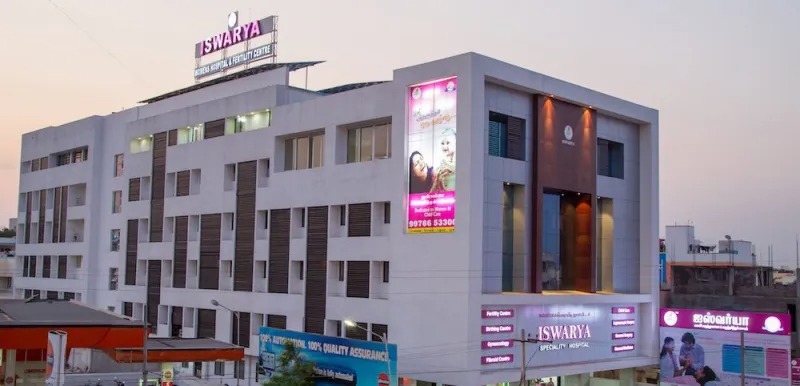
Chennai, December 24th , 2025: In a significant and technically challenging orthopaedic achievement, Iswarya Hospital, OMR Chennai, has successfully performed robotic-assisted total knee replacement on both knees of a patient suffering from advanced osteoarthritis and worsening mobility. The left knee procedure was performed first, followed by the right knee using the advanced Stryker MAKO Robotic System. Both surgeries were performed by Dr. A N Vivek, Consultant Orthopaedic Surgeon, with support from the multidisciplinary team.
The 63-year-old patient resident of Chennai had been experiencing persistent bilateral knee pain for over 12 months, accompanied by stiffness, crepitus, medial joint line tenderness, and restricted movement, all of which severely impacted daily functioning. The case was further complicated by long-standing diabetes mellitus, hypertension, hypothyroidism, and dyslipidemia, factors that made precise surgical planning essential. Despite prolonged conservative treatment, the patient’s symptoms continued to worsen, necessitating surgical intervention.
The patient visited Iswarya hospital for the consultation in September 2025. Dr. A N Vivek, Consultant Orthopaedic Surgeon after evaluating the patient's condition, determined that a robotic-assisted approach would deliver the safest and most accurate outcome. The MAKO system’s patient-specific 3D planning and controlled bone resection capability were especially beneficial in ensuring optimal implant alignment and minimal soft-tissue trauma.
The procedures were completed under spinal–epidural anaesthesia. Each knee was approached through a medial parapatellar incision, followed by soft-tissue dissection and precise anatomical registration on the MAKO platform. The robotic arm guided the femoral and tibial bone cuts with millimetre accuracy, enabling balanced gap restoration and precise alignment. Trial components were placed to assess joint stability and motion before the final cemented implants were fixed. The surgeries were completed smoothly and without complications.
“Robotic technology offers a level of precision that is especially valuable in medically complex patients,” said Dr. Vivek, Consultant Orthopaedic Surgeon. “Performing sequential knee replacements within 48 hours requires a combination of careful planning and dependable surgical accuracy. The MAKO system allows controlled bone resections, reduced soft-tissue disturbance, and improved component positioning, all of which contribute to faster recovery and more natural joint function. We are extremely pleased with the patient’s progress. “added Dr Vivek.
The post-operative recovery was outstanding. The patient was mobilised within 24 hours of surgery, walking with minimal discomfort and no external support. The controlled dissection and reduced bone resection afforded by robotic surgery resulted in lower analgesic requirements and eliminated the need for blood transfusion, key advantages over
conventional knee replacement. Physiotherapy was initiated immediately, symptoms improved steadily, and the patient was discharged in a hemodynamically stable and well-mobilised condition, with instructions for wound care and structured rehabilitation.
“This milestone reinforces our commitment to accuracy-driven healthcare,” said Dr. S. Rajasundaram, CEO of Iswarya Hospital. “Robotic knee replacement significantly improves patient outcomes by enhancing precision and reducing recovery time. We are proud to make such advanced technology accessible to our community.”
Dr. Arun Muthuvel, Managing Director of Iswarya Hospital, added, “Innovation must directly benefit the patient. The successful completion of bilateral robotic knee replacement within such a short interval reflects our clinical capability and our dedication to world-class surgical excellence. We will continue expanding advanced, patient-centric services across specialties.”
The hospital noted that this achievement aligns with Iswarya Hospital’s broader mission to expand precision-led orthopaedic and multispecialty care, powered by advanced technologies and a dedicated clinical team.






.jpeg)










.jpg)
.jpg)
.jpg)
.jpg)
.jpg)
.jpg)


.jpg)