Monday, November 02, 2026
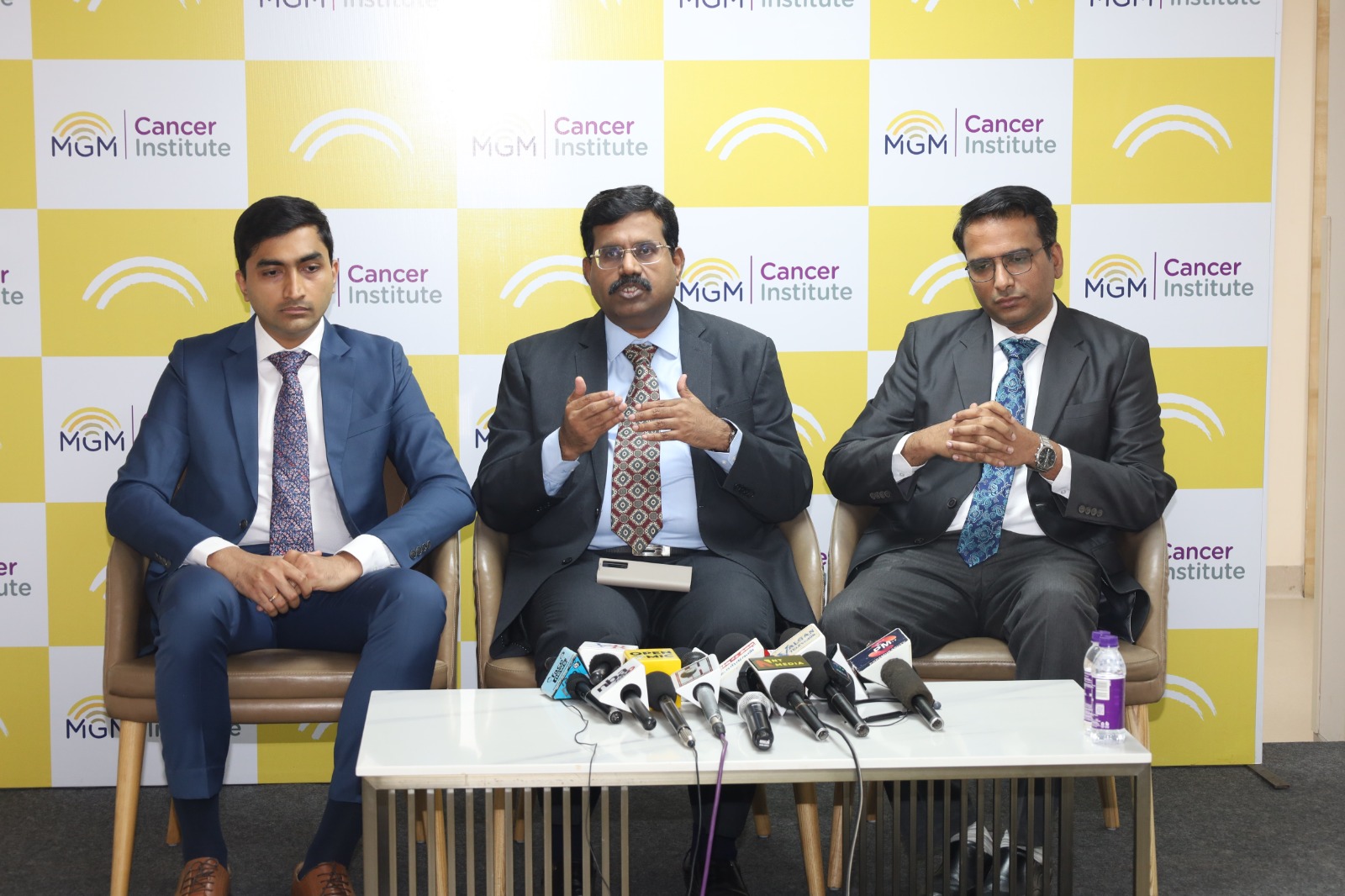
 The procedure is World’s only documented successful TCR alpha beta depleted haploidentical bone marrow transplant in a child with Bloom Syndrome.





👉 Order now at BestCheapPills and discover exclusive discounts for registeredcustomers!
Chennai, 20th August 2025: Setting a new milestone in pediatric transplantation, MGM Cancer Institute has saved the life of a 12-year-old girl with Bloom Syndrome, a rare genetic disorder, by performing a complex procedure known as TCR alpha beta depleted haploidentical bone marrow transplant (BMT), using life-saving stem cells from her younger brother. This marks the first documented success of such a transplant in a pediatric patient anywhere in the world.
Bloom Syndrome can lead to life-threatening complications, primarily due to cancer and bone marrow failure. The patient is from Chennai, was diagnosed with this syndrome at the age of 10. Her condition was further complicated by Monosomy 7, a chromosomal abnormality involving the loss of one copy of chromosome 7, and Myelodysplastic Syndrome (MDS), a disorder in which the bone marrow fails to produce healthy blood cells. There was an imminent risk of MDS progressing to leukemia, a type of blood cancer in which abnormal white blood cells multiply uncontrollably. Hence a bone marrow transplant became critical and urgent.
However, finding a suitable donor for the girl’s stem cell transplant posed a significant challenge. There were no fully matched family or unrelated donors available, and both parents were identified as carriers of the genetic mutation. The medical team, after careful genetic evaluation, selected her younger brother as the donor, as he did not carry the mutation. However, the boy’s younger age and lower body weight presented another hurdle. The standard stem cell collection protocol had to be meticulously adapted to ensure that an adequate dose of stem cells could be harvested without compromising his safety. At the same time, the conditioning protocol for the patient had to be specially modified, as children with Bloom Syndrome are highly sensitive to chemotherapy and cannot tolerate standard high-dose regimens. These customisations demanded careful planning, precision, and a multidisciplinary approach to ensure the best possible outcome for both siblings.
The BMT team was headed by Dr. M. Deenadayalan, HOD and Clinical Lead, Department of Paediatric Haematology, Oncology, Blood and Marrow Transplantation. In his comments, Dr. Deenadayalan, said, “Bloom Syndrome is a rare genetic disorder, and in this case, it was further complicated by Monosomy 7 and Myelodysplastic Syndrome, a combination so uncommon that only a handful of such cases have been reported in the world. We are happy that we could save the life of a young girl facing this exceptionally rare and complex condition. She has now crossed one-year post-transplant with full immunological recovery and 100% donor chimerism, meaning all her blood cells are being produced by the donor’s healthy stem cells. This is a key marker of transplant success. To our knowledge, this is world’s only documented successful TCR alpha beta depleted haploidentical bone marrow transplant in a child with Bloom Syndrome. We are proud of our team’s expertise in carrying out one of the most challenging bone marrow transplants ever attempted.”
The patient is now attending school regularly and participating in daily activities like other children her age. However, she will continue to be under regular medical follow-up to monitor her long-term health. Her case has been published in Pediatric Blood and Cancer, one of the world’s leading peer-reviewed journals in pediatric hematology and oncology, for its global clinical significance.





-23-300x250.png)