 Friday, October 16, 2026
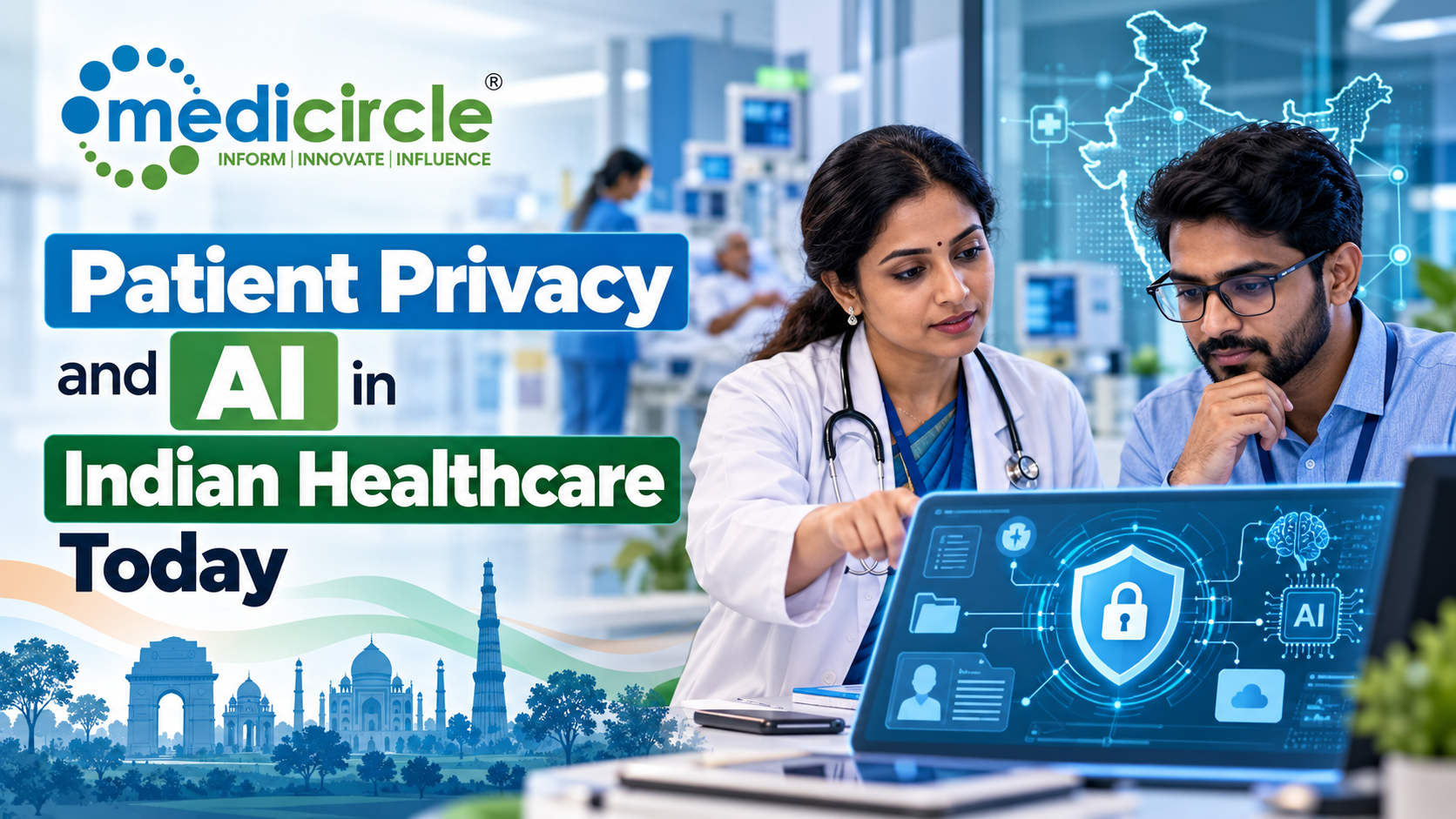
 AI-powered healthcare in India offers significant clinical benefits while raising urgent patient privacy concerns that demand stronger regulation, informed consent practices, and robust cybersecurity across all healthcare institutions.




Introduction
Artificial intelligence is no longer a distant concept in Indian healthcare. It is actively being used today, inside radiology departments, pathology labs, telemedicine platforms, hospital management systems, and even pharmacy chains. AI is helping doctors detect diseases earlier, reducing diagnostic errors, and enabling faster treatment decisions for millions of patients across the country.
However, this progress comes with a responsibility that the Indian healthcare system is still learning to meet fully. When AI systems process patient data, they are not simply reading numbers on a screen. They are accessing deeply personal information: a person's medical history, mental health records, genetic predispositions, chronic conditions, and lifestyle data. This information, if mishandled, can cause harm that goes far beyond a data breach. It can affect a person's employment prospects, insurance coverage, family relationships, and personal dignity.
Patient privacy in the context of AI-powered healthcare is not a technical problem alone. It is a human rights issue, a public health issue, and a matter of institutional trust. For India, where the digital health ecosystem is growing rapidly through initiatives like the Ayushman Bharat Digital Mission, getting this right is not optional.
Understanding the Intersection of AI and Patient Data in India
To understand why patient privacy is at risk, it is important to first understand how AI systems in healthcare actually work and what kind of data they depend on.
AI algorithms learn from large datasets. In the healthcare context, this means training models on thousands or even millions of patient records, including diagnostic images, clinical notes, lab reports, genomic data, and treatment outcomes. The more comprehensive the data, the more accurate the AI model tends to become. This creates a built-in pressure within the technology itself to collect as much patient information as possible.
India's healthcare AI landscape includes both domestic health technology companies and global players operating within the country. Hospitals in metropolitan cities like Mumbai, Delhi, Bengaluru, Hyderabad, and Chennai have adopted AI tools for radiology, cardiology, ophthalmology, and pathology. Telemedicine platforms that expanded rapidly during and after the COVID-19 pandemic collect real-time patient data from users across Tier 1, Tier 2, and Tier 3 cities alike.
The Ayushman Bharat Digital Mission, which aims to create a unified digital health ecosystem across India, assigns every citizen a unique Health ID linked to their medical records. While this improves care coordination dramatically, it also means that a single point of failure in data security could expose the health records of hundreds of millions of Indians.
Key Privacy Risks When AI Enters the Clinical Space
The integration of AI into clinical workflows introduces privacy risks that are distinct from those seen in traditional paper-based or even basic electronic health record systems.
One of the most significant risks is unauthorized data access. AI platforms often require integration with hospital information systems, which means third-party vendors may have access to patient records as part of their service agreements. If these vendors do not maintain adequate data security practices, patient information can be exposed without the knowledge or consent of either the hospital or the patient.
Another risk is algorithmic bias combined with data leakage. Some AI systems trained on global datasets may not perform equitably across India's diverse patient population. When these systems make inaccurate predictions, and those predictions are tied to a patient's permanent digital health record, the consequences can follow that patient across multiple healthcare providers.
Re-identification is an especially concerning risk in the Indian context. Many AI companies anonymize patient data before using it for model training, but research has shown repeatedly that anonymized datasets can often be re-identified using publicly available information. In a country like India, where large portions of the population live in relatively small and closely connected communities, re-identification can expose sensitive health conditions such as HIV status, mental health diagnoses, or reproductive health information to unwanted scrutiny.
Data localization and cross-border data transfers are also a concern. Several healthtech platforms operating in India store or process data on servers located outside the country. This raises questions about which jurisdiction's laws apply if a breach occurs and what rights Indian patients have in seeking accountability.
India's Regulatory Framework and Where Gaps Remain
India has made meaningful progress in building a legal and regulatory foundation for health data privacy, but significant gaps remain.
The Digital Personal Data Protection Act 2023 is India's primary legislation governing personal data. It establishes obligations for data fiduciaries, requires explicit consent for data processing, gives individuals the right to access and correct their data, and creates a framework for handling data breaches. Health data is categorized as sensitive personal data, which means it attracts additional protections under this law.
The Ayushman Bharat Digital Mission operates under its own Health Data Management Policy, which outlines consent-based data sharing principles, patient rights over health records, and technical standards for interoperability. Institutions operating within the ABDM framework are expected to follow these standards.
However, several challenges remain. India does not yet have a dedicated health data protection law comparable to the Health Insurance Portability and Accountability Act in the United States or the General Data Protection Regulation in the European Union. The enforcement mechanisms under the Digital Personal Data Protection Act are still being operationalized. Healthcare providers, particularly smaller clinics and hospitals in Tier 2 and Tier 3 cities, often lack the technical expertise to implement the required data governance practices even when they are willing to comply.
The National Medical Commission and the Ministry of Health and Family Welfare have issued guidelines on digital health and telemedicine, but specific AI governance guidelines for healthcare remain in early stages of development. This regulatory gap means that AI companies and hospital systems currently operate with considerable discretion in how they handle patient data.
The Consent Challenge in AI-Driven Healthcare
Informed consent has always been a cornerstone of ethical medical practice in India. However, the way AI systems collect, process, and use patient data has made traditional consent models inadequate in many situations.
When a patient signs a general consent form at a hospital, they may not be aware that their data will be used to train an AI model, shared with a third-party analytics company, or stored on a cloud server located in another country. General consent forms written in English are often inaccessible to patients who speak only regional languages, raising serious concerns about whether consent is genuinely informed.
The concept of dynamic and granular consent is gaining recognition globally as a more appropriate approach for digital health contexts. Under this model, patients are given the option to consent separately to different uses of their data: clinical care, quality improvement, research, and AI model training, for example. India's ABDM framework incorporates consent manager functionality, which is a step in this direction, but adoption across the healthcare ecosystem remains incomplete.
Cybersecurity Threats Targeting Healthcare Data in India
India's healthcare sector has become an increasingly attractive target for cybercriminals, and the growing volume of valuable patient data held in digital systems is a primary reason.
Ransomware attacks on hospitals have been reported across multiple Indian cities. In these incidents, hackers encrypt a hospital's entire system and demand payment to restore access. Beyond the financial cost, these attacks can delay critical patient care and expose sensitive records. The All India Institute of Medical Sciences in New Delhi experienced a serious cyberattack in late 2022 that disrupted services for several weeks, highlighting the real-world consequences of poor cybersecurity in a high-stakes medical environment.
The threat landscape includes:
- Phishing attacks targeting hospital staff to gain system access
- Exploitation of outdated software in medical devices and hospital systems
- Insider threats from employees with access to patient records
- Vulnerabilities in third-party AI vendor integrations
- Insecure APIs connecting different healthcare applications
Smaller hospitals and clinics, which form the backbone of India's primary healthcare network, are particularly vulnerable. Many lack dedicated IT security teams, use outdated systems, and have not conducted basic security audits. As AI tools are introduced into these environments without accompanying security upgrades, the risk to patient data increases significantly.
What Responsible AI in Healthcare Should Look Like
Building a trustworthy AI-driven healthcare ecosystem in India requires a multi-layered approach that goes beyond compliance checkboxes.
Healthcare institutions adopting AI tools should conduct thorough due diligence on their technology vendors, including reviewing data handling practices, security certifications, and contractual obligations around data use. Data minimization, the practice of collecting only the data that is strictly necessary for a specific purpose, should be a guiding principle. Patient data should be encrypted both in transit and at rest. Access controls should ensure that only authorized personnel can view sensitive information.
From a regulatory standpoint, India needs a dedicated AI governance framework for healthcare that addresses algorithmic accountability, mandatory breach notification timelines, requirements for explainability in clinical AI decisions, and clear liability standards when AI errors harm patients.
Medical education and professional training must also evolve. Doctors, nurses, hospital administrators, and health technology professionals need to understand not just how to use AI tools, but also their ethical and privacy implications. The National Medical Commission has an important role to play in incorporating data ethics and digital health literacy into medical curricula.
Platforms like Medicircle, which serve as trusted bridges between healthcare experts and the public, have an equally important responsibility in this space. By bringing expert voices, regulatory updates, and patient awareness content together in one credible ecosystem, platforms focused on responsible healthcare communication help build the digital trust that India's healthcare AI journey will depend on.
Frequently Asked Questions
Q1: What patient data is collected by AI systems in Indian hospitals?
AI systems in Indian hospitals typically collect electronic health records, diagnostic imaging data, prescription histories, lab results, and in some cases biometric information such as facial recognition for patient identification. The extent of data collection depends on the technology deployed and the hospital's digital infrastructure.
Q2: Is patient data in India protected by law?
Yes. India's Digital Personal Data Protection Act 2023 provides a legal framework for how personal data, including health data, must be collected, stored, and used. Patients have the right to consent, the right to access their data, and the right to seek correction or deletion of inaccurate records.
Q3: How does the Ayushman Bharat Digital Mission relate to patient privacy?
The Ayushman Bharat Digital Mission creates a unique Health ID for every citizen, enabling digital health records to be stored and shared across healthcare providers. While this improves care coordination, it also makes consent management, data access controls, and cybersecurity safeguards critically important to protect patient privacy.
Q4: What are the biggest cybersecurity risks in AI-powered healthcare in India?
The major risks include ransomware attacks on hospital networks, unauthorized access to electronic health records, data breaches through third-party AI vendors, and inadequate encryption of sensitive patient information. Smaller hospitals and clinics in Tier 2 and Tier 3 cities face higher vulnerability due to limited IT resources.
Q5: What can patients in India do to protect their own health data?
Patients should always ask healthcare providers how their data will be used before consenting to digital services. They should avoid sharing health information on unverified apps, regularly review their Health ID records under ABDM, report unauthorized use of their data to the relevant authority, and stay informed about their rights under India's data protection laws.
Resources
- Ayushman Bharat Digital Mission (ABDM): Official platform for India's national digital health ecosystem and Health ID management, abdm.gov.in.
- Ministry of Health and Family Welfare, Government of India: Policy documents, telemedicine guidelines, and digital health frameworks, mohfw.gov.in.
- Ministry of Electronics and Information Technology: Full text of the Digital Personal Data Protection Act 2023 and related rules, meity.gov.in.
- World Health Organization: Global guidance on ethics and governance of artificial intelligence in health, who.int/publications/i/item/9789240029200.
- Indian Computer Emergency Response Team (CERT-In): Cybersecurity advisories and incident reporting for Indian organizations including healthcare entities, cert-in.org.in.
Interlinking Keywords
patient data privacy India, AI in Indian healthcare, digital health records India, Ayushman Bharat Digital Mission, healthcare cybersecurity India, Digital Personal Data Protection Act 2023, health data consent India, electronic health records, telemedicine data privacy, ABDM Health ID
Last reviewed by:
Dr. Manthan Tripathi, Medicircle Editorial and Medical Advisory Team on 14, October 2026.
Disclaimer
The information provided in this article is intended for general awareness and educational purposes only. It does not constitute medical advice, legal advice, or a substitute for professional consultation. Readers are encouraged to consult qualified healthcare professionals, legal experts, or relevant regulatory bodies for guidance specific to their situation. Medicircle does not endorse any specific technology product, vendor, or service mentioned or implied in this article. All regulatory information is current as of the date of publication and may be subject to change as Indian law and policy continue to evolve.





-23-300x250.png)

.jpeg)



.jpg)
.jpg)
.jpg)
.jpg)
.jpg)
.jpg)
.jpg)

.jpg)
.jpg)
.jpg)
.jpg)


.jpg)
.jpg)