 Sunday, October 11, 2026
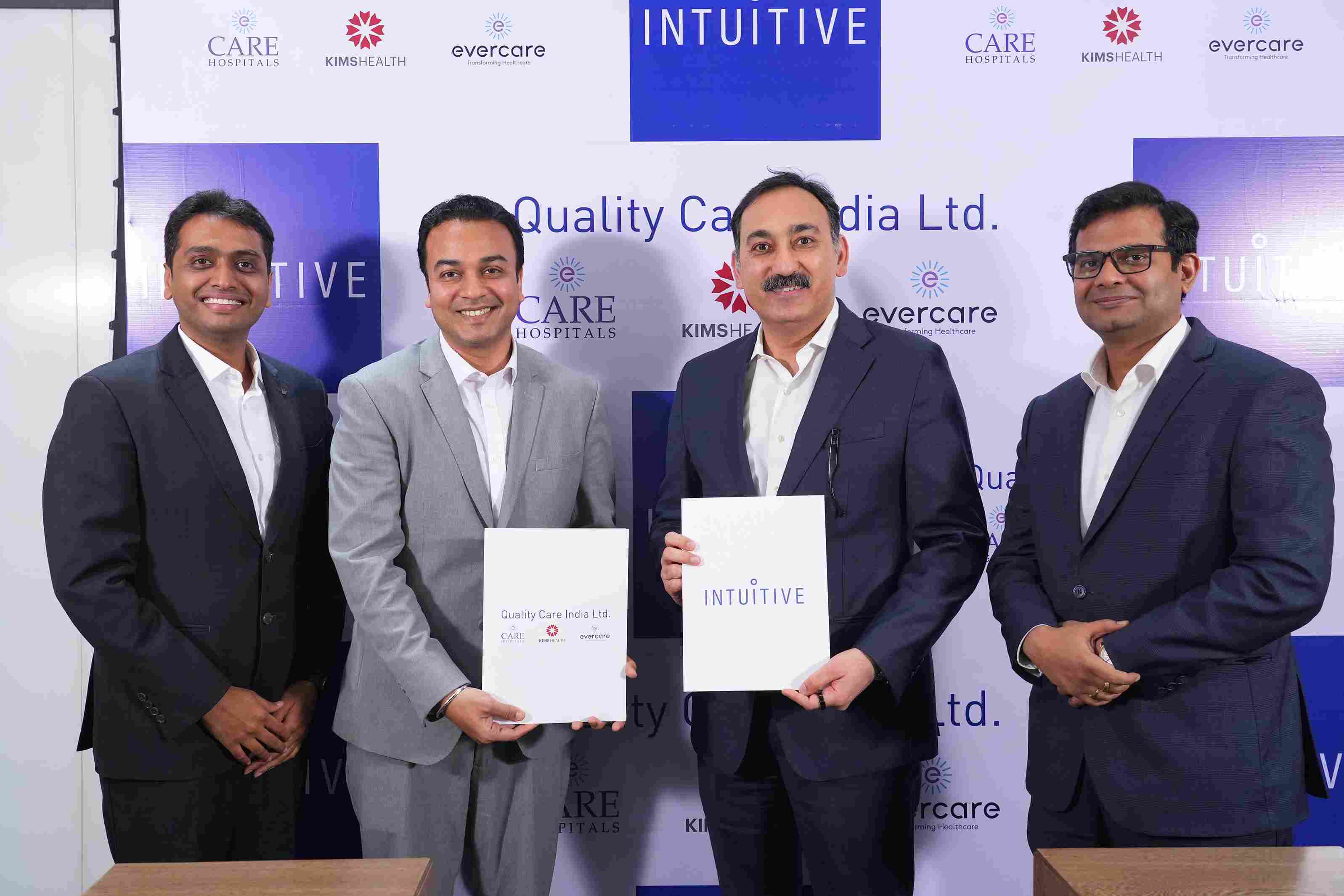
 QCIL will scale its robotic-assisted surgery programme through a phased multi-system installation plan across its hospital network.




Hyderabad, 24th March, 2026: Quality Care India Ltd. (QCIL), headquartered in Hyderabad, one of India’s leading healthcare platforms, has signed a Memorandum of Understanding (MoU) with Intuitive, a global technology leader in minimally invasive care and pioneer of robotic-assisted surgery (RAS), to scale robotic-assisted surgery across its multi-brand hospital network comprising CARE Hospitals, KIMSHEALTH and Evercare Hospitals through a phased multi-system installation plan. The initiative will strengthen clinical capabilities while extending advanced minimally invasive care to patients in tier 2 and tier 3 markets.
The expansion of robotic-assisted surgery aligns with QCIL’s broader strategy to strengthen advanced surgical infrastructure in emerging healthcare markets. This collaboration will help scale its adoption across additional centres, strengthening clinical capacity and access to robotic-assisted surgery for patients across regions. The expanded deployment will support surgeons and care teams in delivering robotic-assisted procedures across specialties, including Thoracic, Transplant, urology, gynaecology, general surgery, and surgical oncology.
Commenting on the collaboration, Varun Khanna, Group Managing Director, Quality Care India Limited, said, “Scaling robotic-assisted surgery across centres requires a structured approach that strengthens clinical capability and programme consistency. Through this collaboration, we will focus on building readiness across teams and specialties so that more patients can access advanced minimally invasive care closer to home as we expand into tier 2 and tier 3 markets. This initiative reflects our commitment to delivering world-class surgical infrastructure beyond metropolitan cities and improving access to high-end clinical interventions across India.”
Rohitt Mahajan, Vice President and General Manager, Intuitive India, added, "We are pleased to collaborate with QCIL as they expand robotic-assisted surgery capabilities across their hospital network in the region. By combining our strengths, we aim to broaden patient access to advanced minimally invasive care, enabling faster recoveries and helping patients return sooner to what matters most in their lives. We are honored to partner with QCIL’s visionary leadership, whose commitment to innovation and patient-centric care aligns strongly with our shared mission to make a meaningful impact on the lives of patients across the region.”
As part of the MoU, Intuitive will provide comprehensive technology training, customer service, and support to surgeons and care teams across QCIL’s network hospitals, strengthening programme adoption, procedural consistency, and scalable implementation across centres. The QCIL hospitals to have a faster recovery & precise surgery, thereby improving clinical outcomes.
There are currently over 200 da Vinci systems installed across India, with more than 1,500 surgeons trained in robotic-assisted surgery in specialties such as gynaecology, urology, general surgery, and oncology. Collectively, there have been more than 16.9 million da Vinci procedures performed globally to date, with more than 43,000 peer-reviewed scientific articles referencing da Vinci and related technologies. Intuitive has supported over 35 clinical studies in India, generating local evidence that supports structured and evidence-based program development across institutions.
The collaboration reflects a shared commitment to building structured, scalable, and outcome-driven robotic surgery programmes that integrate technology, training, and clinical oversight to ensure consistent patient outcomes across diverse geographies.






.jpeg)










.jpg)
.jpg)
.jpg)
.jpg)
.jpg)
.jpg)


.jpg)