 Tuesday, October 27, 2026
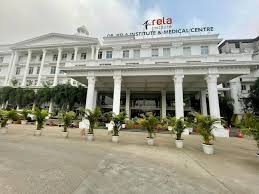
 The patient suffered from deep vein thrombosis that progressed into a life-threatening massive pulmonary embolism.




Chennai, December 4, 2025: Rela Hospital successfully saved the life of a critically ill patient who suffered a massive pulmonary embolism, a dangerous blood clot that had travelled from the leg to the lungs, by performing a mechanical thrombectomy, a catheter-based procedure used to physically extract the clot from the blocked lung artery. The intervention was extremely high risk, as the patient had experienced multiple episodes of cardiac arrest, in spite of receiving clot dissolving medications.
The patient, a healthy 42-year-old, had suffered an injury to his left leg and subsequently developed Deep Vein Thrombosis (DVT), a condition in which a blood clot forms in the deep veins of the leg. However, the condition went undiagnosed. The clot eventually travelled to the pulmonary artery, blocking the flow of oxygen-rich blood to the heart. This led to sudden breathlessness and chest discomfort, prompting his family to rush him to the hospital. Shortly after arriving, the patient suffered a cardiac arrest.
The emergency department quickly diagnosed a pulmonary embolism. Clot-dissolving medication (lysis) was administered and intense resuscitative measures were administered. The patient still was unstable and deteriorated and also suffered another cardiac arrest, leaving the team with only one life-saving option: performing a high-risk mechanical thrombectomy. The procedure proved successful and ultimately saved the patient’s life.
The thrombectomy was performed by Dr. Shabnam Fathima. A, Consultant, Vascular Surgery. A multidisciplinary team comprising specialists from Emergency Medicine, the ICU,cardiology and Nephrology provided vital pre- and post-operative support throughout the patient’s treatment.
In her comments, Dr. Shabnam said, “Mechanical thrombectomy is the gold-standard treatment for blood clots that do not respond to medication. However, performing the procedure on a patient who had just suffered multiple cardiorespiratory arrests made it extremely high risk. His prognosis was grave. After explaining the risks to the family, we proceeded with the procedure. The patient required extensive support, including renal support and ventilator assistance. Fortunately, he responded well to the life-saving procedure, and there were no further episodes of cardiac arrest Immediately after the surgery, his blood pressure stabilised, and in the following days he was successfully weaned off from ventilator and blood pressure. In resonable period, he was weaned off the renal support as well. He has returned to a normal life now.”
Talking about the diagnosed condition, the surgeon explained that the patient faced two serious problems: deep vein thrombosis, where a clot forms in a deep vein - usually in the leg, and pulmonary embolism, which occurs when part of that clot breaks off and travels to the lungs. In most cases, the thrombosis is symptomatic, with visible signs such as sudden leg pain and swelling. If ignored, the clot can migrate and block blood flow to the heart or lungs, causing sudden breathlessness and chest pain. “Early diagnosis and treatment of deep vein thrombosis can prevent serious complications such as pulmonary embolism. It is important that people seek immediate medical attention, especially from a vascular surgeon, if they develop sudden swelling or pain in the legs.”
In her comments, Dr. Sathya AC, Head-Multidisciplinary Intensive Care Unit said, "The patient arrived in a critical condition, collapsing upon admission and requiring immediate stabilisation and diagnostic evaluation. He experienced multiple cardiac arrests affecting other organs, necessitating ventilatory and renal support. Our team focused on optimising his condition to provide maximum stability for the thrombectomy, which was successfully performed. Postoperatively, the patient showed good recovery, and we continued close monitoring for 24 hours before gradually weaning off ventilatory and renal support."




-23-300x250.png)

.jpeg)






.jpg)
.jpg)
.jpg)
.jpg)
.jpg)
.jpg)
.jpg)
.jpg)
.jpg)

