 Thursday, October 08, 2026
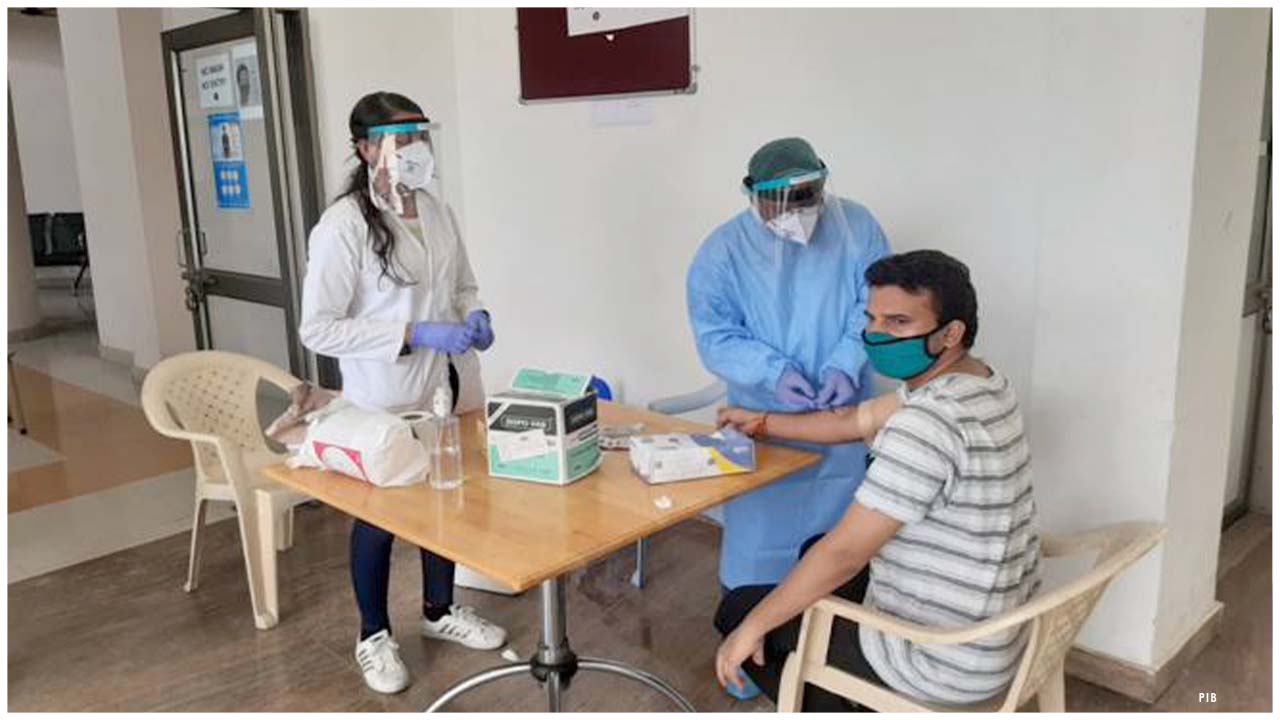
 The test is VOLUNTARY and free of cost and is open to all CSIR staff and students




CSIR-CDRI (Central Drug Research Institute) is carrying out a research study that involves testing of people for antibodies against SARS-CoV-2. The serological testing is conducted from 9th-11th September. For the past 7 months we are in the midst of a pandemic of coronavirus (COVID-19) infection with more than 45 lakh individuals being infected with the virus which has resulted in more than 76,270 deaths in India.
Dr. Susanta Kar and Dr. Amit Lahiri, the nodal scientists from CSIR-CDRI, said that the diagnostic tests performed in India have been largely limited to people showing symptoms and those who have come in close contact with these individuals. Most importantly, community testing has not been initiated yet. From the reports available from various countries it can be perceived that there are many more asymptomatic cases who have not been tested. Thus, the burden of the disease could be larger.
Dr. Kar and Dr. Lahiri also stated that, a person infected with the disease will generate antibodies which is expected to protect them for further infection. However, since this is a novel virus, the duration of protection from antibodies is not known. It is therefore important to perform a long-term pan-India surveillance using serology-based assays to not only estimate the burden of the infection, but also assess thetitres of the antibodies by collecting samples at fixed intervals. This will also help us to identify people who can also donate their plasma to the terminally ill COVID patients.
Prof. Tapas K Kundu, The Director CSIR-CDRI, said that the establishment of such a cohort with longitudinal biological sampling will also align with the framework of the National Health Mission and will facilitate the development of national reference standards to aid clinical decision making as well as national healthcare policy decisions. It will also help address several unanswered questions on the infection caused by novel Corona virus.
The test is VOLUNTARY and free of cost and is open to all CSIR staff and students. Blood samples will be collected from those who are willing to participate in the CDRI dispensary under the supervision of resident doctors Dr. Shalini Gupta and Dr. Vivek Bhosale. The presence or absence of anti-SARS-CoV2 antibody titers in CSIR staff and students will then be assessed using ELISA based assay at CSIR-IGIB, New Delhi. Other biochemical parameters also will be measured to ascertain correlation between Cardio-metabolic risk factors and the possibility of recurrent infection. This project will align well with the CSIR’s Indigenous program “Phenome India - A long-term longitudinal observational cohort study of health outcomes”






.jpeg)










.jpg)
.jpg)
.jpg)
.jpg)
.jpg)
.jpg)


.jpg)