 Thursday, October 08, 2026
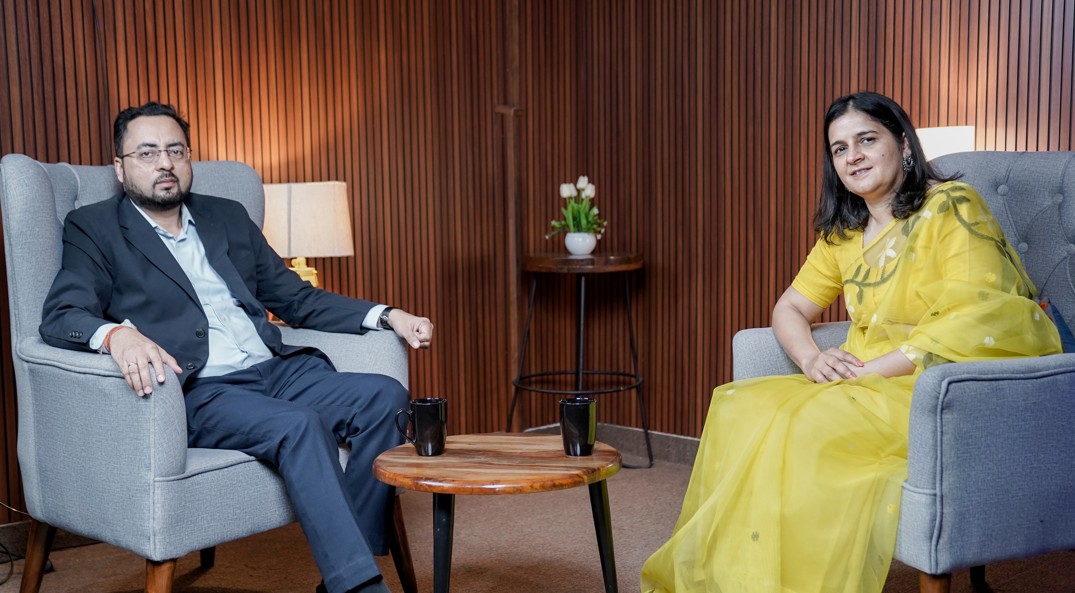
 As India's insurance industry reports grievances rising to 2.57 lakh in FY24-25 from 2.15 lakh the previous year according to a recent Deloitte report.




NEW DELHI, MARCH 23, 2026 — As India's insurance industry reports grievances rising to 2.57 lakh in FY24-25 from 2.15 lakh the previous year according to a recent Deloitte report, Shilpa Arora, co-founder & chief operating officer of Insurance Samadhan revealed during a Startup Caffe podcast appearance with host Sriwant Wariz, that the country operates only eighteen ombudsmen to handle disputes for the entire population, with resolution times in major cities stretching from three months to six months or one year due to backlogs and staff vacancies.
Ms. Arora, who spent twenty-eight years in insurance before founding the grievance resolution platform in 2018, identified two interconnected failures preventing mass adoption.
First, increasing reliance on artificial intelligence to process health claims creates rejections through algorithmically generated terminology that policyholders cannot understand or challenge.
Second, ground-level implementation failures including hospital refusals of government schemes and systemic mis-selling practices continue undermining consumer trust despite regulatory oversight.
The Deloitte report noted that claims-related issues and mis-selling account for nearly 69 percent of all grievances, while pendencies on the Bima Bharosa portal have risen to over 10,000 cases.
"Insurance in India is operating in a trust deficit market where mis-selling has happened, claim rejections have happened, and the system makes it nearly impossible for people to understand what went wrong," Ms. Arora stated. "When hospitals submit discharge summaries, automated systems analyze documentation using parameters designed to identify rejection grounds rather than facilitate legitimate payments."
The entrepreneur explained that asymmetry becomes apparent during ombudsman hearings, where insurance companies send legal representatives with complete documentation while policyholders appear alone without understanding insurance terminology or procedures. With only eighteen ombudsmen serving the entire country, hearing times have stretched from three months to six months or longer in major cities.
"There are three entities involved - hospital, insurance company, and TPA desk. A policyholder cannot understand on their own what to write to the insurer. The policy terms are complex, the discharge summary is complex. Not everyone in India is able to represent their case well," she noted.
The Low Penetration Rate Persists Despite Expanded Digital Distribution And Government Schemes:
The Deloitte report highlighted that despite insurance premiums growing nearly sixfold over the past decade to ₹11.9 lakh crore in FY24-25, penetration has only increased marginally from 3.3 percent to 3.7 percent, indicating premium growth has not translated into proportionate expansion in protection coverage. The report noted that claims adjudication across many insurers continues to rely heavily on manual processes driving nearly 60 percent of operational costs and leading to slower turnaround times.
Ms. Arora identified multiple factors preventing mass adoption including hospital refusals of Ayushman Bharat treatment due to delayed government reimbursements, corporate employees depending entirely on employer-provided coverage without individual policies, and awareness gaps where consumers view insurance as investment vehicles rather than financial protection. Products are frequently sold emphasizing returns and cash-back features, with senior citizens receiving equity-linked policies the entrepreneur considers inappropriate for their risk profiles.
Recent Regulatory Developments Signal Awareness Of Systemic Problems:
The Reserve Bank of India recently issued guidance holding banks accountable for insurance mis-selling, establishing that sellers bear responsibility for proving transactions were appropriate even when customer consent documentation exists. The Deloitte report noted that banks now distribute more than half of some life insurers' business and earn commissions of as much as 65 to 70 percent on first-year premiums, often driven by aggressive sales targets.
Ms. Arora appeared on Shark Tank India Season One, negotiating with investor Peyush Bansal before ultimately securing funding from IFL at three times higher valuation than the television commitment. Following the broadcast, company growth accelerated eight to ten times as television visibility increased consumer trust sufficiently that people began sharing sensitive documents necessary for case processing. The company currently operates at a one hundred seventy-five crore valuation, serving customers predominantly from Maharashtra, Ahmedabad, Uttar Pradesh, and Delhi.
The company serves customers predominantly from Maharashtra, Ahmedabad, Uttar Pradesh and Delhi. Ms. Arora stated her goal is to establish the PolyFix application as infrastructure for every Indian policyholder providing centralized document storage, automated claim filing and family sharing features.






.jpeg)










.jpg)
.jpg)
.jpg)
.jpg)
.jpg)
.jpg)


.jpg)