 Sunday, October 11, 2026
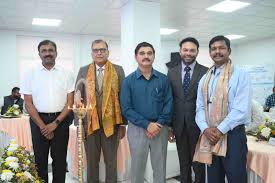
 A National Level Workshop on 'Strengthening Chlorination for Safe Water Supply' was held on February 20, 2026, at SPM NIWAS, Kolkata.




Kolkata, February 20, 2026: A National Level Workshop on 'Strengthening Chlorination for Safe Water Supply' was held on February 20, 2026, at SPM NIWAS, Kolkata. The workshop was organised by Dr. Syama Prasad Mookerjee National Institute of Water and Sanitation (SPM NIWAS), Kolkata with the support of Evidence Action (through its technical partner 'EAII Advisors' in India), under the guidance of the Department of Drinking Water and Sanitation, Ministry of Jal Shakti, Government of India.
Shri Mohd. Ishfaq, IAS (Retd.), Advisor, SPM NIWAS, outlined the workshop's objective: identifying actionable solutions for strengthening chlorination systems and ensuring safe drinking water supply. He provided an overview of the current water disinfection status and highlighted key gaps in the system.
A key highlight was the signing of a Memorandum of Understanding (MoU) between SPM NIWAS and Evidence Action to strengthen water sector initiatives, with focus on safe drinking water through in-line chlorination technology—an innovative disinfection system integrated directly into village water pipelines.
The MoU will support capacity building, research and technical knowledge, program management, and policy advocacy in rural drinking water. The partnership aims to strengthen rural water systems by improving water quality management, scaling disinfection solutions, promoting evidence-based decision-making, and building institutional capacity.
Shri Priyatu Mandal, IAS, Joint Secretary-cum-Director and Head, SPM NIWAS, Kolkata,
emphasized the need for strong monitoring, accountability, and governance mechanisms to ensure effective chlorination across rural water supply schemes. He said, "Safe and clean drinking water must move from aspiration to reality, and strengthening chlorination through collective action is essential to achieving that goal". He further reiterated that, “Drink from Tap is only possible if the water is chlorinated at the point of consumption, with a residual chlorine level of not less than 0.2 mg/litre”.
Shri Ankur Garg, Executive Vice President and India Country Director, EAII Advisors, highlighted the importance of scalable, cost-effective, and sustainable chlorination technologies to address technical and operational gaps. "Our collective goal remains clear: ensure the Har Ghar Jal milestone delivers not just connections, but safe, reliable water for all. I am hopeful these discussions will yield practical insights to make robust chlorination a routine reality in piped water delivery nationwide.”
The workshop brought together senior officials, academicians, technical experts, and industry representatives who discussed the role of chlorination as a reliable method of disinfecting drinking water by eliminating harmful microorganisms.
Shri Mohd. Ishfaq, IAS (Retd.), Advisor, SPM NIWAS, concluded the workshop by reaffirming the collective commitment to strengthen chlorination systems and ensure safe drinking water for rural communities. Discussions covered technical gaps, monitoring, human resources, operations, and community engagement.






.jpeg)










.jpg)
.jpg)
.jpg)
.jpg)
.jpg)
.jpg)


.jpg)