 Monday, October 05, 2026
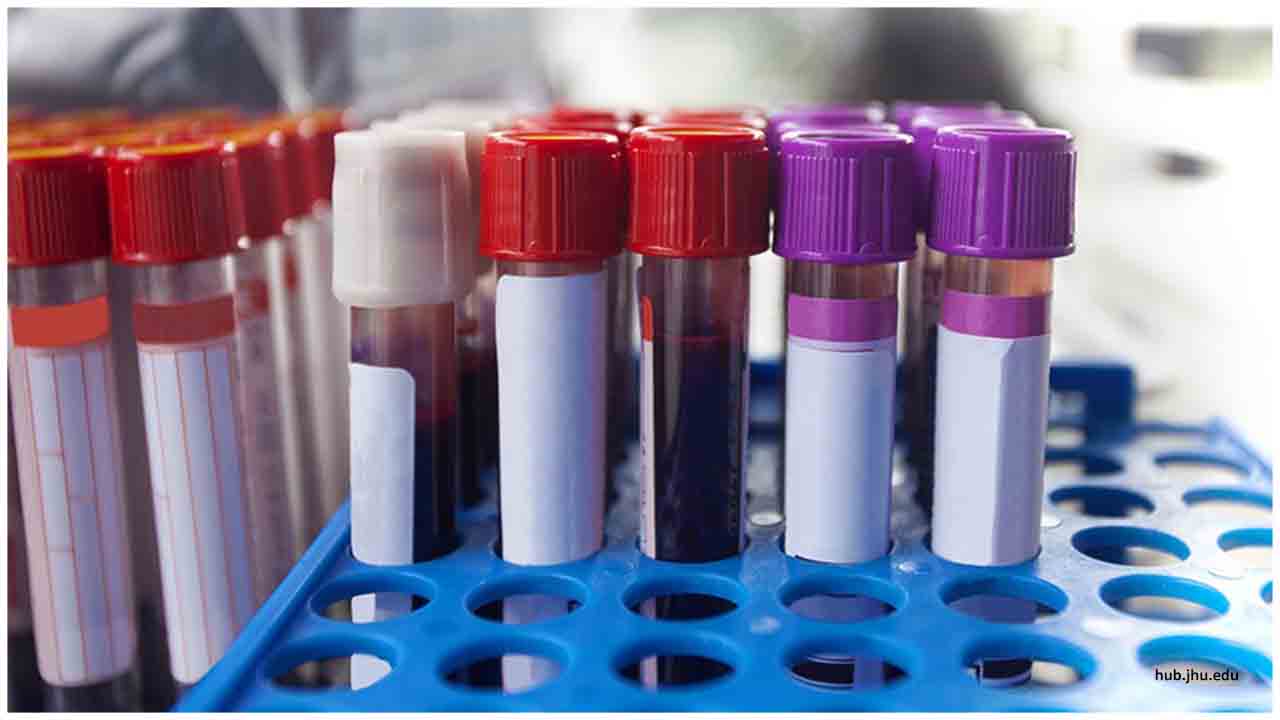
 Tracking and contact tracing mechanisms should be ensured by testing laboratories by notifying public health authorities




ICMR (Indian Council of Medical Research) on Friday changed its procedure on Covid-19 testing. According to its most recent warning, people going to nations or states must convey an antagonistic Covid-19 test result at the purpose of the section.
What's more, the warning likewise suggests testing on-request which implies that any individual who wishes to get tried for Covid-19 must be permitted to do as such.
Following and contact following systems ought to be guaranteed by testing labs by telling general healthcare specialists and state governments ought to choose rearranged modalities, the record proceeds to the state. These progressions were suggested by the National Task Force on Covid-19.
The ICMR's warning is nonexclusive in nature and might be changed according to the circumspection of state healthcare specialists.
At present, testing is done in four cases, to be specific control zones, routine observation in non-regulation territories, clinics, and on-request testing. One can decide on Rapid Antigen Test, RT-PCR, or TrueNat or CBNAAT to get screened for Covid-19.
Inside regulation zones
In its warning, ICMR recommended that all asymptomatic (ILI side effects) cases, including medical services laborers and cutting edge laborers working in regulation zones, must be tried. Indeed, all asymptomatic immediate and high-hazard contacts of a research center affirmed case ought to be tried once between day 5 and day 10 of coming into contact with the patient.
The body has likewise suggested testing all asymptomatic high-hazard people in regulation zones.
Outside control zones
ICMR's trying methodology calls for routine observation. All suggestive people with a background marked by worldwide travel over the most recent 14 days are to be tried for Covid-19 separated from all indicative (ILI manifestations) contacts of a research center affirmed case outside of control zones.
It further suggested testing of all indicative flu-like disease cases among returnees and travelers inside seven days of sickness alongside all asymptomatic high-hazard contacts.
Emergency clinic
All patients experiencing Severe Acute Respiratory Infection (SARI) and all suggestive (ILI) patients present in a medical services setting must be tried for Covid-19 according to the ICMR's warning.
The warning proceeds to include those asymptomatic high-hazard patients who are hospitalized or looking for sure-fire hospitalization, for example, safe traded off people, patients determined to have the dangerous malady, relocate patients, patients with ceaseless co-morbidities, and the old ought to be screened for the disease.
Asymptomatic patients going through careful/non-careful obtrusive techniques are added to be tried however not more than once per week during their stay in the clinic.
All pregnant ladies in the medical clinic and those hospitalized and approaching work for conveyance should likewise be tried for Covid-19.
Recurrence of testing
A solitary RT-PCR/TrueNat/CBNAAT/RAT positive test is to be viewed as corroborative, with no continue testing, the warning says.
"No re-testing is prescribed preceding release from a Covid-19 office after clinical recuperation, including for move from a Covid territory/office to a non-Covid region/office," it includes.
The ICMR likewise proposes that if side effects create following a negative RAT test, a recurrent RAT or RT-PCR ought to be finished.
India has crossed the 1-million tests for each day mark after it generously increases the testing framework with throughput machines to call for expanded reconnaissance. As of September 4, India has more than 1,600 testing labs across states. Be that as it may, quick antigen tests have likewise assumed a major function in expanding reconnaissance on the novel Covid





.jpeg)
.jpg)
.jpg)
.jpg)
.jpg)
.jpg)
.jpg)








.jpeg)

.jpeg)


.png)