Friday, October 23, 2026
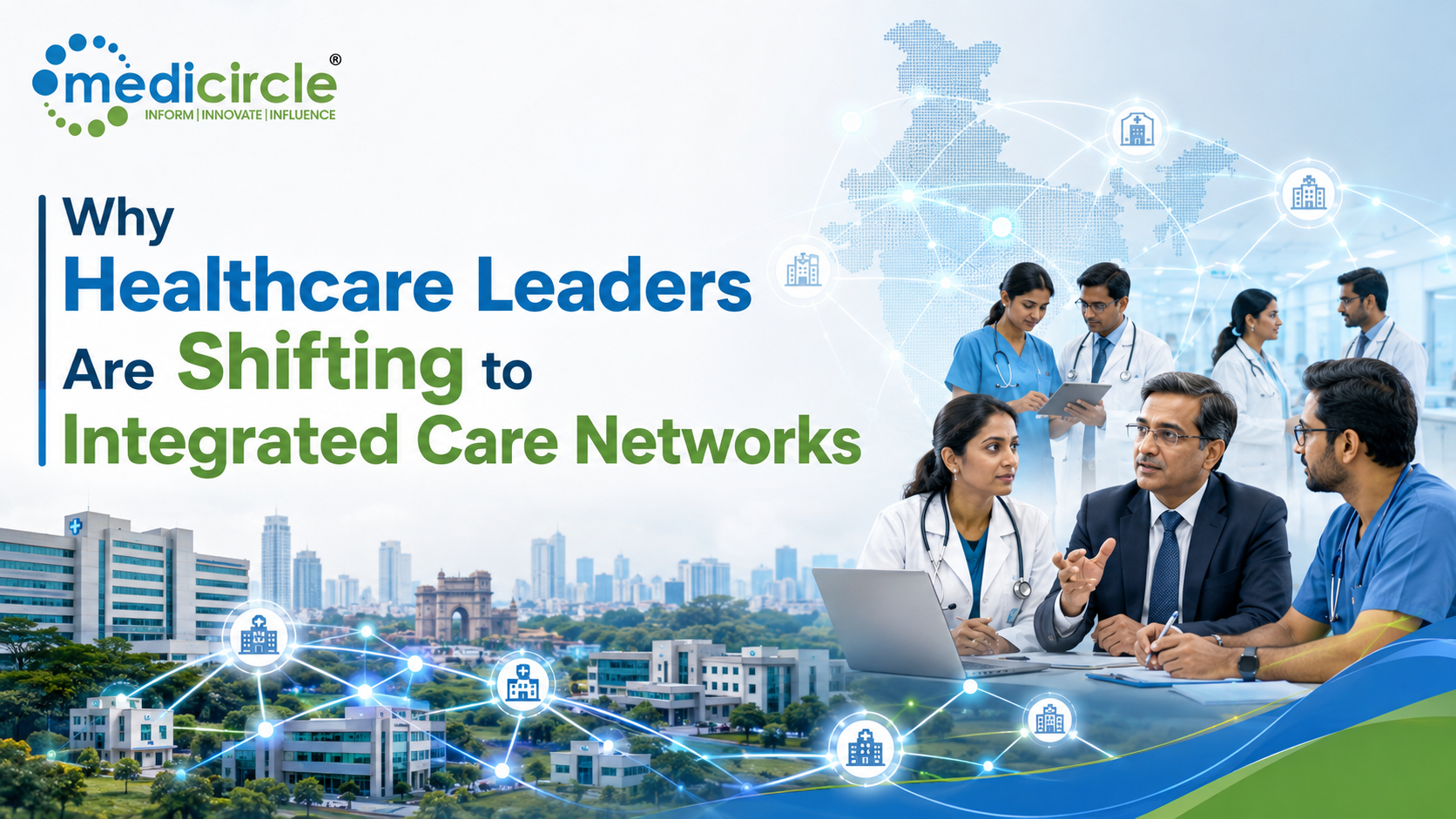
 Indian healthcare leaders are shifting from physical expansion to integrated care networks, driven by rising costs, policy support, and the need for better coordinated, patient-centered outcomes.





Introduction
For the better part of two decades, growth in the Indian healthcare sector was measured in beds, buildings, and branch locations. Hospital chains competed to establish a presence in new cities. Investors tracked expansion as a proxy for market dominance. Leadership teams devoted enormous energy to acquiring land, recruiting specialists, and constructing towers.
That model is changing. Quietly but decisively, some of India's most experienced healthcare leaders are asking a different question. Instead of asking where to build next, they are asking how to connect what already exists and make it work better together.
This shift from physical expansion to integrated care networks is not a retreat. It is a strategic evolution driven by economic realities, patient expectations, policy direction, and a clearer understanding of what actually improves health outcomes. Understanding this transition is essential for every hospital administrator, healthcare investor, policymaker, and medical professional who wants to stay relevant in the next decade of Indian healthcare.
Understanding Integrated Care Networks and What They Mean for Indian Healthcare
An integrated care network is a coordinated system that connects multiple points of healthcare delivery into a unified experience for the patient. It typically includes primary care centers, outpatient clinics, specialist services, diagnostic facilities, hospitals, rehabilitation units, and community health programs, all working under shared protocols, shared data systems, and a shared accountability framework.
The concept is not new globally. Countries such as the United Kingdom, Singapore, and parts of the United States have been building integrated systems for years. What is new is the urgency with which Indian healthcare organizations are now embracing this model.
In the Indian context, integration addresses a fundamental problem. The country's healthcare delivery has historically been fragmented. A patient may visit a general physician at a local clinic, then travel to a different location for diagnostics, consult a specialist at a third facility, and seek hospitalization at a fourth. Each of these encounters happens in isolation. Records do not transfer. Instructions do not align. The patient carries information in paper files or memory.
This fragmentation is not just inconvenient. It is medically dangerous and economically wasteful. Integrated care networks eliminate these disconnections by creating a system where every provider has visibility into the patient's full health history and every step of care is coordinated.
The Business Case: Why Expansion Alone No Longer Works
The expansion model served its purpose during an era when demand outpaced supply across most Indian cities. Building a new hospital in an underserved region guaranteed patient volumes simply because the facility existed.
That equation has shifted in several important ways.
Urban markets in India's tier 1 cities are increasingly saturated. Delhi, Mumbai, Bengaluru, Hyderabad, and Chennai now host multiple large hospital chains competing for the same base of insured and paying patients. The cost of building and operating in these markets has risen sharply. Real estate, medical equipment, specialist salaries, and regulatory compliance all demand heavier capital investment than they did a decade ago.
At the same time, return on investment from new beds has slowed. Occupancy rates at many large private hospitals have not kept pace with the growth of physical capacity. Operating a half-filled tertiary care hospital is an expensive proposition that strains even well-funded organizations.
Healthcare leaders who have studied these numbers are drawing a clear conclusion. Adding more of the same infrastructure without improving how existing infrastructure functions does not create sustainable value. What creates value is connecting assets intelligently and ensuring that patients move through the system efficiently.
Integrated care networks make existing assets more productive. A spoke clinic that channels appropriate patients to a hub hospital improves that hospital's case mix and occupancy. A teleconsultation system reduces unnecessary referrals while bringing specialist expertise closer to the patient. A shared diagnostic network reduces duplication and lowers cost per investigation across the network.
The financial logic is compelling. In a connected network, every unit contributes to the performance of every other unit. In an isolated expansion model, each new unit carries its own full cost and risk.
Policy Momentum: How Government Initiatives Are Accelerating the Shift
India's policy environment is actively supporting the move toward integrated care. Two landmark initiatives deserve particular attention.
The Ayushman Bharat Digital Mission (ABDM) is creating the digital backbone that integrated care requires. By establishing Health ID infrastructure, digitizing health records, and enabling interoperability between healthcare providers, ABDM is building the technical environment within which networks can function. Hospitals and clinics that register on ABDM and adopt its standards position themselves to participate in coordinated care ecosystems.
Ayushman Bharat Pradhan Mantri Jan Arogya Yojana (AB-PMJAY) is changing the financial incentives within healthcare. By covering hospitalization costs for over 500 million beneficiaries, it is directing significant patient volumes through insurance pathways. For providers, this means that value-based performance, patient outcomes, and cost efficiency matter more than volume-driven billing. Integrated systems are structurally better suited to succeed in this environment.
The National Health Policy 2017 explicitly called for strengthening primary care and creating continuity between primary, secondary, and tertiary levels. This policy direction has been reinforced in subsequent budget allocations and health ministry communications. Healthcare organizations that align their strategies with this direction gain policy support, potential accreditation advantages, and first-mover positioning in government partnership programs.
NABH accreditation standards increasingly recognize care coordination as a quality dimension. Organizations building integrated networks are building toward a standard that regulators and payers increasingly require.
What Integration Actually Looks Like on the Ground
The transition from expansion thinking to integration thinking changes how healthcare organizations make decisions at every level.
Hub-and-spoke architecture is the most common structural form. A large tertiary or quaternary care hospital functions as the hub, managing complex cases, surgical procedures, and intensive care. Surrounding it are spoke facilities: smaller hospitals, outpatient clinics, diagnostic centers, and primary care units. Spokes handle routine care, chronic disease management, and health screening. They refer upward when complexity demands it and receive patients back for post-acute or rehabilitative care.
Unified digital infrastructure connects all nodes. Electronic health records that follow the patient across facilities, shared imaging archives, real-time bed availability tracking, and teleconsultation platforms create the information layer that makes coordination possible. Without this layer, integration remains an organizational aspiration rather than a clinical reality.
Shared care protocols standardize how conditions are managed across the network. A diabetic patient visiting a spoke clinic and later admitted to the hub hospital receives care that follows the same evidence-based guidelines, reducing variation and improving outcomes.
Community health integration extends the network beyond facility walls. Community health workers, home care services, and patient monitoring programs link the system to patients in their own environments. This is particularly significant in India, where a large proportion of the population lives in settings where traveling to a facility for every healthcare need is impractical.
The Patient Experience Imperative
Healthcare leaders often frame integration in operational or financial terms. However, the most powerful argument for integrated care networks may be what they do for the patient experience.
Indian patients are increasingly aware of their options. Urban populations compare hospitals, read reviews, and make choices based on perceived quality and convenience. A system that offers seamless transitions between a local clinic, a specialist, and a hospital with shared records and coordinated communication is fundamentally more attractive than one that requires the patient to start from scratch at every facility.
Chronic disease management offers a particularly clear illustration. India carries one of the world's heaviest burdens of non-communicable diseases. Diabetes, hypertension, heart disease, and chronic respiratory conditions affect hundreds of millions of people and require sustained, multi-provider management over years or decades.
Managing these conditions through fragmented, episodic care is clinically ineffective. The patient who sees a different doctor at each visit, with no continuity of records or treatment plan, is at high risk of poor control, complications, and preventable hospitalization. An integrated care network manages chronic conditions through coordinated longitudinal care, regular monitoring, and proactive intervention. The outcomes are better and the long-term cost to the system is lower.
Challenges That Healthcare Leaders Must Address
The shift to integrated care is not without difficulty. Several challenges are specific to the Indian context.
Interoperability remains inconsistent. Many hospitals operate on legacy systems that do not communicate with other platforms. Migrating to ABDM-compliant systems requires investment and change management that some organizations have been slow to undertake.
Specialist availability outside major cities limits the depth of spoke networks. A hub-and-spoke model works best when spokes can resolve a meaningful proportion of cases locally. If every complex case must travel to the hub, the efficiency gains shrink.
Cultural resistance within medical teams can slow integration. Doctors who have practiced independently may resist protocols, shared records, or performance measurement systems that integration requires.
Financial model design needs careful attention. Networks must develop pricing and revenue-sharing arrangements that create fair incentives across hub and spoke facilities. Without this, individual units within the network may optimize for their own volume rather than for network-wide performance.
Despite these challenges, the direction of travel is clear. Healthcare leaders who invest in solving these problems position their organizations for long-term competitive advantage.
The Leadership Mindset That Integration Requires
Building an integrated care network is as much a leadership challenge as it is a technical or financial one. The mindset that built hospital empires through expansion is not automatically the mindset that builds effective networks.
Network thinking requires:
- Prioritizing system outcomes over facility-level metrics
- Embracing data transparency across organizational boundaries
- Investing in relationships with community health providers and primary care practitioners
- Measuring success through patient outcomes and population health indicators, not just bed occupancy
- Building governance structures that give all network participants a voice in shared decisions
Healthcare organizations that are succeeding at integration are investing heavily in leadership development, change management, and culture alongside technology and infrastructure.
Conclusion
The movement from expansion to integrated care networks represents one of the most significant strategic shifts in Indian healthcare in a generation. It reflects a maturing industry that is moving from building infrastructure to optimizing systems, from adding capacity to improving connectivity, and from facility-level thinking to population-level accountability.
For healthcare leaders, the message is clear. The next era of healthcare value creation in India will not be won by those who build the most hospitals. It will be won by those who build the most effective networks. Platforms such as Medicircle play an important role in this transition by amplifying expert voices, sharing knowledge about healthcare system evolution, and connecting the healthcare community around conversations that shape the future of the sector.
The shift has already begun. The question for every healthcare leader is not whether to integrate but how quickly and how well.
Frequently Asked Questions
Q1: What is an integrated care network in healthcare?
An integrated care network connects hospitals, clinics, specialists, diagnostics, and community health services into a coordinated system that ensures continuous, patient-centered care across all levels of the health system.
Q2: Why are Indian hospitals moving away from pure expansion strategies?
Rising operational costs, increasingly saturated urban markets, and the pressure to demonstrate better patient outcomes are encouraging Indian hospitals to focus on care coordination and network efficiency rather than simply increasing physical capacity.
Q3: How does integrated care benefit patients in India?
Integrated care reduces fragmented treatment, avoids duplication of diagnostics, improves follow-up rates, and ensures that patients receive timely and coordinated care across primary, secondary, and tertiary levels of the healthcare system.
Q4: What role does technology play in integrated care networks?
Technology platforms such as the Ayushman Bharat Digital Mission and hospital electronic health record systems enable seamless data sharing, teleconsultation, remote monitoring, and care coordination across a network of facilities.
Q5: Are integrated care networks suitable for smaller hospitals and clinics in India?
Yes. Smaller facilities can participate in integrated networks as primary or spoke centers, gaining access to specialist referrals, shared diagnostics, and digital infrastructure without bearing the full financial burden of independent expansion.
Resources
- Ayushman Bharat Digital Mission (ABDM): Official portal for India's national digital health infrastructure and Health ID ecosystem
- National Health Authority (NHA), Government of India: Guidelines and updates on Ayushman Bharat PM-JAY and provider network policies
- National Accreditation Board for Hospitals and Healthcare Providers (NABH): Accreditation standards for hospitals and healthcare organizations in India
- World Health Organization (WHO) India Country Office: Reports and frameworks on integrated health service delivery and primary health care strengthening
- NITI Aayog Health Division: Policy papers and strategic documents on transforming India's healthcare delivery system
Interlinking Keywords
integrated care networks India, hub and spoke hospital model, Ayushman Bharat Digital Mission, value-based healthcare India, hospital network strategy, healthcare leadership India, chronic disease management India, NABH accreditation, healthcare system transformation, primary care integration
Last Medically Reviewed by:
Editorial and Medical Review Team, Medicircle on 2 September 2026
Disclaimer:
This article is intended for informational and educational purposes only. It does not constitute medical, clinical, legal, or financial advice. Readers are advised to consult qualified healthcare professionals, legal advisors, or financial experts before making any decisions related to healthcare infrastructure, strategy, or policy. The views expressed reflect general industry knowledge and analysis.





-23-300x250.png)

.jpeg)
.jpg)
.jpg)
.jpg)
.jpg)
.jpg)
.jpg)
.jpg)
.jpg)
.jpg)