 Tuesday, October 27, 2026
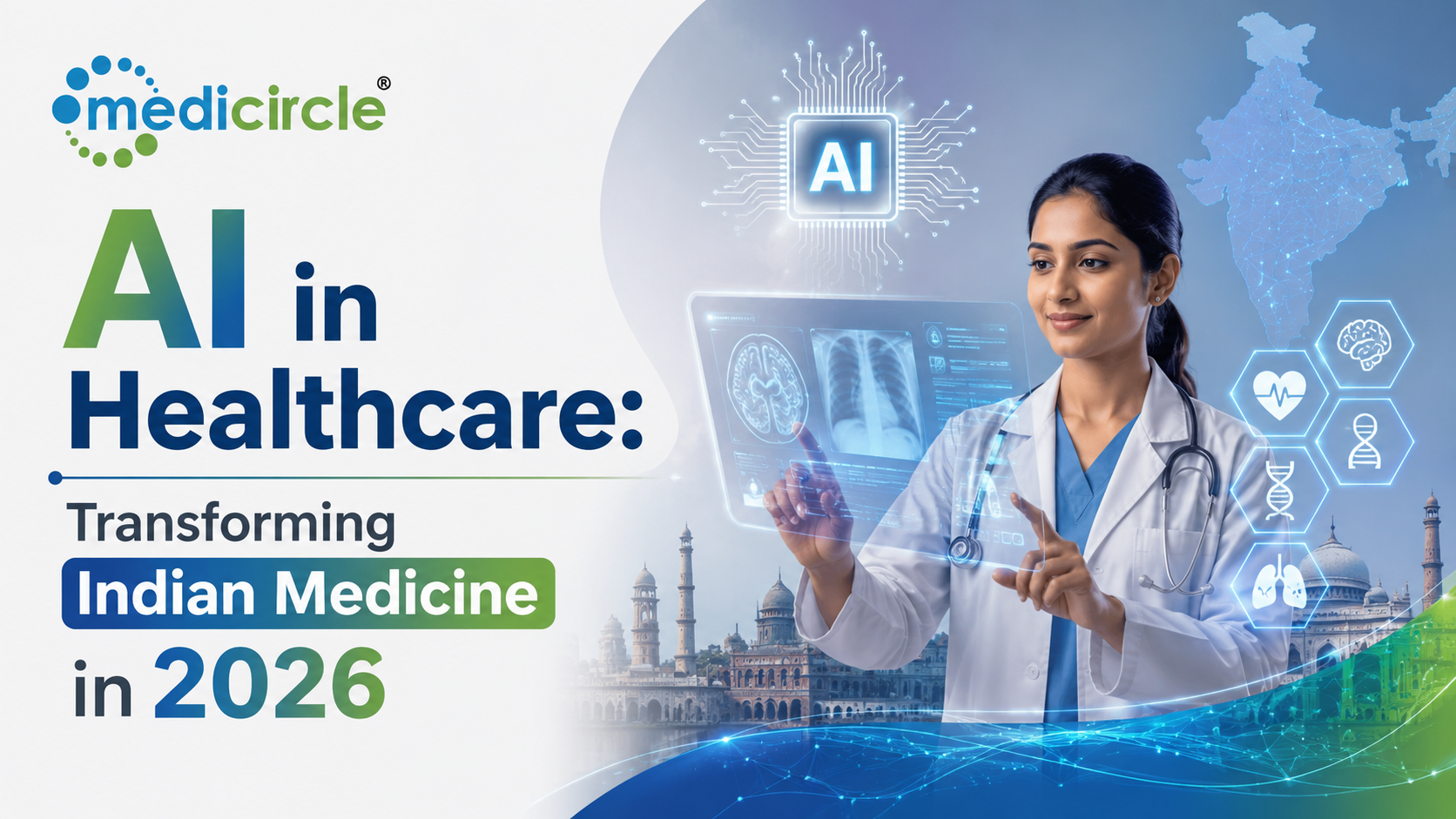
 Artificial intelligence is reshaping Indian healthcare through improved diagnostics, smarter clinical decisions, and scalable access, offering transformative potential for a system serving 1.4 billion people.





Introduction
India stands at a remarkable crossroads in its healthcare journey. On one side lies a system under immense pressure, serving 1.4 billion people with a doctor-to-patient ratio of approximately 1 to 834, well below the World Health Organization's recommended standard. On the other side lies a wave of technological innovation that holds genuine promise for bridging this gap. Artificial intelligence in healthcare is no longer a distant concept reserved for research laboratories in the United States or Europe. It is actively reshaping how diseases are detected, how treatment decisions are made, and how healthcare reaches patients in both metropolitan cities and remote rural communities across India.
The global AI in healthcare market, valued at around 11 billion US dollars in 2021, is projected to reach nearly 187 billion US dollars by 2030. India, with its rapidly expanding digital infrastructure, growing healthtech ecosystem, and national programs like Ayushman Bharat Digital Mission (ABDM), is uniquely positioned to benefit from this transformation. For Indian healthcare professionals, hospital administrators, and patients alike, understanding what AI can and cannot do has become not just useful knowledge but a professional and public health necessity.
Understanding Artificial Intelligence in Healthcare
Artificial intelligence, at its core, refers to the ability of computer systems to perform tasks that typically require human intelligence. These tasks include recognizing patterns, making decisions, processing natural language, and learning from data. In the context of healthcare, AI is not one single technology but rather a family of tools and approaches, each with specific strengths and clinical applications.
Machine learning is the most widely applied branch of AI in medicine. It allows systems to learn from large datasets of patient records, medical images, or laboratory results and identify patterns that can predict outcomes or flag concerns. Deep learning, a more advanced subset, powers much of today's medical imaging analysis, enabling computers to examine X-rays, CT scans, and retinal photographs with a level of detail that rivals or in some cases exceeds expert human review.
Natural language processing (NLP) enables AI systems to read and interpret unstructured text, such as clinical notes, discharge summaries, and handwritten prescriptions. In a country like India where clinical documentation varies significantly across languages, formats, and regions, NLP holds particular relevance for standardizing health records and extracting actionable insights.
Rule-based expert systems, one of the older forms of AI, continue to operate within many electronic health record (EHR) platforms. These systems follow predefined logic, alerting clinicians to potential drug interactions, abnormal lab values, or missed vaccination schedules. While simpler in design, they remain a practical and widely used form of clinical decision support in Indian hospitals today.
Key Applications of AI in Indian Healthcare
Medical Imaging and DiagnosticsOne of the most mature and clinically validated applications of AI in healthcare is in the analysis of medical images. AI algorithms have demonstrated the ability to detect diabetic retinopathy from retinal photographs, identify pulmonary tuberculosis on chest X-rays, and flag suspicious lesions in mammograms. For India, where diabetic retinopathy alone threatens the vision of millions of people with diabetes and access to ophthalmologists is severely limited in Tier 2 and Tier 3 cities, AI-powered screening tools offer a genuinely transformative opportunity.
Studies conducted in Indian settings have validated AI tools for detecting diabetic retinopathy with sensitivity and specificity comparable to expert ophthalmologists. Several Indian startups and hospital networks have begun deploying these tools in primary health centres and government hospitals, allowing frontline health workers to screen patients without requiring a specialist on-site. The images are analyzed by AI, and only flagged cases are escalated to an eye specialist, making the entire process more efficient and accessible.
Tuberculosis remains one of India's most significant public health challenges, with the country accounting for the highest TB burden globally. AI-based chest X-ray analysis is increasingly being used to assist radiologists in high-volume settings, reducing turnaround time and improving early detection rates in patients who might otherwise wait weeks for a diagnosis.
Clinical Decision Support and Risk PredictionAI systems integrated into electronic health records can analyze a patient's full medical history, current symptoms, laboratory results, and medications to generate risk scores and clinical alerts. These tools help doctors identify patients at high risk of sepsis, cardiac events, or deterioration before the situation becomes critical.
Predictive modeling of this kind is particularly valuable in Indian hospitals managing high patient volumes with limited specialist availability. When an AI system flags a patient as high-risk, the clinical team can prioritize monitoring and intervention, potentially preventing ICU admissions or adverse events that would place further strain on already stretched resources.
For India's growing burden of non-communicable diseases, including diabetes, hypertension, cardiovascular disease, and cancer, population-level AI risk prediction models are being explored under programs like the National Programme for Non-Communicable Diseases. The ability to predict which individuals are most likely to develop serious complications allows public health planners to allocate resources more effectively and shift the focus from treatment to prevention.
Natural Language Processing in Clinical DocumentationIndian clinicians write, dictate, and transcribe enormous volumes of clinical notes, referral letters, and discharge summaries every day. Much of this information is unstructured and difficult to analyze at scale. NLP-powered tools can read these documents, extract diagnoses, medications, and clinical findings, and organize them in structured formats that AI and analytics platforms can then use for further analysis.
This has direct implications for the quality of care. When key clinical information is structured and searchable, doctors spend less time hunting through paper records or lengthy notes. Errors of omission, where a clinician misses a critical detail buried in an older document, become less common. Administrative processes like insurance claims, discharge coding, and audit documentation are also streamlined.
Telemedicine and AI-Assisted Remote CareThe COVID-19 pandemic accelerated India's adoption of telemedicine in ways that would have taken years under normal circumstances. The Telemedicine Practice Guidelines issued by the Ministry of Health and Family Welfare in 2020 provided a legal framework that enabled millions of teleconsultations. AI is now increasingly integrated into telemedicine platforms, helping triage patients based on reported symptoms, suggest likely diagnoses, and alert doctors to urgent cases.
For India's vast rural population, where the nearest hospital may be hours away and specialist care remains largely urban, AI-enabled telemedicine represents a practical and scalable solution. AI chatbots available in regional languages are being developed to help patients describe symptoms accurately and receive initial guidance on whether to seek immediate care or manage the condition at home.
Drug Discovery and Pharmaceutical ResearchIndia is one of the world's largest producers of generic medicines and hosts a growing number of pharmaceutical research organizations. AI is transforming drug discovery by dramatically accelerating the identification of promising drug candidates. What previously required years of laboratory screening can now be narrowed down in months using AI models that predict how molecules will interact with biological targets.
DeepMind's AlphaFold, which solved the long-standing challenge of predicting protein structures from amino acid sequences, has already opened new possibilities in understanding disease mechanisms. Indian pharmaceutical companies and research institutions are beginning to incorporate such tools into their research pipelines, with implications for both global drug development and diseases that disproportionately affect Indian populations.
How AI Supports India's National Health Mission
The government of India has embedded digital health infrastructure into its broader health mission in significant ways:
- The Ayushman Bharat Digital Mission (ABDM) aims to create a unified digital health ecosystem by assigning every Indian citizen a unique health ID and enabling interoperability of health records across providers. AI tools built on this infrastructure can generate population health insights and support evidence-based policy decisions.
- The National Health Policy 2017 explicitly acknowledges the role of digital health and emerging technologies in achieving universal health coverage.
- The Indian Council of Medical Research (ICMR) has published guidelines on AI-based tools in healthcare, acknowledging their potential while emphasizing the need for validation against Indian patient populations.
- NITI Aayog's discussion papers on AI for healthcare have outlined strategic priorities for deploying AI to address India-specific disease burdens and workforce shortages.
These policy frameworks signal that AI in Indian healthcare is not being driven solely by the private sector. There is a concerted national effort to ensure that the benefits of healthcare AI reach every segment of the population, including those in the most underserved regions.
Challenges and Ethical Considerations
For all its promise, the integration of AI into Indian healthcare is not without significant challenges. Data quality and availability remain fundamental obstacles. AI systems learn from data, and if the training data does not adequately represent the diversity of Indian patients across geography, ethnicity, comorbidities, and socioeconomic background, the resulting algorithms may perform poorly or unfairly for certain groups.
Algorithmic bias is a genuine concern. If an AI model trained predominantly on data from urban tertiary hospitals is deployed in a rural primary health centre, its predictions may not be reliable. Indian healthcare institutions and researchers must prioritize building and validating AI models on locally representative datasets.
Privacy and data protection are equally important. Healthcare data is among the most sensitive personal information, and India's Digital Personal Data Protection Act 2023 establishes a framework for how such data must be collected, stored, and processed. Patients must understand how their data is being used and must have meaningful control over it.
There is also the question of clinical accountability. When an AI system provides a recommendation that influences a clinical decision, and that decision results in harm, the question of responsibility is complex. Clear regulatory guidance from bodies such as the Central Drugs Standard Control Organisation (CDSCO) on the approval and post-market surveillance of AI-based medical devices is essential as the technology becomes more widely deployed.
Finally, workflow integration remains one of the most practical barriers. Even when AI tools perform well in controlled studies, integrating them into the day-to-day realities of Indian hospital workflows, which often involve paper records, variable connectivity, and high patient turnover, requires careful implementation planning and training.
The Future of AI in Indian Healthcare
The trajectory of AI in Indian healthcare points toward a future that is more personalized, more predictive, and more equitable. In the near term, the most significant gains will come from scaling existing validated applications in diagnostics, clinical decision support, and administrative automation. As 5G connectivity expands and smartphone penetration deepens, AI-powered tools will become accessible to providers and patients far beyond urban centers.
In the medium term, precision medicine, where treatment is tailored to an individual's genetic profile, lifestyle, and environmental context, will become increasingly achievable for Indian patients. AI will serve as the analytical backbone of this shift, making sense of the vast multidimensional data required to deliver truly personalized care.
The long-term vision is one of a connected healthcare ecosystem in which AI augments the capabilities of every healthcare professional, reduces administrative burden, accelerates research, and ensures that no patient is overlooked due to geography, language, or resource constraints. Platforms like Medicircle play an important role in this ecosystem by bringing credible healthcare information and expert voices to a wide audience, helping both professionals and the public understand and engage with the changes transforming Indian medicine.
Conclusion
Artificial intelligence is not replacing doctors. It is giving them better tools to serve their patients. In India, where the scale of the healthcare challenge demands innovative solutions, AI offers a genuine opportunity to improve diagnostic accuracy, expand access, reduce the burden of preventable disease, and make the most of a healthcare workforce that is already stretched thin. The key to realizing this potential lies in responsible development, rigorous validation, thoughtful regulation, and a commitment to ensuring that the benefits of healthcare AI reach every Indian, regardless of where they live or what they can afford. The conversation about AI in Indian healthcare has well and truly begun. The work of making it work, equitably and effectively, is now underway.
Frequently Asked Questions
Q1: How is AI currently being used in Indian hospitals?
AI is being applied in Indian hospitals for medical imaging analysis, predictive risk scoring, clinical documentation support, and telemedicine triage. Several government programs, including ABDM and ICMR-supported projects, are also integrating AI tools to improve population health outcomes and early disease detection.
Q2: Can AI replace doctors in India?
AI is designed to support clinical decision-making, not replace the physician. It can process large volumes of data, identify patterns, and provide alerts that help doctors make better-informed decisions. However, the final clinical judgment, empathy, and patient communication remain irreplaceable human responsibilities.
Q3: What are the risks of using AI in healthcare?
Key risks include algorithmic bias when training data does not represent diverse patient populations, data privacy concerns, potential errors in AI recommendations, and the challenge of integrating AI tools into existing clinical workflows. Regulatory oversight and ongoing performance monitoring are essential safeguards.
Q4: How does the Indian government support AI in healthcare?
The government supports AI in healthcare through the Ayushman Bharat Digital Mission, National Health Policy frameworks, ICMR research guidelines, and NITI Aayog strategic papers. The Digital Personal Data Protection Act 2023 also provides a legal framework for handling sensitive health data used in AI development.
Q5: Is AI in healthcare accessible to patients in rural India?
Access is growing but uneven. AI-powered telemedicine platforms, regional language chatbots, and mobile-based screening tools are being developed specifically for rural and underserved populations. Government programs and healthtech startups are working to close the gap, though connectivity and infrastructure remain ongoing challenges in many areas.





-23-300x250.png)

.jpeg)






.jpg)
.jpg)
.jpg)
.jpg)
.jpg)
.jpg)
.jpg)
.jpg)
.jpg)

