 Thursday, October 08, 2026
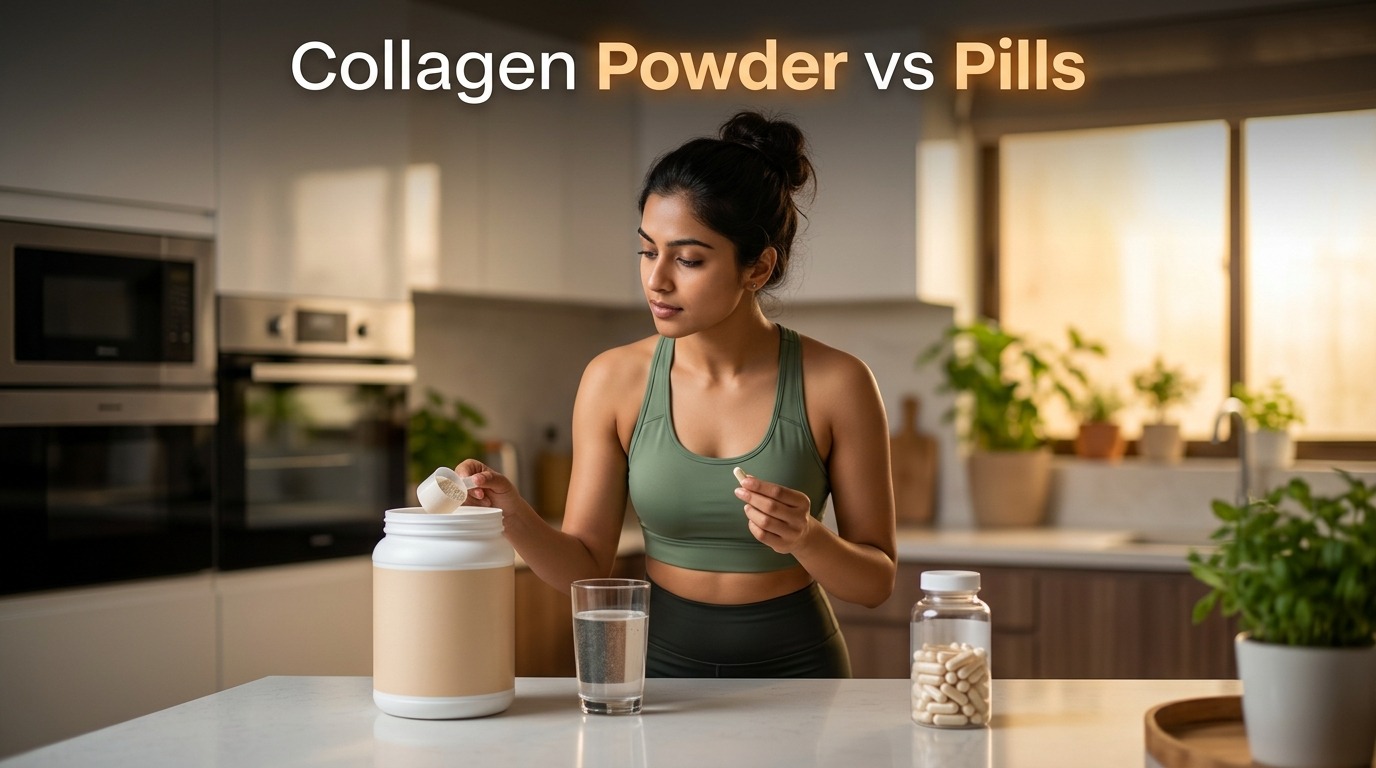
 Understanding collagen powder vs pills comes down to consistency, lifestyle fit, and dosage patterns rather than absorption alone. Choosing between collagen pills vs powder becomes easier when aligned with daily habits, ensuring long-term results and better outcomes.




When people search for collagen powder vs pills, they are usually not just curious about the form. They want to know what truly works in real life. Should you choose convenience or effectiveness? Does one absorb better than the other? Understanding the difference between collagen pills vs powder helps you make a choice that aligns with your routine, expectations, and long-term results.
Understanding Collagen Forms: Powder, Pills, and Capsules
Collagen supplements are available in multiple forms, mainly powder, tablets, and capsules. While they all aim to deliver collagen peptides, the way they interact with your body and lifestyle can differ.
When comparing collagen capsules vs powder or collagen tablets vs powder, the key difference lies in dosage, digestion, and usability. Powder forms are typically hydrolyzed collagen, meaning they are broken down into smaller peptides for easier absorption. Pills and capsules contain the same collagen but in compressed or encapsulated form.
In real-world usage, powder often allows for higher intake in fewer servings, while pills require multiple capsules to match the same dose. This becomes important for people who prefer simplicity or those who struggle with swallowing tablets.
Another factor is flexibility. Powder can be mixed into drinks, smoothies, or food, making it adaptable. Pills, on the other hand, offer convenience and portability, especially for people with busy schedules.
The question of collagen powder or pills is not just about composition. It is about how the format fits into your daily routine and whether you can maintain consistency over time.
Absorption and Bioavailability: Does Form Really Matter?
One of the most debated aspects in collagen powder vs pills is absorption. Many assume powder is automatically better, but the reality is more nuanced.
Both forms use hydrolyzed collagen, which means the body breaks it down into amino acids before using it. The digestive system does not treat powder and pills very differently once they reach the stomach.
However, there are subtle differences in how they behave:
- Powder dissolves and integrates quickly into digestion
When mixed with liquids, collagen powder enters the digestive process more evenly. This can feel lighter on the stomach and may be preferred by people with sensitive digestion or those consuming higher doses regularly. - Pills rely on breakdown before absorption begins
Capsules and tablets need to dissolve first. While this does not significantly reduce effectiveness, it may slow initial processing slightly, especially if taken in large quantities. - Dosage consistency influences perceived results
Powder allows larger, consistent doses in one serving, while pills may require multiple servings. This affects how users perceive results over time, not necessarily the actual absorption rate.
So when asking is collagen powder better than pills, the answer depends more on usage pattern than biology. Absorption differences exist but are not drastic enough to make one universally superior.
Convenience vs Consistency: What Fits Real Life Better
In everyday life, consistency matters more than form. The debate of collagen powder or capsules often comes down to practicality.
Pills are easy to carry, quick to take, and require no preparation. This makes them ideal for travel, work environments, or people who prefer a no-effort routine. For many, this simplicity answers the question of which is better collagen powder or pills.
Powder, however, integrates into meals and beverages. It becomes part of your routine rather than a separate task. For people who already consume smoothies, coffee, or protein shakes, this feels natural and sustainable.
Real-life patterns show that:
- People who enjoy structured routines often prefer powder
- People with unpredictable schedules lean toward pills
- Long-term users tend to stick with the form that requires the least effort
The question is collagen powder or pills better often resolves itself when you consider what you will realistically continue for months, not days.
Dosage Control and Effectiveness Over Time
One of the most practical differences in collagen pill vs powder is dosage control. This is where real-world results begin to diverge.
Powder typically offers higher doses in a single scoop. This makes it easier to meet daily intake without counting multiple servings. Pills, on the other hand, often require several capsules to match the same amount.
This creates two different usage behaviors:
- Powder users tend to maintain consistent intake because it is measured once
- Pill users may skip doses or take fewer capsules due to inconvenience
Over time, this affects outcomes. Not because one form is inherently better, but because adherence varies.
When people ask is it better to take collagen powder or capsules, they are often indirectly asking about consistency. The more consistent the intake, the more noticeable the results.
Digestive Comfort and Personal Tolerance
Another factor in collagen powder vs capsules is how the body reacts during digestion. While collagen itself is generally well tolerated, the format can influence comfort.
Powder mixed with liquids often feels lighter and easier to process. It blends into digestion gradually, which may reduce the feeling of heaviness.
Capsules and tablets, especially when taken in large numbers, can sometimes feel dense or uncomfortable for certain individuals. This does not affect everyone, but it becomes noticeable for those sensitive to supplements.
For people comparing collagen powder or capsules, personal comfort plays a larger role than scientific differences. Some prefer the simplicity of swallowing pills, while others prefer the smooth intake of powder.
Use Cases: Matching the Form to Your Lifestyle
The decision between collagen powder vs pills becomes clearer when you look at specific use cases.
When Powder Fits Better- You already consume beverages like coffee or smoothies daily
Adding collagen powder becomes effortless and blends into an existing habit. This improves consistency and reduces the feeling of taking an extra supplement. - You prefer fewer steps and higher doses in one serving
Powder allows you to meet your intake goals quickly without managing multiple capsules. This suits people focused on efficiency. - You want flexibility in how you consume supplements
Powder can be added to different foods and drinks, making it adaptable to changing routines.
- You need a portable and quick option
Capsules are easier to carry and consume without preparation, making them suitable for travel or busy schedules. - You prefer precise, pre-measured servings
Pills eliminate the need for measuring, which some people find more convenient. - You do not want to alter the taste or texture of food and drinks
Capsules provide a neutral experience without affecting meals.
These real-life scenarios often answer the question what is better collagen powder or pills more effectively than technical comparisons.
Cost, Value, and Long-Term Perspective
Cost is another factor in collagen pills or powder decisions. Powder often provides better value per serving because it delivers higher doses in bulk form. Pills may appear cheaper initially but can require more servings to match the same intake.
Over time, this difference becomes noticeable, especially for long-term users. However, value is not just about price. It also includes how consistently you use the product.
A less expensive option that you do not use regularly offers less value than a slightly higher-priced option that fits your routine perfectly.
This is why the question is powder collagen better than capsules cannot be answered purely on cost. It depends on how effectively the product integrates into your daily life.
Common Misconceptions Around Collagen Forms
Many assumptions exist around collagen powder vs pills, and not all of them are accurate.
Some believe powder is always superior due to absorption, while others assume pills are less effective. In reality, both forms deliver similar collagen peptides.
The difference lies in behavior, not chemistry. Consistency, dosage, and routine determine results more than the format itself.
Understanding this helps avoid overcomplicating the decision and allows you to focus on what actually matters.
Conclusion
The comparison of collagen powder vs pills is less about which is scientifically better and more about which works better for you. Both forms provide collagen in usable forms, but their effectiveness depends on consistency, lifestyle fit, and personal comfort.
If you prefer flexibility and higher doses, powder may suit you better. If convenience and portability matter more, pills or capsules are a practical choice. Ultimately, the best option is the one you can maintain consistently over time.
Frequently Asked Questions (FAQs)
1. Can you take collagen powder and pills together?Yes, some people combine both when they want flexibility and convenience. In the collagen powder vs pills discussion, this approach works when powder is used at home and pills are taken on the go. However, it is important to stay consistent rather than overcomplicate intake, as results depend more on routine than combining forms.
2. Does collagen powder work faster than collagen pills?In most cases, results depend on consistency rather than speed. When comparing collagen pills vs powder, powder may feel quicker because it allows higher intake in one serving. However, both forms support the body similarly over time, especially when taken regularly.
3. Which is easier on the stomach, collagen powder or capsules?For many people, powder feels lighter because it mixes with liquids and enters digestion smoothly. In the debate of collagen powder or capsules, individuals with sensitive digestion often prefer powder, while others find capsules equally comfortable depending on personal tolerance.
4. Is collagen powder better for daily use than pills?For daily routines, powder can be easier to maintain if it fits into meals or beverages. When considering is collagen powder better than pills, the answer often depends on habit. Powder works well for structured routines, while pills suit fast-paced lifestyles.
5. Do collagen capsules provide the same benefits as powder?Yes, both forms deliver similar collagen peptides. The difference in collagen capsules vs powder is mainly in how they are consumed. Capsules are convenient, while powder offers flexibility and larger serving sizes in fewer steps.
6. How do I choose between collagen powder or pills for my routine?Choosing between collagen powder or pills depends on your daily habits. If you prefer mixing supplements into drinks, powder works better. If you want something quick and portable, pills are more suitable. The best choice is the one you can follow consistently.
7. Does collagen form affect long-term results?Long-term results are influenced more by regular intake than form. In the comparison of collagen pill vs powder, both can be effective if used consistently. Skipping doses or irregular usage has a bigger impact than choosing one form over the other.
8. Is powder collagen better than capsules for higher dosage?Powder often makes it easier to consume higher amounts in a single serving. When asking is powder collagen better than capsules, many users prefer powder for this reason. Capsules may require multiple servings to reach similar intake levels.
9. Can I switch between collagen pills and powder?Yes, switching between forms is common and does not affect overall effectiveness. The collagen powder vs capsules comparison shows that both deliver similar benefits, so switching based on convenience or availability is generally fine.
10. What is better collagen powder or pills for beginners?For beginners, the choice depends on ease of use. When considering what is better collagen powder or pills, pills are often simpler to start with, while powder becomes easier once it fits into a routine. The goal is to choose what feels manageable long term.






.jpeg)










.jpg)
.jpg)
.jpg)
.jpg)
.jpg)
.jpg)


.jpg)