 Thursday, October 08, 2026
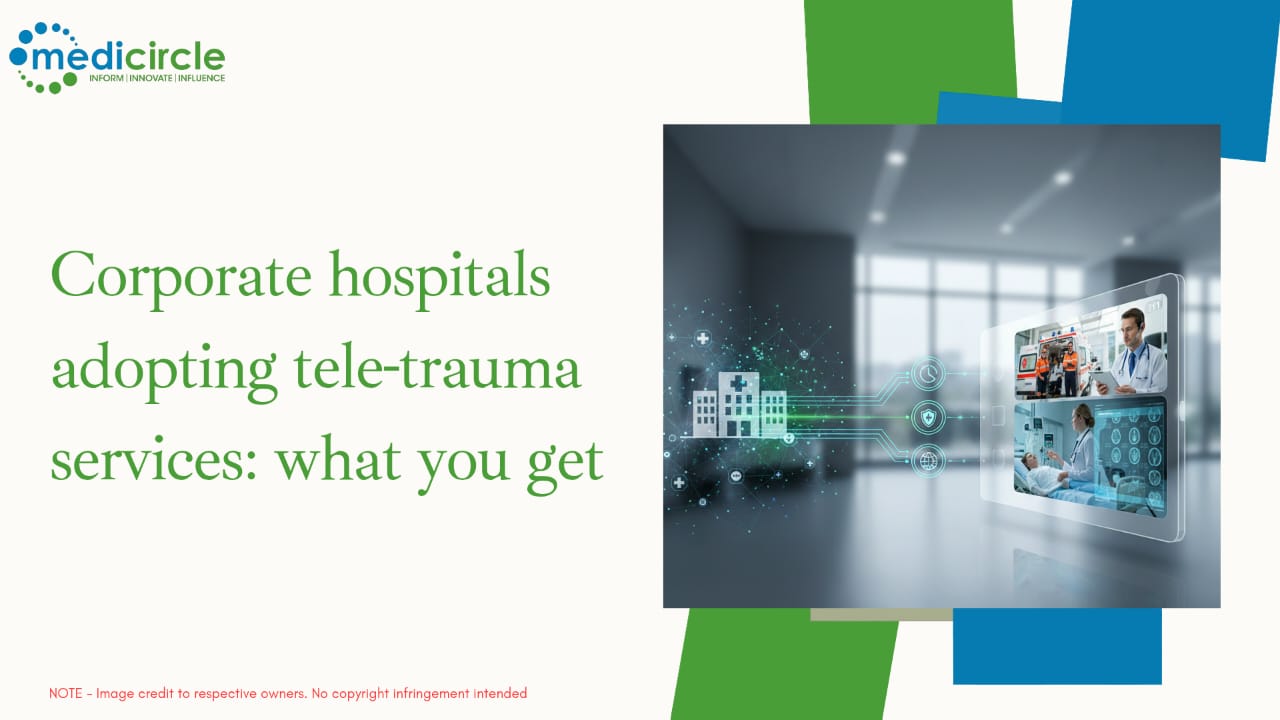
 Tele-trauma services are redefining emergency care in India by connecting remote medical teams to trauma specialists, improving patient outcomes and expanding access to expert guidance during critical moments.




Across India, a critical transformation is reshaping how hospitals respond to emergencies. The first hour after a serious injury, often called the golden hour, has always been a frantic battle against the clock. Challenges of distance and limited local resources can dictate outcomes. Now, major corporate hospitals are embracing a new ally in this battle: tele-trauma services. This is not just a new gadget; it is a fundamental shift in philosophy.
The aim is straightforward yet profound. Tele-trauma does not seek to remove the ambulance or replace the local doctor. Instead, it empowers them. It connects them instantly to a reservoir of specialized knowledge, ensuring expert advice arrives at the scene precisely when it is most needed. For anyone who might one day need emergency care, this shift holds significant promise.
Demystifying tele-trauma:
So, what does this look like in practice? Picture a secure digital bridge. At one end, a medical team stabilizes a patient in a small clinic or at an accident site. At the other, in a dedicated hub at a major city hospital, a senior trauma specialist joins via a high-definition video link.
This live connection changes everything. The remote specialist can assess the patient visually, speak directly with the on-ground team, monitor real-time heart rate and blood pressure data and provide clear, step by step guidance for complex procedures. It effectively places an expert's eyes and voice right beside the patient, offering crucial support during the most vulnerable window before or during transfer.
Tele-trauma: Hospital impact
For large hospital networks, investing in this technology is a strategic decision with clear benefits. It allows their most skilled trauma professionals to guide multiple cases across vast distances simultaneously, vastly expanding their reach and impact. This direct link to specialist’s means patients can be stabilized more effectively from the very first moments, improving the chances of survival and reducing long-term complications.
Furthermore, it builds a stronger, more connected healthcare ecosystem. By supporting smaller clinics and district hospitals with real-time advice, corporate hospitals strengthen the entire chain of care. Successful programs, such as those reported by groups like Indraprastha Apollo Hospitals, demonstrate how this model delivers timely expertise to underserved regions. Pioneering such a critical service also positions a hospital as a true innovator, deeply committed to making advanced care accessible.
Technology with human voice:
A valid concern is whether technology makes care impersonal. Tele-trauma convincingly argues otherwise. The screen is not a barrier; it is a conduit for human experience. The essence of the system is a senior doctor using a digital tool to extend their knowledge and calm presence. It is the steady voice that helps a young medic manage a difficult wound. It is the specialist who takes a moment to explain the situation to an anxious family. The technology succeeds only when it amplifies this human connection, a point leading practitioners consistently stress.
Looking to the future:
The journey is just beginning. The next steps are exciting. We might see this technology integrated directly into advanced ambulances, allowing care to begin even earlier during transport. The use of augmented reality could provide even clearer visual guidance for procedures. To reach the most remote areas, increased collaboration between the public and private sectors will be key. The proven track record of existing services, handling tens of thousands of cases from Rajasthan to the Northeast, shows this model is not just theoretical; it works.
Hurdles remain, of course. Stable internet in rural locations and ongoing training for frontline staff are ongoing priorities. But the momentum is undeniable. What began as an innovative pilot is steadily becoming an expected standard for comprehensive emergency care.
The hospital advantage:
In the end, the rise of tele-trauma in corporate hospitals signals more than an upgrade in equipment. It represents a redrawing of the map for emergency medicine in India. It challenges the old idea that top-tier care is only found in a big-city hospital building. By beaming their expertise where it is needed, hospitals are helping to ensure that where you live does not have to determine whether you live after a traumatic event.
This move towards a system where physical distance is less of a barrier may well be one of the most important developments in Indian healthcare. At Medicircle, our focus is on exploring such practical advancements, providing clarity on how they work and fostering discussions that help build a healthcare system that is both robust and within reach for every citizen.






.jpeg)










.jpg)
.jpg)
.jpg)
.jpg)
.jpg)
.jpg)


.jpg)