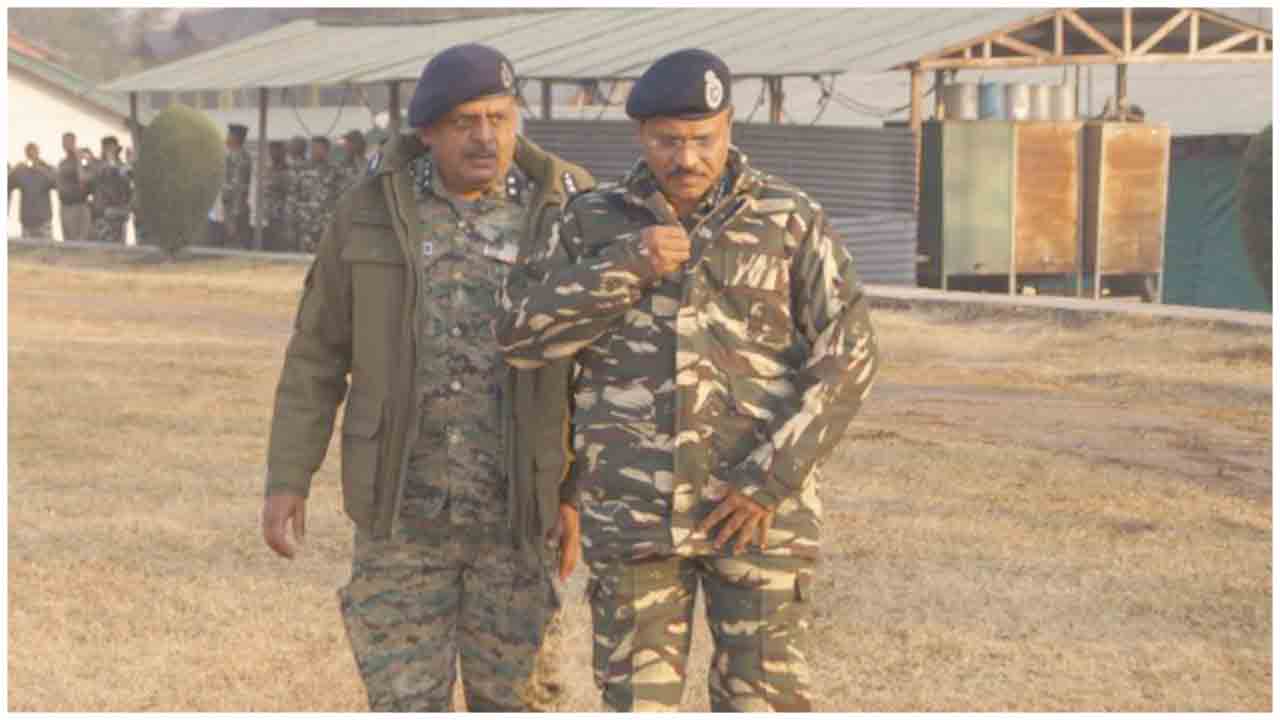
CRPF blames medical directorate for sharp spike in COVID-19 cases


Deprecated: strlen(): Passing null to parameter #1 ($string) of type string is deprecated in /home/medicircle/public_html/script_newsdetails.php on line 75
▴ CRPF blames medical directorate for sharp spike in COVID-19 cases
After a detailed investigation CRPF officers submitted a report citing the real reasons behind spike in COVID-19 cases in the 31st battalion.


The CRPF battalion deployed in Mayur Vihar Phase 3 has reported one death and 140 positive cases, making it the largest cluster of paramilitary forces to be impacted by the pandemic.
They submitted a detailed report of fact-finding to Union Home Secretary Ajay Bhalla, detailing the reason for the sharp spread of Covid-19 in its 31st Battalion in New Delhi.
The report blames MHA'S medical directorate for giving vague advisories to CRPF. The second reason pointed out was non-disclosure by a CRPF constable that he came from COVID-19 hotspot.
High level sources mentioned that CRPF informed MHA that a CRPF constable of 162 Battalion reported to 31st Battalion to join duties on April 4, based on directions from Director Medical, CRPF.
The constable failed to inform the battalion that his home address was Gali (lane) Number 9, Pandav Nagar, which was declared a hotspot before he reported to 31 Battalion.
He was kept in quarantine for 10 days after which he was discharged and sent back after thorough medical examination.
The personnel, originally posted in Kupwara in North Kashmir, reported on April 4 to join 31 Battalion after fresh guidelines for Centre.
Later on April 29, an assistant sub-inspector died after which the entire 31st battalion had to be sealed.
Meanwhile, India's confirmed cases swell 81,970 after 3,995 more test positive in 24 hrs. The COVID-19 recovery rate stood at 34 percent after 27,920 patients were discharged on Friday.


Tags : #CRPF #Mathura #COVID-19 #31stBattalion #MHA

Related Stories

Loading Please wait...

-Advertisements-


Trending Now

The Value of Risk Communication in Public HealthOctober 08, 2026
What Makes a Reliable Health Screening Programme?October 08, 2026
How Language Access Can Improve Patient Communication in Indian HealthcareOctober 07, 2026
Why Health Literacy Matters in Preventive HealthcareOctober 07, 2026
Improving Follow-Up After Diagnostic Testing: Where Systems Commonly Break DownOctober 07, 2026
How Community Health Workers Support Preventive Care DeliveryOctober 07, 2026
AI in India's Emergency Departments: Reducing Diagnostic DelaysOctober 06, 2026
AI and Patient Consent in India: Who Is Responsible?October 06, 2026
Wearable Technology in Pregnancy: Benefits and LimitsOctober 06, 2026
Remote Monitoring for High-Risk Pregnancies in IndiaOctober 06, 2026
Fortis Escorts Faridabad Launches ‘Sehat Express’ Mobile Bus for Accessible Doorstep Cancer Screening in association with Faridabad Industries Association Charitable Society and Rotary Club FaridabadOctober 05, 2026
Advanced Thrombectomy Saves 60-Year-Old Woman After Severe Heart Attack at KIMS SaveeraOctober 05, 2026
Constipation, Bloating and Long Sitting Hours: Doctors at RG Hospitals Delhi Warn Urban Professionals Not to Ignore Gut ProblemsOctober 05, 2026
Fermenta – Centre of Excellence for Food Fortification Inaugurated at NIFTEM-T, ThanjavurOctober 05, 2026
Alzheimer’s Dementia: Recognising the Signs, Diagnosing Earlier and Changing the Future of Brain HealthOctober 05, 2026
Man Matters Hairfall Case Study 2026: 7 Lakh+ Consultations Reveal How Hair Loss Changes With AgeOctober 05, 2026
Medication Reconciliation: A System-Level Step for Safer Transitions of CareOctober 05, 2026
The Role of Clinical Pharmacists in Safer Medication UseOctober 05, 2026
Nanavati Max Hospital Hosts Max Cancer Congress 2026, Bringing Together Oncology Experts to Explore the Future of Cancer Care October 01, 2026