Tuesday, October 06, 2026
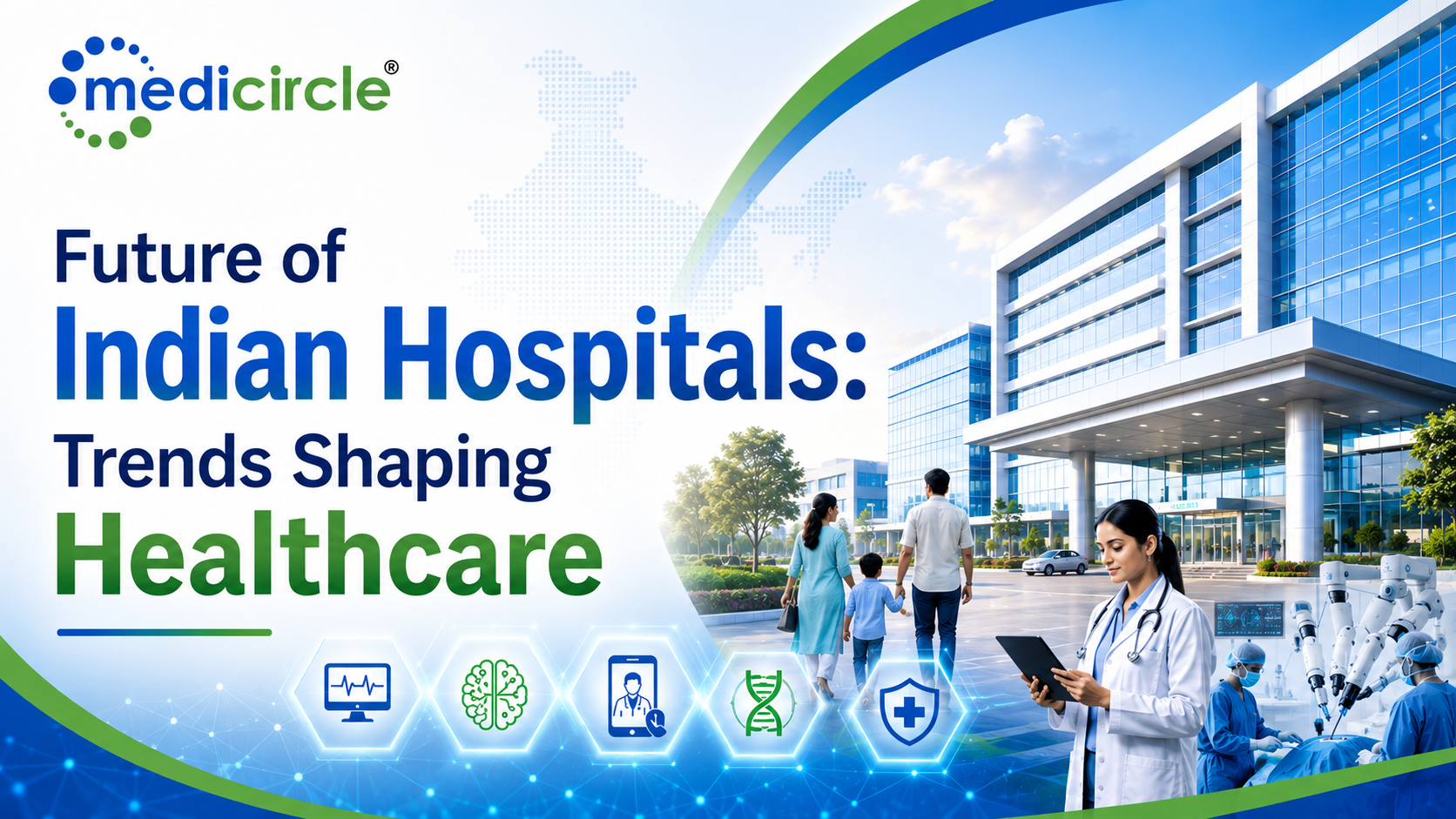
 Indian hospitals are transforming through digital integration, AI adoption, geographic expansion, and policy reform, positioning the sector for sustained growth and improved patient outcomes nationwide.




Future of Indian Hospitals: Key Trends, Technologies, and Transformations Ahead
Introduction
India's hospital sector stands at one of the most consequential turning points in its history. With a population of 1.4 billion, a rapidly growing burden of non-communicable diseases, increasing health awareness, and an expanding middle class demanding quality care, the pressure on Indian hospitals to evolve has never been greater. At the same time, the conditions for transformation have never been more favorable.
Government policy frameworks such as Ayushman Bharat and the Ayushman Bharat Digital Mission (ABDM) are reshaping how care is financed and delivered. Private equity investment in hospital chains is accelerating consolidation. Digital technologies, artificial intelligence, and connected health platforms are beginning to redefine the clinical experience. And multi-speciality hospital chains are expanding aggressively into tier 2 and tier 3 cities that have long been underserved.
For healthcare professionals, hospital administrators, investors, and patients, understanding the trajectory of Indian hospitals is not merely an academic exercise. It is a practical necessity. This article examines the major forces driving the future of Indian hospitals, the structural challenges that must be resolved, and the vision of a healthcare ecosystem that is more connected, more equitable, and more capable of serving every Indian.
The Current State of Indian Hospitals: A Baseline for Transformation
Before examining where Indian hospitals are headed, it is important to understand where they currently stand. India has approximately 1.4 hospital beds per 1,000 people, well below the World Health Organization's recommended benchmark of two to three beds per 1,000. Around 60 percent of available bed capacity is concentrated in the private sector, and a significant portion of that capacity is clustered in metropolitan and tier 1 cities such as Mumbai, Delhi, Bengaluru, Chennai, and Hyderabad. This leaves smaller cities, semi-urban areas, and rural districts with acute shortfalls in healthcare access.
The multi-speciality hospital market in India was valued at approximately INR 6,300 billion in 2024, and industry projections place the figure at INR 9,800 billion by 2028, representing a compound annual growth rate of around 12 percent. This scale of growth reflects both the enormous unmet demand in the market and the sustained investor confidence that the sector continues to attract.
Out-of-pocket healthcare expenditure, while declining from 74 percent of total health spending in 2001 to approximately 20 percent in recent years, remains a persistent challenge. India's public healthcare expenditure stood at around two percent of gross domestic product in recent financial years, which is low compared to global peers. The government has set targets to increase this allocation substantially, and progress is visible in the annual health budget, but the gap between public funding and population need remains significant.
Digital Transformation: From Legacy Systems to Connected Care Ecosystems
The most visible and consequential change happening across Indian hospitals today is the shift from fragmented, paper-based, legacy systems to integrated, digital, and data-driven platforms. This is not simply a technology upgrade. It is a fundamental restructuring of how hospitals operate, communicate, and deliver care.
Large hospital chains and even mid-sized private players are actively investing in Hospital Information Systems (HIS), Electronic Medical Records (EMR), Enterprise Resource Planning (ERP) platforms, and Customer Relationship Management (CRM) tools. The goal is to create a unified ecosystem where clinical data, operational data, and financial data can be accessed, analyzed, and acted upon in real time.
Patient journeys are being redesigned from the ground up. Smart outpatient departments are using digital registration and automated triage to reduce waiting times, which have historically been one of the most significant sources of patient dissatisfaction in Indian hospitals. Mobile applications are enabling patients to book appointments, access test results, receive medication reminders, and monitor chronic conditions through wearable device integrations. Post-discharge follow-up, which was previously fragmented and dependent on physical visits, is increasingly being managed through teleconsultation platforms and digital health apps.
Business intelligence dashboards are aggregating data from clinical, operational, and financial systems to give hospital leadership real-time visibility into bed occupancy, resource utilization, revenue cycles, and clinical outcomes. The ability to make informed, data-backed decisions at speed is becoming a genuine competitive advantage for hospitals that have invested in these systems.
Artificial Intelligence and Advanced Analytics: The Clinical and Operational Revolution
Artificial intelligence in Indian healthcare is no longer a future promise. It is an active present. The application of AI, generative AI, and machine learning across both clinical and administrative functions is expanding rapidly, and Indian hospitals are beginning to integrate these capabilities into their core workflows.
On the clinical side, AI is being used to assist radiologists and pathologists in analyzing medical images with greater speed and precision. Risk prediction models are helping clinicians identify high-risk patients before conditions deteriorate, enabling proactive intervention. Treatment planning is being supported by algorithms that integrate patient history, genomics data, and real-world clinical evidence to recommend personalized therapeutic approaches. AI-assisted documentation is reducing the administrative burden on doctors, allowing them to spend more time on direct patient care.
On the operational side, predictive analytics are improving scheduling efficiency, capacity planning, and inventory management. Digital twin technology, which involves creating virtual simulations of hospital operations, is enabling administrators to test and optimize workflows without disrupting actual patient care. Claims management and insurance processing, which are notoriously complex in the Indian context, are being streamlined through automation.
It must be noted that the promise of AI in Indian healthcare comes with important responsibilities. Data quality, algorithmic transparency, patient consent, and equitable access to AI-assisted care are all issues that hospital leadership, policymakers, and technology providers must address proactively. The Digital Personal Data Protection Act (DPDP Act) and the ABDM framework are providing regulatory guidance, but the implementation of responsible AI in clinical settings requires ongoing vigilance and institutional commitment.
Geographic Expansion: Reaching Tier 2, Tier 3, and Beyond
One of the most strategically important shifts in the Indian hospital sector is the deliberate expansion of multi-speciality hospital chains into tier 2 and tier 3 cities. Cities such as Coimbatore, Jaipur, Kochi, Nashik, Visakhapatnam, Indore, and Bhubaneswar are emerging as the next frontier for quality healthcare delivery.
The rationale for this expansion is compelling on multiple levels. Disposable incomes in these cities are rising steadily. Health insurance penetration, driven by both government schemes and private insurance products, is increasing. The cost of land and operations is significantly lower than in metro cities, improving unit economics for hospital operators. And perhaps most importantly, the population in these cities has long had access to only a fraction of the specialty care available in larger urban centers.
Large national chains and regional operators are pursuing aggressive acquisition and greenfield strategies to establish footholds in these markets. Private equity funds, including marquee global funds, are providing the capital to back these expansion strategies. The consolidation of standalone hospitals and single-region players into national networks is accelerating, creating more integrated and competitive healthcare landscapes in these cities.
For patients in tier 2 and tier 3 cities, this expansion means access to oncology, cardiology, orthopedics, neurology, and other specialty services that previously required expensive and disruptive travel to metro hospitals. This is not just a business opportunity. It is a genuine public health intervention.
Policy Architecture: ABDM, Ayushman Bharat, and the Regulatory Ecosystem
No discussion of the future of Indian hospitals is complete without examining the policy and regulatory environment that is shaping the sector. The Indian government has introduced a set of interconnected policy initiatives that are fundamentally altering how hospitals plan, operate, and engage with patients.
The Ayushman Bharat scheme, consisting of Health and Wellness Centers and the Pradhan Mantri Jan Arogya Yojana (PMJAY), has been one of the most significant healthcare policy interventions in the country's history. PMJAY provides health insurance coverage of up to INR 5 lakhs per family per year for secondary and tertiary hospitalization, targeting approximately 100 million economically disadvantaged families. For hospitals empanelled under PMJAY, this scheme has opened access to a vast segment of the population that was previously unable to afford private hospital care.
The Ayushman Bharat Digital Mission (ABDM) is creating the digital infrastructure backbone for a unified national health ecosystem. By establishing Ayushman Bharat Health Accounts (ABHA IDs) for citizens, enabling the linkage of health records across providers, and promoting interoperability between hospitals, diagnostic centers, and insurance systems, ABDM is laying the groundwork for truly connected care.
NABH accreditation continues to serve as the quality benchmark for Indian hospitals, and an increasing number of hospitals are pursuing accreditation not only to meet regulatory requirements but to signal quality commitment to patients and insurance partners. Cybersecurity protocols guided by NABH and CERT-In are becoming standard practice as hospitals handle increasing volumes of sensitive patient data.
The National Medical Commission (NMC) is modernizing medical education and professional standards, which will have downstream effects on the quality of clinical talent entering Indian hospitals over the coming decade.
Investment and Consolidation: Shaping the Hospital of the Future
The Indian hospital sector is experiencing a powerful wave of financial activity that is reshaping its structure. Private equity investment has surged, with global funds actively pursuing large-scale and control-oriented transactions in the hospital space. The average deal value has climbed significantly, reflecting both the scale of capital being deployed and the maturity of the sector as an investment destination.
A notable trend is the emergence of platform plays, where private equity funds are not merely acquiring individual hospitals but building integrated networks of hospitals, diagnostic centers, pharmacy chains, and digital health services. This integrated model creates operational efficiencies, pricing leverage with insurance companies, and a more comprehensive patient experience.
Valuation multiples for quality hospital assets have risen sharply, driven by strong sector fundamentals, consistent revenue growth, and the consolidation trend. More hospitals are also exploring public markets through initial public offerings, providing exit opportunities for early investors and bringing greater institutional discipline and transparency to hospital governance.
Emerging formats are also gaining attention. Short-stay surgical centers focused on high-volume, low-complication procedures offer efficiency and patient convenience. Senior-care focused facilities are growing in relevance as India's demographic profile ages. These differentiated formats will increasingly coexist with traditional multi-speciality hospitals to create a more diverse and responsive hospital ecosystem.
The Human Element: Workforce, Trust, and Patient-Centered Care
Buildings, technology, and capital are necessary ingredients for the future of Indian hospitals, but they are not sufficient. The human dimension of healthcare transformation is equally important.
India continues to face a significant shortage of trained healthcare professionals, particularly in rural and semi-urban areas. The limited capacity of medical colleges, nursing schools, and allied health training institutions contributes to this shortage. Expanding training capacity, improving the geographic distribution of healthcare workers, and creating career incentives for professionals to serve in underserved areas are all priorities that the healthcare system must address urgently.
Within hospitals, the success of digital transformation depends heavily on how well clinicians, nurses, and administrative staff adapt to new systems and workflows. Doctors who embrace EMRs and AI-assisted clinical tools, and who communicate their value to patients, become catalysts for broader digital adoption. Nurses and paramedical staff who participate in workflow design bring practical insight that improves system usability and patient safety.
Patient trust is the foundation upon which all of these investments must be built. As hospitals collect more data, deploy more AI, and move toward increasingly digital interactions, the responsibility to protect patient privacy, communicate transparently, and maintain the humanity of care becomes greater, not lesser. Hospitals that succeed in the future will be those that combine technological sophistication with genuine empathy and a deep commitment to patient well-being.
Frequently Asked Questions
Q1: What is the future of hospitals in India?
Indian hospitals are evolving toward digital integration, AI-assisted clinical care, geographic expansion into tier 2 and tier 3 cities, and stronger compliance with regulatory frameworks like ABDM and NABH. The sector is projected to grow significantly through the end of the decade, driven by rising demand, insurance penetration, and private investment.
Q2: How is AI being used in Indian hospitals?
AI is being applied in diagnostic imaging analysis, clinical risk prediction, personalized treatment planning, AI-assisted documentation for doctors, and operational functions such as scheduling, capacity planning, and claims processing. The adoption is expanding rapidly across both large chains and mid-sized private hospitals.
Q3: What role does Ayushman Bharat play in the future of Indian hospitals?
Ayushman Bharat, particularly PMJAY, extends financial protection for hospitalization to millions of economically vulnerable families. For hospitals, it widens the patient base, improves payor mix with government-backed insurance settlements, and encourages quality improvement through NABH accreditation requirements.
Q4: Why are hospitals expanding into tier 2 and tier 3 cities in India?
Rising disposable incomes, growing insurance penetration, lower land and operational costs, and significant unmet healthcare demand make these cities highly attractive. National hospital chains and private equity investors are actively pursuing expansion strategies in these markets to capture long-term growth.
Q5: What challenges do Indian hospitals face in digital transformation?
The primary barriers include outdated legacy infrastructure, fragmented and siloed health data, shortage of specialist healthcare IT professionals, resistance to workflow changes among clinical staff, and the complexity of complying with regulations like the DPDP Act and ABDM interoperability standards.






.jpeg)
.jpg)
.jpg)
.jpg)
.jpg)
.jpg)
.jpg)


.jpg)
.jpg)
.jpg)
.jpg)
.jpg)
.jpg)