 Saturday, October 10, 2026
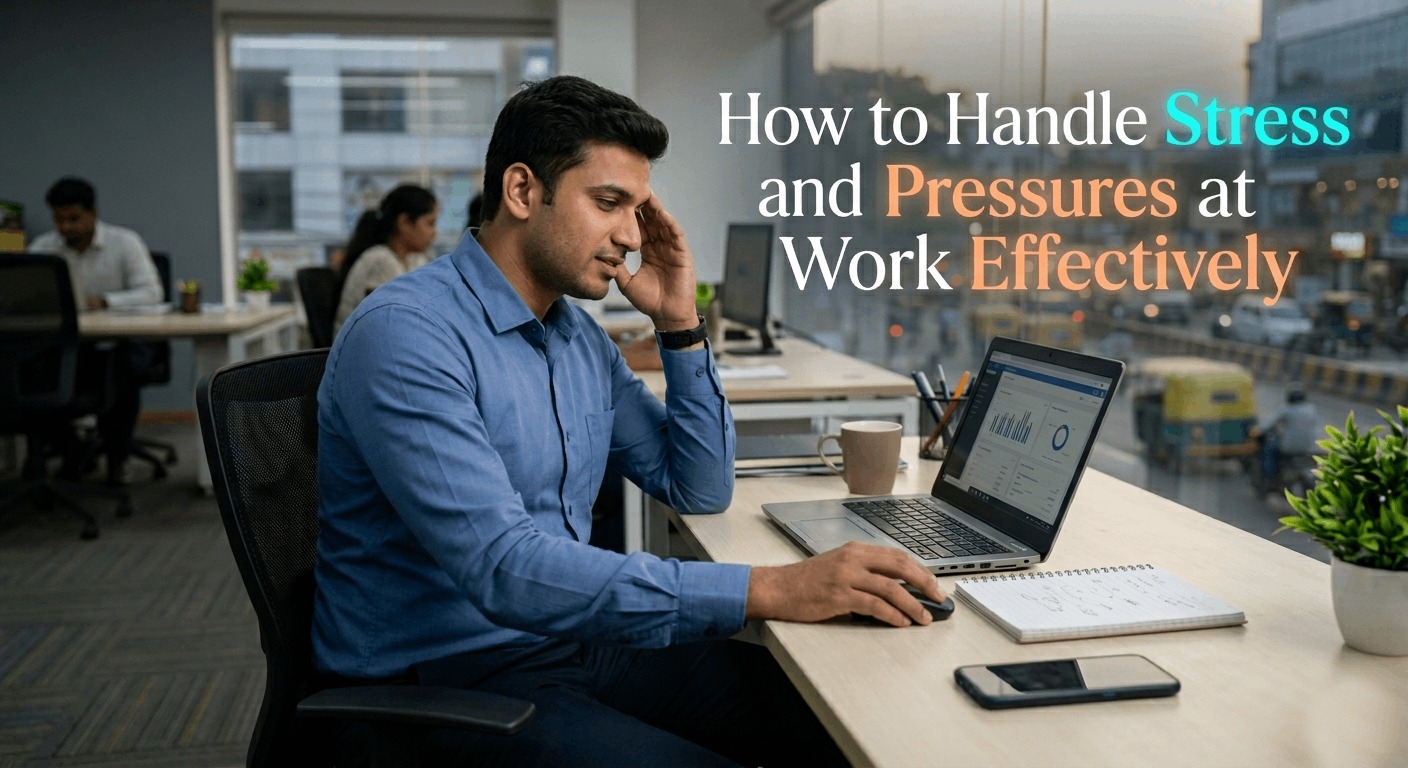
 Work pressure affects professionals across global work environments, driven by deadlines, expectations, and constant connectivity. Understanding pressure and stress at work helps you adopt the best way to handle pressure through structured routines, clear priorities, and mindful work habits. Whether you are dealing with pressure at work daily or coping under pressure at work during intense periods, consistent strategies can improve productivity, reduce stress, and support long-term balance.




How to Handle Stress and Pressure at Work Effectively
Deadlines keep getting tighter. Messages don’t stop. Expectations rise faster than time allows. This is the reality of modern work, where work pressure has become part of everyday life. Whether you are in a fast-paced office in the US, managing hybrid work in the UK, or navigating long hours in India or Australia, the experience of pressure and stress at work is no longer occasional—it is constant.
Many people try to push through, assuming it is temporary. But when ignored, extreme work pressure starts affecting focus, productivity, and even personal well-being. Understanding how to handle stress and pressure is not just helpful—it is necessary for long-term balance.
This article explores the real reasons behind workplace pressure, its effects, and the best way to handle pressure without feeling overwhelmed.
What Is Work Pressure and Why Does It Build Up?
Work pressure refers to the mental and emotional strain caused by job demands, deadlines, expectations, and responsibilities. It is not always negative—some pressure can improve focus and performance. But when it becomes constant or excessive, it turns into stress.
In today’s global work culture, several factors contribute to pressure and stress at work:
- High expectations with limited time
- Constant communication through emails and messaging tools
- Performance tracking and competition
- Lack of clear boundaries between work and personal time
In countries like Canada and Australia, remote work has blurred these boundaries even more, making it harder to disconnect.
When Work Pressure Becomes Too Much
There is a difference between manageable pressure and overwhelming stress. Recognizing when you are moving toward extreme work pressure is important.
You may notice:
- Difficulty focusing even on simple tasks
- Constant fatigue despite rest
- Irritability or lack of motivation
- Feeling mentally drained before the day even begins
At this stage, coping under pressure at work becomes more difficult without conscious effort.
Effects of Pressure and Stress at Work on Daily Life
The impact of pressure and stress at work is not limited to office hours. It slowly affects your entire routine.
Common Effects You May Experience
- Reduced productivity despite longer working hours, as mental fatigue limits efficiency
- Sleep disturbances, especially when work thoughts continue into the night
- Lower confidence due to constant performance pressure
- Reduced personal time, leading to imbalance in daily life
Over time, these effects make dealing with pressure at work feel more exhausting than the work itself.
Why Modern Work Culture Increases Pressure
Across the US, UK, and India, work environments have become more demanding due to technology and global competition.
- Work is no longer limited to fixed hours
- Instant responses are often expected
- Multiple responsibilities overlap throughout the day
- Job roles are expanding without clear boundaries
This creates a cycle where coping with pressure at work becomes a daily challenge rather than a temporary phase.
How to Handle Stress and Pressure Without Feeling Overwhelmed
Learning how to handle stress and pressure is about managing both mindset and routine. It is not about avoiding work pressure completely, but about responding to it better.
Best Way to Handle Pressure in Daily Work
- Break tasks into smaller, manageable steps instead of focusing on everything at once. This reduces mental overload and improves clarity.
- Set realistic expectations for what can be completed in a given time instead of overcommitting.
- Take short pauses during work to reset your focus rather than pushing continuously for hours.
- Communicate clearly with your team or manager when workload becomes difficult to manage.
These simple adjustments can significantly improve how you experience work pressure.
Coping with Pressure at Work: Practical Approaches
Instead of reacting to stress, it helps to build habits that support coping with pressure at work more effectively.
Ways to Stay Balanced During High-Pressure Situations
- Maintain a structured routine, even in flexible work environments. This helps create a sense of control.
- Prioritize tasks based on importance rather than urgency alone.
- Avoid multitasking excessively, as it increases mental strain and reduces efficiency.
- Keep your workspace organized to reduce distractions and improve focus.
These strategies are commonly used in high-performance work cultures across the US and Australia.
Coping Under Pressure at Work During Deadlines
Deadlines are one of the biggest triggers of extreme work pressure. The key is to approach them strategically rather than emotionally.
When facing tight timelines, focus on execution instead of perfection. Many people struggle because they try to meet unrealistic standards under limited time.
Coping under pressure at work becomes easier when you:
- Focus on progress rather than perfection
- Avoid overthinking outcomes
- Stay consistent instead of rushing at the last moment
This approach helps maintain both quality and mental stability.
Dealing with Pressure at Work in Long-Term Roles
For people in demanding roles, dealing with pressure at work requires long-term adjustments.
Working professionals between 25–45 years are the most affected by work pressure, especially in urban environments. Long hours, career expectations, and financial responsibilities create continuous stress. While younger professionals may feel pressure due to performance expectations, experienced workers often face leadership and decision-making stress.
The key is to create a sustainable work pattern instead of relying on short-term coping methods.
Challenges in Handling Work Pressure
Even with awareness, managing pressure and stress at work is not always easy.
- Work demands may not always be within your control
- Deadlines and expectations can change suddenly
- Personal motivation may fluctuate due to fatigue
- It can be difficult to disconnect from work mentally
These challenges make it important to build consistent habits rather than depending on occasional breaks.
Advantages of Managing Work Pressure Effectively
When you learn to handle stress and pressure, the benefits go beyond work.
- Improved focus and productivity during working hours
- Better work-life balance and personal time
- Reduced mental fatigue and improved clarity
- Greater confidence in handling responsibilities
Managing work pressure effectively allows you to stay productive without feeling overwhelmed.
Conclusion: A Smarter Approach to Work Pressure
Work pressure is part of modern professional life, but it does not have to control your routine. By understanding how pressure and stress at work develop and learning practical ways to handle stress and pressure, you can create a more balanced and sustainable work style.
From coping with pressure at work during daily tasks to managing extreme work pressure during deadlines, small changes in approach can make a big difference.
Frequently Asked Questions (FAQs)
1. What is work pressure and how does it affect daily performance?
Work pressure refers to the mental strain caused by deadlines, responsibilities, and expectations at the workplace. While some level of pressure can improve focus, ongoing pressure and stress at work can reduce productivity, affect decision-making, and lead to fatigue. Over time, it can make even simple tasks feel overwhelming.
2. What are the main causes of pressure and stress at work?
The most common causes of pressure and stress at work include tight deadlines, high expectations, long working hours, and lack of work-life balance. Constant communication and multitasking also increase stress levels, making it harder to stay focused and organized.
3. How can you handle stress and pressure effectively at work?
To handle stress and pressure, it helps to break tasks into smaller steps, set realistic goals, and take short breaks during work hours. Staying organized and maintaining a routine can improve focus and reduce the feeling of being overwhelmed.
4. What is the best way to handle pressure during deadlines?
The best way to handle pressure during deadlines is to focus on priorities instead of trying to do everything at once. Avoid overthinking, stay consistent with your work pace, and aim for progress rather than perfection. This helps in coping under pressure at work more effectively.
5. How can you improve coping with pressure at work in the long term?
Coping with pressure at work becomes easier when you build daily habits like time management, task prioritization, and clear communication. Regular breaks and a structured routine also help in maintaining mental clarity and reducing long-term stress.
6. What are the signs of extreme work pressure?
Extreme work pressure often shows up as constant fatigue, lack of motivation, difficulty concentrating, and irritability. People may also experience burnout when they are unable to manage workload or disconnect from work mentally.
7. Why do working professionals experience high work pressure today?
Modern work culture in countries like the US, UK, and Australia often involves long hours, digital communication, and high performance expectations. These factors contribute to increasing work pressure, especially among professionals managing multiple responsibilities.
8. How does dealing with pressure at work impact mental health?
Dealing with pressure at work for long periods without proper management can affect mental well-being. It may lead to stress, reduced confidence, and difficulty maintaining focus, making it important to adopt healthy coping strategies.
9. Can coping under pressure at work improve productivity?
Yes, coping under pressure at work can improve productivity when managed well. A balanced approach helps maintain focus, ensures better time management, and allows individuals to perform efficiently even in demanding situations.
10. What simple habits can help reduce pressure and stress at work?
Simple habits like planning your day, taking regular breaks, avoiding excessive multitasking, and maintaining a clear workspace can reduce pressure and stress at work. These small changes support better focus and help manage workload more effectively.






.jpeg)










.jpg)
.jpg)
.jpg)
.jpg)
.jpg)
.jpg)


.jpg)