 Wednesday, October 28, 2026
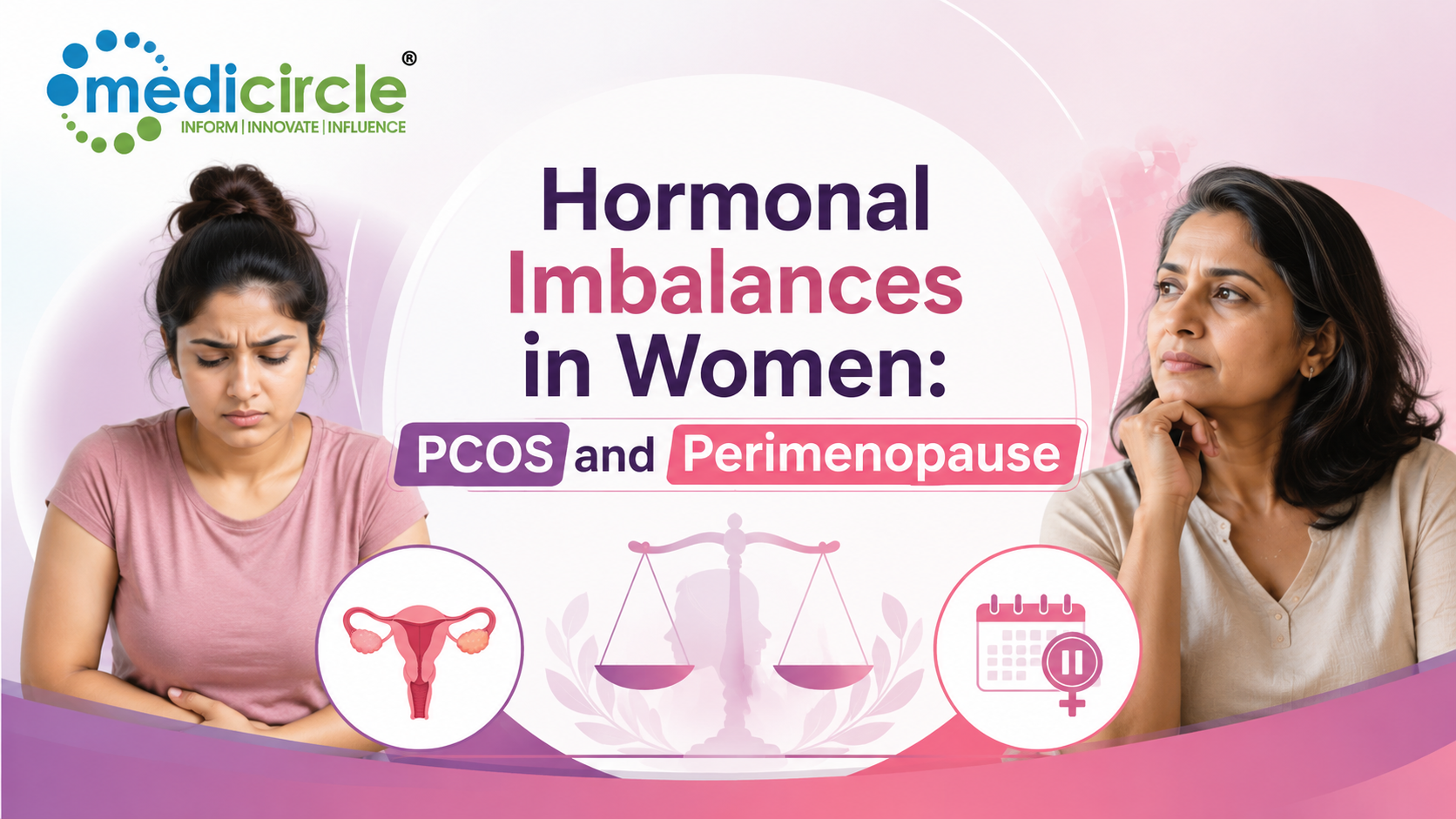
 The female endocrine system relies on intricate hormonal feedback mechanisms that regulate reproductive health, metabolism, and overall physiological balance. Understanding these interconnected pathways enables earlier diagnosis, personalized treatment, and more effective management of hormonal disorders across different stages of a woman's life.




The female endocrine landscape is controlled by complex, highly sensitive feedback loops that regulate reproductive health, metabolic balance, and long-term systemic cellular function. Unlike static endocrine systems, a woman's hormonal matrix is naturally dynamic, shifting across monthly cycles and evolving through major biological life phases.
When these delicate signaling systems experience disruption, women frequently navigate severe, system-wide imbalances that profoundly alter their physical and mental well-being.
The two most common endocrine challenges occurring across different stages of a woman's life are Polycystic Ovary Syndrome (PCOS) and Perimenopause. PCOS stands as the leading cause of endocrine-related subfertility worldwide, primarily affecting women of reproductive age. Perimenopause, conversely, represents the natural transitional window leading toward menopause, typically beginning in a woman's late 30s or 40s.
While these conditions represent entirely different reproductive phases, they share significant clinical overlaps: both are driven by profound hormonal shifts, both heavily alter metabolic health, and both introduce long-term cardiovascular and bone health risks if left unmanaged.
Failing to address these conditions with clinical precision carries severe physiological costs. Relying on superficial symptom tracking or generic lifestyle advice allows hidden metabolic dysregulation, severe insulin resistance, and systemic vascular inflammation to progress unchecked.
Transitioning to an evidence-based, data-driven endocrine framework resolves this therapeutic gap. By using high-density hormone panels, monitoring dynamic metabolic biomarkers, and applying targeted clinical therapies, women can balance their internal endocrine chemistry, protect their metabolic health, and maintain high physical vitality across every stage of life.
1. The Endocrine Architecture of PCOS and Perimenopause
To manage these conditions effectively, we must first trace the distinct molecular pathways and hormonal shifts that drive their clinical presentation:
Polycystic Ovary Syndrome (PCOS): Hyperandrogenism and Insulin ResistancePCOS is a multi-systemic endocrine disorder. It is defined clinically by a core breakdown in the communication between the brain's pituitary gland and the ovaries, resulting in a high luteinizing hormone (LH) to follicle-stimulating hormone (FSH) ratio. This altered signaling prompts the specialized cells inside the ovaries to overproduce male hormones (androgens), primarily testosterone and androstenedione.
As detailed in the anatomical comparison, this excess of local androgens halts the normal maturation of ovarian follicles. Instead of developing into a single, dominant egg cell ready for ovulation, multiple primary follicles become arrested early in their growth cycle. They form a characteristic ring of tiny, fluid-filled sacs along the edge of the ovary, resulting in chronic anovulation and irregular, unpredictable menstrual cycles.
Crucially, insulin resistance functions as a primary driver in over 70\% of all PCOS cases, entirely independent of body weight. When the body's muscle and fat cells become numb to circulating insulin, the pancreas produces massive amounts of the hormone to compensate.
This state of hyperinsulinemia acts as a direct stimulus on the ovaries, worsening androgen production and lowering levels of Sex Hormone-Binding Globulin (SHBG), which increases free, active testosterone in the blood and triggers persistent acne, hair thinning, and weight distribution challenges.
Perimenopause: The Erratic Decline of the Female Hormone LifecyclePerimenopause represents a highly dynamic transitional phase defined not by a simple, flat drop in hormones, but by severe, chaotic fluctuations in estrogen and progesterone levels.
As mapped out in the hormone lifecycle grid, the body's natural reserve of ovarian eggs drops over time, causing the ovaries' response to brain signaling to become highly erratic. In an effort to stimulate the fading follicles, the pituitary gland floods the system with high levels of Follicle-Stimulating Hormone (FSH). This high signaling triggers temporary, sudden surges in Estradiol (estrogen), followed by rapid drops.
Because many monthly cycles during perimenopause occur without successful ovulation (anovulatory\ cycles), the body struggles to produce adequate progesterone to balance out the estrogen. This state of relative estrogen dominance, paired with sudden hormone drops, acts as a primary trigger for intense central nervous system disruptions. It causes debilitating hot flashes, night sweats, severe sleep fragmentation, sudden mood shifts, and early loss of bone mineral density.
2. The Advanced Endocrine Lab Panel and Diagnostic Targets
To map your specific hormonal landscape accurately without relying on guesswork, you must replace basic, single-draw tests with a comprehensive metabolic and endocrine laboratory panel. The table below outlines the precise biomarkers needed to establish a definitive diagnosis.
|
Diagnostic Biomarker |
Standard Lab "Normal" Reference |
Optimized Clinical Target Zone |
The Systemic Clinical Interpretation |
|---|---|---|---|
|
Total & Free Testosterone |
Total: 15\text{ to }70\text{ ng/dL} Free: 0.1\text{ to }6.4\text{ pg/mL} |
Total: <30\text{ ng/dL} Free: <3.0\text{ pg/mL} |
Elevated free testosterone confirms a state of clinical hyperandrogenism, pointing directly toward a PCOS diagnostic path. |
|
Fasting Serum Insulin |
<25\text{ \mu IU/mL} |
2\text{ to }5\text{ \mu IU/mL} |
Scores climbing above 6 uIU/mL prove the presence of functional insulin resistance, driving ovarian androgen overproduction. |
|
Follicle-Stimulating Hormone (FSH) |
Reproductive: 4.7\text{ to }21.5\text{ mIU/mL} |
Variable; tracking trends over time |
An FSH score rising consistently above 25 mIU/mL on random mid-cycle draws confirms the transition into perimenopause. |
|
Sex Hormone-Binding Globulin (SHBG) |
18\text{ to }144\text{ nmol/L} |
70\text{ to }110\text{ nmol/L} |
Low SHBG scores leave high amounts of testosterone unbound in the blood, worsening skin breakouts and male-pattern hair thinning. |
|
Dehydroepiandrosterone Sulfate (DHEA-S) |
35\text{ to }430\text{ \mu g/dL} |
150\text{ to }250\text{ \mu g/dL} |
High DHEA-S levels pinpoint a strong adrenal contribution to overall androgen excess, expanding focus past the ovaries alone. |
3. High-Performance Clinical Management Action Plan
To successfully balance your endocrine system, protect your cardiovascular pathways, and eliminate chronic symptoms, execute this structured operational protocol under the direct guidance of a specialized medical provider:
- Establish Advanced Diagnostic Baselines and Exclude Mimicking Conditions
Phase 1
Map your exact internal chemistry. Order a comprehensive laboratory panel tracking your free testosterone, fasting insulin, SHBG, DHEA-S, and FSH levels, while running targeted checks to rule out mimicking thyroid or prolactin conditions completely. - Deploy Targeted Insulin-Sensitizing and Hormone-Balancing Elements
Phase 2
Initiate metabolic and endocrine support. If insulin resistance is verified, utilize evidence-based sensitizers like Myo-Inositol combined with D-Chiro-Inositol in a 40:1 ratio (2000 mg daily) or physician-prescribed Metformin to restore cellular receptor sensitivity. For severe perimenopausal hot flashes and structural bone loss, collaborate with your specialist to consider tailored, bioidentical Menopausal Hormone Therapy (MHT) using transdermal estradiol paired with oral micronized progesterone to stabilize your systemic hormone lines safely. - Lock in Long-Term Cardiovascular Shielding and Semi-Annual Panel Audits
Phase 3
Maintain permanent metabolic control. Enforce a daily nutrition and low-glycemic routine to keep your blood sugar line flat, and schedule follow-up biomarker evaluations every six months to confirm your endocrine system remains securely within the optimal longevity targets.
Actionable Strategy: Your Long-Term Health Governance Roadmap
- Link Your Endocrine Ledger Natively with the Universal ABHA Framework: Prevent fragmented medical charts across separate specialist clinics. Ensure all your laboratory hormone sheets, pelvic ultrasound reports, and metabolic history tracking sync cleanly using a verified ABHA ID via the Ayushman Bharat Digital Mission (ABDM) pipeline, preserving an unbroken, highly portable medical timeline.
- Deploy a High-Performance Strength and Resistance Training Routine: Use your muscles to clear blood glucose naturally. Engage in 150 minutes of structured resistance training weekly—such as progressive weight lifting or bodyweight strength blocks—to expand your total muscle mass, increase the expression of GLUT4 glucose transporters, and lower systemic insulin resistance.
- Incorporate Advanced Micronutrient and Anti-Inflammatory Co-Factors: Support your internal metabolic path with targeted nutrients. Maintain an optimal baseline by supplementing with 2,000 to 5,000 IU of Vitamin D3 daily paired with magnesium and omega-3 fatty acids, directly stabilizing cellular walls, calming chronic tissue irritation, and supporting healthy ovarian steroidogenesis.
Frequently Asked Questions (FAQs)
Q1. Can an individual have PCOS even if their pelvic ultrasound shows zero ovarian cysts?Yes, absolutely. Under the standardized international Rotterdam Criteria, a definitive diagnosis requires meeting at least two out of three benchmarks: irregular cycles, clinical or biochemical high androgens, and polycystic ovaries on an ultrasound scan. If you present with irregular cycles and elevated testosterone, you meet the criteria independent of ultrasound imaging.
Q2. Why does a perimenopausal hormone shift cause such intense sleep disruptions and night sweats?Fluctuating estrogen levels directly disrupt the brain's hypothalamus, the primary control center responsible for tracking body temperature. Sudden drops in estrogen trigger false internal heat alarms, causing the body to launch intense hot flashes and night sweats that break normal sleep architecture.
Q3. How exactly does Myo-Inositol assist in restoring regular ovulation for women with PCOS?Inositol molecules act as essential secondary messengers within your cells, controlling the insulin signaling path. Restoring receptor sensitivity helps lower high blood insulin levels, removing the abnormal stimulus on the ovaries, reducing testosterone production, and allowing follicles to mature and ovulate naturally.
Q4. What is the role of an ABHA ID in tracking long-term endocrine health histories?An Ayushman Bharat Health Account (ABHA) ID serves as a secure, lifetime digital record that links your clinical hormone sheets, ultrasound files, and prescription logs cleanly across verified clinics and national medical networks, keeping your care aligned.
Q5. Why do standard total cholesterol tests frequently fail to evaluate cardiovascular risk during perimenopause?As estrogen levels drop, the body experiences a shift toward a more inflammatory lipid profile, increasing small, dense LDL particle counts. Standard cholesterol tests measure total weight rather than particle numbers, making advanced metrics like Apolipoprotein B (ApoB) far more accurate for tracking true cardiovascular risk.
Q6. Can high psychological stress worsen the underlying symptoms of both PCOS and perimenopause?Yes, dramatically. Chronic stress prompts the adrenal glands to flood the body with cortisol and DHEA-S, directly increasing total circulating male hormones. Furthermore, high cortisol levels raise blood glucose lines, worsening insulin resistance and intensifying perimenopausal hot flashes.
Q7. What are the key warning signs that show a woman is entering perimenopause?Primary early indicators include unexpected changes in menstrual cycle length, uncharacteristic morning fatigue, sudden night sweats, recurring sleep fragmentation, unexplained breast tenderness, and sudden shifts in emotional resilience.
Q8. What parameters are continuously monitored on a 360-degree female hormone capability scorecard?A holistic endocrine scorecard looks past basic cycle calendars, cross-referencing free testosterone concentrations, fasting serum insulin scores, SHBG levels, sleep quality consistency, systemic inflammation markers, and bone density preservation indices.
Q9. How fast can a woman expect an improvement in energy and cycle regularity after starting this protocol?When you deploy targeted inositol balancing elements, implement a low-glycemic whole-food routine, and incorporate regular strength training, the systemic response is steady. You can observe improved energy levels and more predictable metabolic patterns within 4 to 6 weeks of active execution.
Q10. What immediate steps should a woman take if her fasting insulin flags above 15 uIU/mL?Act promptly within a structured path: consult a specialist to evaluate your complete metabolic baseline, eliminate refined white carbohydrates and industrial seed oils from your diet immediately, incorporate regular resistance training to build muscle mass, and explore evidence-based insulin sensitizers under direct medical oversight.
Q11. How does transdermal estradiol differ from oral estrogen options regarding safety?Transdermal estradiol patches or gels deliver estrogen straight through the skin into the blood, bypassing the liver's initial metabolism entirely. This delivery method avoids stimulating clotting factor production, offering a significantly safer profile with lower blood clot risks than traditional oral tablets.
Q12. Why do low estrogen levels during menopause accelerate the risk of developing osteoporosis?Estrogen acts as a natural shield for the skeleton by suppressing the activity of osteoclasts, the specialized cells responsible for breaking down bone tissue. When estrogen lines drop, these cells operate uninhibited, causing rapid bone mineral loss.
Q13. Can lifestyle adjustments alone completely reverse severe adrenal-driven hyperandrogenism?While stress reduction, anti-inflammatory nutrition, and deep sleep support are essential to lower adrenal stress, severe cases often require a combined strategy that pairs lifestyle upgrades with targeted clinical elements like low-dose spironolactone or specific adaptogens under close medical monitoring.
Q14. What specific role does Sex Hormone-Binding Globulin (SHBG) play in managing skin breakouts?SHBG functions as a biological transport vehicle that binds tightly to circulating male hormones, rendering them temporary inactive. When SHBG levels drop due to high insulin, more free testosterone floats into skin tissue, stimulating sebaceous glands and causing severe acne.
Q15. How do digital health networks protect women from undergoing repetitive pelvic imaging scans?Centralized records linked to secure digital platforms store high-resolution ultrasound files and reports permanently. Having immediate access to this shared history allows any new specialist to review original images instantly, removing the need to rerun expensive diagnostic scans at every consultation.





-23-300x250.png)

.jpeg)







.jpg)
.jpg)
.jpg)
.jpg)
.jpg)
.jpg)
.jpg)
.jpg)
.jpg)

