 Monday, October 05, 2026
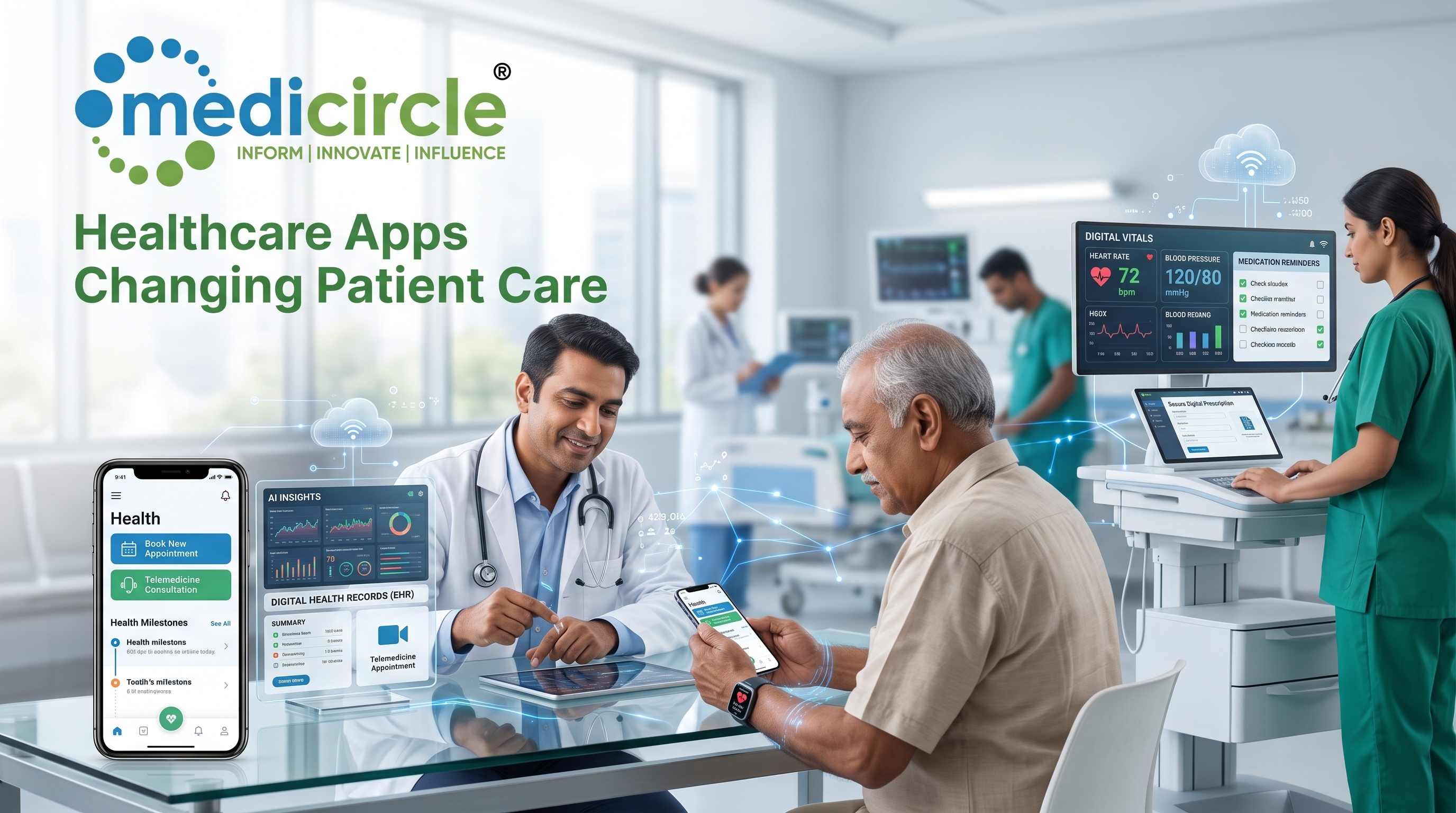
 This article examines how healthcare apps are transforming patient care across India, covering adoption trends, patient engagement benefits, accessibility challenges, and the evolving role of digital health tools alongside traditional clinical care.





Introduction
Healthcare in India is undergoing a quiet but powerful transformation, and much of it is happening through the screens of smartphones. Healthcare apps are no longer a novelty limited to fitness enthusiasts or tech-savvy urban professionals. They have become part of how patients book appointments, track medications, consult doctors, and manage chronic conditions. From Tier 1 metros like Mumbai and Bengaluru to smaller Tier 2 cities, digital health tools are gradually closing gaps in access, convenience, and continuity of care.
This shift matters because India carries a significant burden of chronic disease, a shortage of doctors relative to population size, and vast geographic distances between patients and specialists. Healthcare apps address these challenges directly by bringing consultation, monitoring, and education closer to where patients actually live. Understanding how these apps are changing patient care, and what to look for when adopting them, is now essential knowledge for patients, caregivers, and healthcare professionals alike.
Understanding the Growth of Healthcare Apps in India
The global appetite for digital health tools has grown considerably in recent years. Health and fitness apps alone accumulated close to 1.83 billion downloads worldwide in 2025, and the broader digital health market now includes hundreds of thousands of applications competing for user attention. This growth is not limited to Western markets. India's own digital health ecosystem has expanded rapidly, supported by increasing smartphone penetration, affordable data plans, and government-led digital health initiatives.
The Ayushman Bharat Digital Mission (ABDM) has played a meaningful role in this shift by working toward a unified digital health ecosystem that includes health IDs, digital health records, and interoperability between healthcare providers. This kind of infrastructure makes it easier for healthcare apps to integrate meaningfully into the broader system rather than functioning as isolated tools. The National Health Policy has also emphasized the use of technology to improve healthcare access, particularly in underserved regions.
For Indian patients, this translates into tangible benefits. A patient in a smaller town no longer has to travel long distances simply to consult a specialist for a routine follow-up. A working professional in a metro city can review lab reports without taking time off to visit a clinic in person.
Types of Healthcare Apps Transforming Patient Care
Healthcare apps are not a single category. They serve different needs across the patient journey, and understanding these categories helps clarify why their impact has been so broad.
Patient portal apps allow individuals to access medical records, lab results, and prescriptions in one place, reducing dependence on physical files and repeated hospital visits. Telemedicine apps have perhaps seen the most visible growth in India, particularly since the pandemic normalized virtual consultations. These platforms typically include scheduling, secure messaging, video consultations, and follow-up care, allowing patients to consult doctors without geographic constraints.
Medication management apps address a particularly important gap. Missed doses and poor adherence remain significant contributors to poor outcomes in chronic disease management, and reminder-based apps have shown real value in improving consistency. Health tracking and monitoring apps, often paired with wearable devices, allow patients to record vital signs such as blood pressure, glucose levels, or heart rate and share this data with their healthcare providers.
Mental health apps have also gained traction as awareness around psychological wellbeing grows in India, though this remains an area where cultural sensitivity and clinical rigor must go hand in hand. Care coordination apps, meanwhile, are proving valuable for families managing care for elderly relatives, particularly in joint family structures common across the country, where multiple family members may share responsibility for a single patient's care.
How Healthcare Apps Are Improving Patient Engagement
One of the most significant shifts these apps have enabled is a change in the patient's role within their own care. Traditionally, most healthcare interactions in India have been episodic, largely confined to the time a patient spends inside a clinic or hospital. Healthcare apps extend this relationship beyond the consultation room.
Research on health app usage patterns has found that patients who use these tools report feeling more informed about their health and better prepared for conversations with their healthcare providers. Many users describe using apps to gather information before an appointment, which in turn helps them communicate more clearly with their doctor during the actual consultation. This kind of preparation can make a real difference, particularly in India where consultation times are often short due to high patient loads.
That said, adoption is not universal, and understanding why some patients hesitate is just as important as celebrating the successes. Common reasons for reluctance include uncertainty about whether an app is genuinely useful, concerns about cost, and worries about data privacy. These concerns are entirely reasonable and should be addressed transparently by developers and healthcare providers rather than dismissed.
Addressing Barriers: Access, Trust, and the Digital Divide
Despite their promise, healthcare apps in India face real structural challenges that deserve honest acknowledgment. Not every patient owns a smartphone, and not every smartphone owner has reliable internet access, particularly in rural areas. This digital divide means that healthcare apps, if not designed thoughtfully, risk widening existing healthcare inequities rather than reducing them.
Health literacy and digital literacy also vary considerably across India's population. An elderly patient in a Tier 2 city may find navigating a healthcare app considerably more difficult than a younger, urban, tech-comfortable user. This is why the most effective healthcare apps prioritize simplicity in design, ensure regional language support, and often work alongside human support systems rather than replacing them entirely.
Data privacy is another area that deserves careful attention. Patients sharing sensitive health information through an app need confidence that this data is protected. Regulatory frameworks in India continue to evolve in this space, and patients are encouraged to use apps that are transparent about their data handling practices and, where applicable, aligned with government health data standards.
It is also worth noting that regulatory oversight for health apps remains an evolving area globally, including in India. Not all apps undergo the same level of clinical validation, which means patients and caregivers should exercise judgment, particularly for apps that claim to diagnose or treat conditions rather than simply support monitoring and communication.
The Role of Doctors and Healthcare Providers
Healthcare apps work best when they complement, rather than replace, the relationship between a patient and their healthcare provider. Doctors in India are increasingly recognizing the value of app-generated data, particularly for chronic disease management where continuous monitoring between visits can reveal patterns that a single consultation might miss.
At the same time, integrating patient-generated data into clinical practice is not without its challenges. Physicians often have limited time to review data from multiple sources, and there can be uncertainty about how much weight to give self-reported information from an app compared to clinical measurements. Building this integration thoughtfully, with proper training for healthcare professionals on how to use and interpret app-based data, will be key to realizing the full benefit of these tools.
Platforms like Medicircle play a role here by helping bridge this gap, giving doctors, hospitals, and healthtech innovators a credible space to share how digital tools are being used responsibly in real clinical settings, while helping patients understand what to expect from these technologies.
Practical Considerations Before Choosing a Healthcare App
Patients and caregivers evaluating healthcare apps should keep a few practical points in mind rather than choosing based on popularity or marketing alone.
- Check whether the app is recommended or used by a registered healthcare provider or hospital, particularly for apps involved in monitoring or medication management
- Review the app's data privacy policy and understand how your health information will be stored and shared
- Consider ease of use, especially if the app will be used by elderly family members or those less comfortable with technology
- Look for apps that support regional languages where relevant, to ensure the information is genuinely accessible
These considerations matter because the value of a healthcare app depends heavily on whether it is actually used consistently and correctly, not simply downloaded.
The Road Ahead for Healthcare Apps in India
The trajectory for healthcare apps in India points toward deeper integration with the broader healthcare system rather than standalone functionality. As ABDM infrastructure matures, healthcare apps are likely to increasingly connect with hospital records, pharmacy systems, and insurance platforms, creating a more continuous picture of patient health rather than fragmented data sitting in separate apps.
Artificial intelligence is also expected to play a growing role, particularly in symptom assessment and care navigation, though this must be approached carefully. AI features should support clinical decision-making and help patients understand when to seek care, not replace the judgment of a qualified doctor. Wearable integration is another area of expected growth, allowing apps to draw on real-time physiological data rather than relying solely on self-reported information.
For India specifically, the greatest opportunity may lie in extending these tools meaningfully into Tier 2 and Tier 3 cities, where the shortage of specialists is often most acute and where digital tools have the potential to make the biggest difference in access to care.
Conclusion
Healthcare apps are reshaping patient care in India in ways that extend well beyond convenience. They are changing how patients engage with their own health, how families coordinate care for loved ones, and how doctors extend their reach beyond the walls of a clinic. At the same time, real challenges remain around accessibility, digital literacy, data privacy, and ensuring these tools genuinely serve patients rather than simply generating data. As India's digital health infrastructure continues to mature, healthcare apps that are built thoughtfully, with attention to trust, simplicity, and genuine clinical value, are likely to have the greatest lasting impact on patient outcomes across the country.
Frequently Asked Questions
Q1: Are healthcare apps safe to use for managing chronic conditions in India?
Many healthcare apps can support chronic disease management effectively, particularly for medication reminders and symptom tracking, but they should be used alongside regular consultation with a qualified doctor rather than as a replacement for medical advice.
Q2: How do I know if a healthcare app is trustworthy?
Look for apps that are transparent about data privacy, ideally recommended or used by registered hospitals or healthcare providers, and that clearly state their purpose without making exaggerated claims about diagnosis or cures.
Q3: Can healthcare apps replace visits to a doctor?
No. Healthcare apps are designed to support and extend the patient-provider relationship through monitoring, reminders, and communication, but they cannot replace clinical examination, diagnosis, or treatment decisions made by a qualified doctor.
Q4: Why do some patients in India hesitate to use healthcare apps?
Common reasons include limited digital literacy, concerns about data privacy, uncertainty about whether the app is genuinely useful, and, in some cases, limited access to smartphones or reliable internet, particularly in rural areas.
Q5: What role does the government play in healthcare app adoption in India?
Initiatives such as the Ayushman Bharat Digital Mission are working to build unified digital health infrastructure, including health IDs and interoperable records, which supports more meaningful integration of healthcare apps into the wider healthcare system.
Resources
- Ayushman Bharat Digital Mission (ABDM): Official government portal detailing India's digital health infrastructure initiatives
- World Health Organization (WHO): Global reports and guidance on digital health interventions
- Indian Council of Medical Research (ICMR): Guidelines and publications relevant to digital health and clinical research in India
- National Health Portal of India; Government resource for public health information and digital health initiatives
- PubMed Central (PMC): Peer-reviewed research on health app usage, patient motivations, and clinical outcomes
Interlinking Keywords
telemedicine in India, digital health records, chronic disease management apps, medication adherence, patient engagement technology, Ayushman Bharat Digital Mission, remote patient monitoring, healthtech innovation India
Medical Disclaimer:
This article is intended for general informational and awareness purposes only and does not constitute medical advice, diagnosis, or treatment recommendations. Readers should consult a qualified healthcare professional before making any decisions related to their health, medication, or use of healthcare technology.






.jpeg)
.jpg)
.jpg)
.jpg)
.jpg)
.jpg)
.jpg)




.jpeg)

.jpeg)
.png)