Tuesday, October 27, 2026
 Haryana seals border with Delhi due to surge in infections in the capital, but nationally recovery rate improves




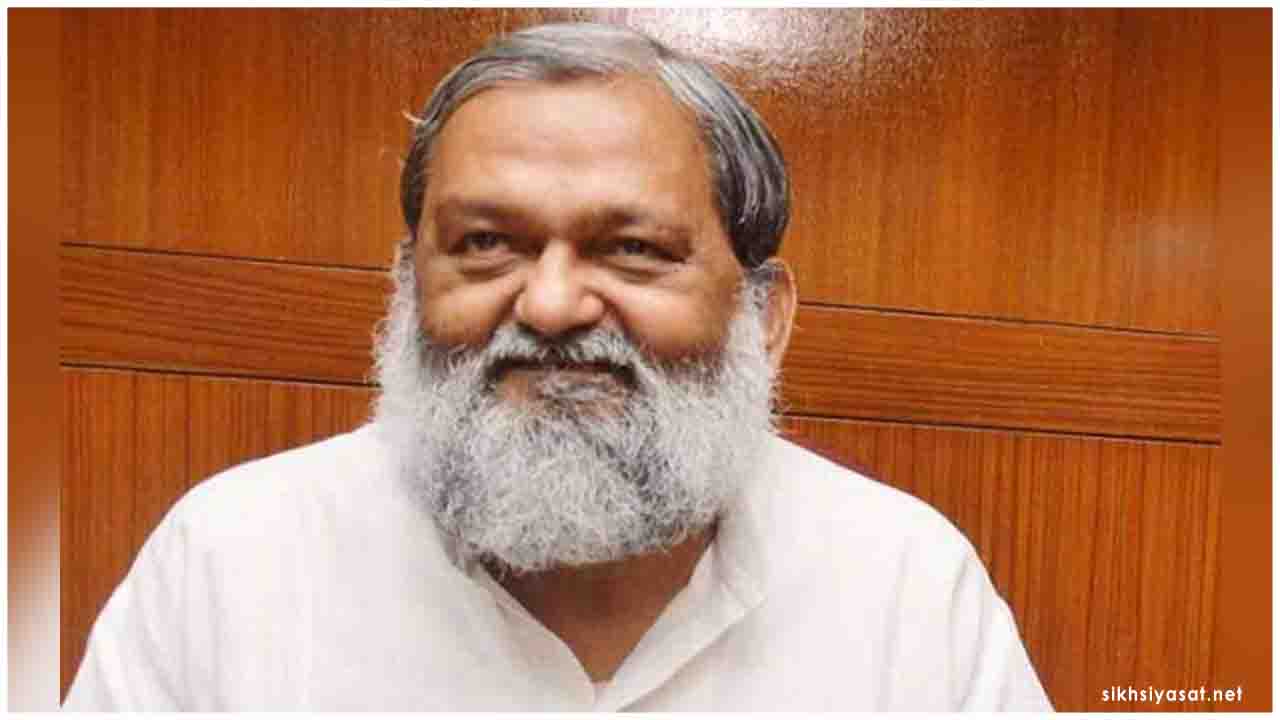
Citing a sharp increase in coronavirus cases during the past one week in Haryana districts adjoining Delhi, the state's Home Minister Anil Vij issued fresh orders for sealing borders with the national capital.
The order is likely to make the movement of people travelling across the borders without valid permission tougher. The order came just days before the fourth coronavirus lockdown ends on May 31.
"I have again issued orders today that in the districts adjoining Delhi, no leniency should be shown. Eighty per cent of our coronavirus cases are from the districts adjoining Delhi. Therefore, we are maintaining strictness on our borders with the national capital and keeping these sealed," the minister said.
He, however, in an order said barring the categories exempted by the Delhi High Court and the Centre, the state borders for others will remain completely sealed.
"The districts bordering Delhi are witnessing a sharp increase in the number of cases, which is a matter of concern," Vij, who is also the state health minister, told reporters in Ambala.
He cited the movement of people into the districts bordering the national capital as the reason behind the surge in cases.
Gurgaon, Faridabad, Sonipat, and Jhajjar are the four worst-hit districts accounting for a majority of 1,504 infection cases in the state.
Faridabad has reported the maximum seven fatalities in the state followed by three in Gurgaon and one in Sonipat, according to a state health bulletin.
On Thursday, Gurgaon reported 68 fresh cases followed by 18 in Faridabad and four in Sonipat. The total cases in Gurgaon are 405, Faridabad 276, Sonipat 180, and Jhajjar 97, as per the bulletin.
Meanwhile, the recovery rate of people affected with COVID-19 has improved further and it haw now reached 42.75 percent. Health Ministry in a statement said that so far, a total of 67 thousand 691 people have been cured and in the last 24 hours, 3,266 people have recovered from the infection.
It said the number of cases under active medical supervision is 86,110. The Ministry said, through a graded, pre-emptive, and pro-active approach, the Central Government is taking several steps along with the States and Union Territories for prevention, containment, and management of COVID-19. It said these steps are being regularly reviewed and monitored at the highest level.
To take stock of the current situation, yesterday Cabinet Secretary Rajiv Gauba held a meeting with Municipal Commissioners, District Magistrates of 13 COVID-19 hit cities to take a review of the situation.
The meeting bears significance as these 13 cities are considered to be the worst novel Coronavirus affected locations and constitute about 70 percent of the positive cases in the country.
The cities are Mumbai, Chennai, Delhi, Ahmedabad, Thane, Pune, Hyderabad, Kolkata, Indore, Jaipur, Jodhpur, Chengalpattu and Thiruvallur.
The Chief Secretaries of all concerned States and Union Territories attended the meeting.





-23-300x250.png)

.jpeg)






.jpg)
.jpg)
.jpg)
.jpg)
.jpg)
.jpg)
.jpg)
.jpg)
.jpg)