Tuesday, October 06, 2026
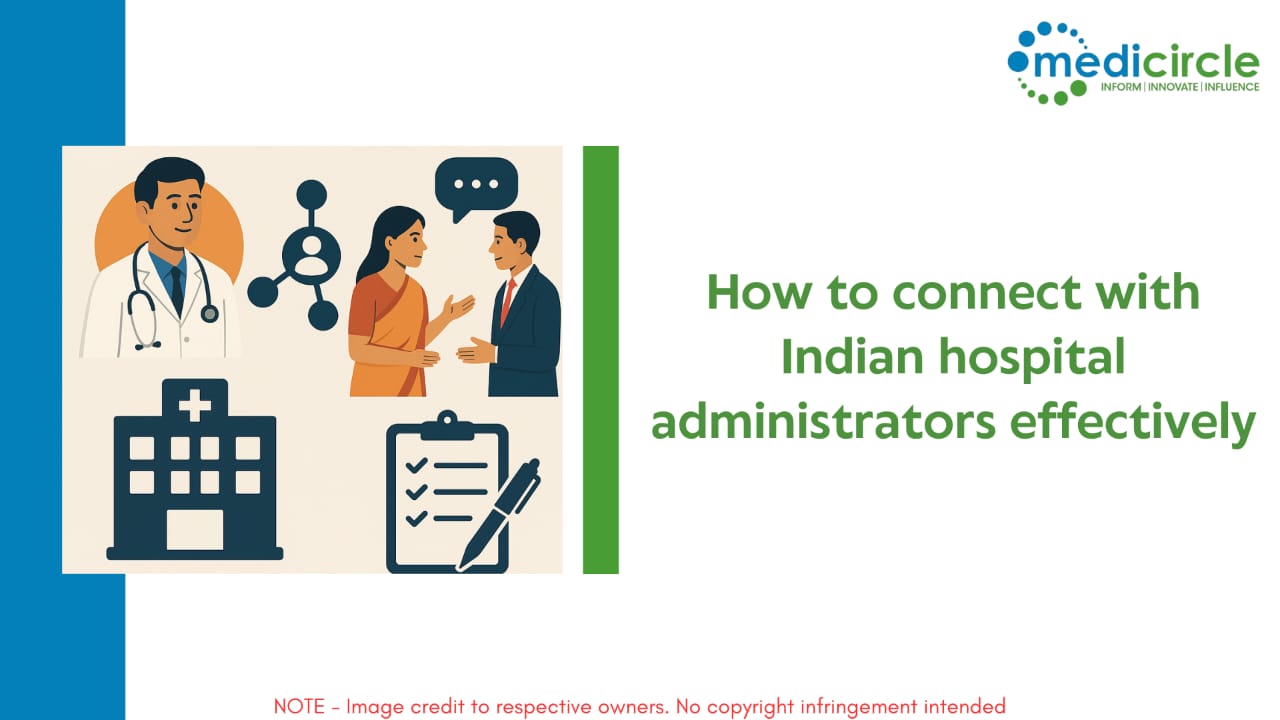
 Building meaningful relationships with hospital administrators in India requires empathy, patience and trust. Success comes from understanding their challenges, offering real solutions and focusing on long term partnerships.




We have all been there. You have a product that could genuinely help patients. You have a service that could save time and money. You send the emails, you make the calls and you are met with silence. It feels like trying to get a meeting with a minister. The frustration is real and the question remains: how do you get through?
The answer often lies not in what you are selling, but in how you are connecting. The old sales playbook does not work here. Building a relationship with an Indian hospital administrator requires a different approach altogether. It is about understanding the terrain before you start the journey.
Step in their shoes:
First, let us be clear about one thing: a hospital administrator in India has one of the most demanding jobs in the country. They are not just office managers; they are the central nervous system of a complex, life or death operation. Their world is a constant juggling act.
They are under pressure to manage tight budgets while everyone expects world class care. They are expanding services to smaller cities, dealing with the integration of new technologies such as telemedicine and navigating a maze of regulations. They face the daily challenge of doing more with less. When you view them through this lens, your perspective changes. You stop being a salesperson and start becoming a potential problem solver.
Speak solutions:
Administrators are bombarded with companies promising to revolutionize healthcare. To stand out, you must cut through the noise by talking about specific solutions, not flashy features.
Think about what keeps them up at night. Can your offering help them use their staff more efficiently? Does it reduce the waste of unused medicines? Can it shave precious minutes off a patient’s wait time? These are the questions that matter.
Frame everything around three pillars:
Saving resources: Show them how you optimize what they already have; be it people, equipment or supplies.
Improving patient care: Connect your service directly to better patient outcomes. This is after all their core mission.
Smoothing operations: Demonstrate how you make their daily workflows simpler and less prone to error. When communication breaks down, patient care suffers. Show them you can prevent that.
Trust, your currency:
In the Indian context, a transaction is never just a transaction. It is the beginning of a relationship. Trust is not given; it is earned over time. A quick, hard sell is the fastest way to be shown the door.
Instead, focus on building genuine partnerships. It starts with engagement. Participate in webinars or interviews with established healthcare platforms that administrators already know and respect. This association builds credibility.
Show that you are in it for the long haul. Attend conferences not just to hand out business cards, but to listen and learn. Offer your insights on common challenges without always pushing your product. Understand that the decision to work with you might involve not just the administrator, but also doctors, finance teams and technical staff. Your solution must provide value to all of them.
Art of the conversation:
So, you finally have that meeting. Now what? This is where many falter. The key is to listen more than you talk. Let the administrator tell you about their pain points. Your first job is to understand, not to convince.
Drop the complex jargon. Speak in clear, simple language about how you address real world problems. Be respectful of their time, get to the point quickly and meaningfully. They will thank you for it.
Beyond the title:
In an era of artificial intelligence and digital records, the human touch matters more than ever. Behind the official title is a person tasked with an immense responsibility: keeping a hospital running so that lives can be saved.
One administrator from a busy Mumbai hospital shared a sentiment that rings true everywhere: “I do not have time for vendors. I have time for partners. I need people who see the challenges from my side and are ready to walk the path with me.”
The final word:
Making a true connection requires a fundamental shift. Stop trying to sell a product and start aiming to solve a problem. See administrators not as obstacles but as allies. Invest the time to understand their world, speak to what truly matters in their day to day work and build trust through consistent, valuable engagement.
The future of Indian healthcare depends on these strong, collaborative partnerships. It is about building bridges, one genuine connection at a time.






.jpeg)
.jpg)
.jpg)
.jpg)
.jpg)
.jpg)
.jpg)


.jpg)
.jpg)
.jpg)
.jpg)
.jpg)
.jpg)