Tuesday, October 27, 2026
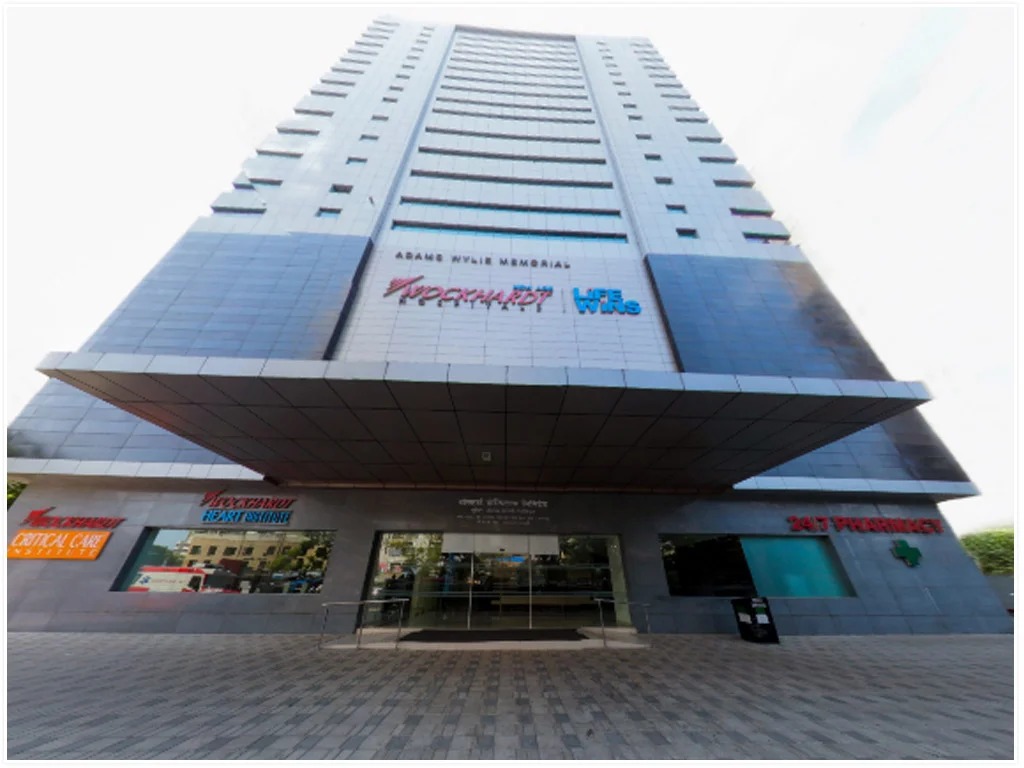
 He had come to Wockhardt Hospitals, Mumbai Central, only to care for his mother, who was undergoing cancer treatment. For days, he had been by her side—helping her walk, speaking with doctors, and doing everything a devoted son does. At 44, fit, active, and with no medical history whatsoever, he was the last person anyone expected to become a patient himself.




Mumbai, December 2025: He had come to Wockhardt Hospitals, Mumbai Central, only to care for his mother, who was undergoing cancer treatment. For days, he had been by her side—helping her walk, speaking with doctors, and doing everything a devoted son does. At 44, fit, active, and with no medical history whatsoever, he was the last person anyone expected to become a patient himself.
But in a matter of seconds, everything changed.
As he stepped out of his mother’s room, he suddenly felt his right side give way. His arm dropped, his leg refused to move, and within moments, he collapsed with complete one-sided weakness. Panic spread instantly. A young, healthy man with no hypertension, no diabetes, no smoking history, no alcohol intake, and no known comorbidities—how could he be having a stroke?
He was rushed to the emergency department, where Consultant Neurologist Dr Sheetal Goyal immediately activated the hospital’s stroke code. Every minute mattered.
An urgent MRI scan was performed. To the team’s surprise, the scan appeared normal. Even the diffusion-weighted imaging (DWI) sequence—the most sensitive modality for detecting an acute stroke—showed no obvious abnormalities.
However, the patient’s sudden onset of dense one-sided weakness strongly pointed toward an acute ischemic stroke. For Dr Goyal, the clinical findings did not align with the imaging results. Given this mismatch, she personally reviewed the MRI images in detail. That is when she identified a subtle but critical vascular abnormality—an early arterial blockage that precisely corresponded to the area controlling movement on the affected side.
The absence of visible changes on DWI was explained by the ultra-early timing of the stroke, which had occurred only minutes before the scan—well before radiological changes typically become apparent. In such situations, established stroke guidelines emphasize that treatment decisions should be guided by the clinical presentation rather than imaging alone.
Based on this assessment, Dr Goyal made the decisive call to proceed with immediate thrombolysis.
Within 15 minutes of receiving the clot-dissolving medication, the response was dramatic. The hand that had been completely lifeless began to lift. Sensation returned. His leg started to move. A man who had arrived with zero power on one side showed visible neurological recovery right on the treatment table.
With the immediate crisis addressed, the next challenge was understanding why a healthy 44-year-old had suffered a stroke at all. Detailed investigations revealed no abnormalities in blood pressure, blood sugar, thyroid function, vitamin levels, or cardiac evaluation.
A deeper evaluation for uncommon causes of stroke was then undertaken. Advanced testing revealed a rare genetic predisposition to abnormal blood clot formation—a silent condition that can significantly increase stroke risk even in young individuals without traditional risk factors.
With the cause identified and long-term treatment initiated, his recovery continued steadily. Six months later, he has returned to a fully normal life, with no residual weakness. He is walking independently, working, and caring for his family as before.
The most emotional moment came when both mother and son—she having completed her cancer treatment and he having survived a potentially life-altering stroke—walked out of the hospital together.
“This case is a powerful reminder that not all strokes are immediately visible on MRI, especially in the very early stages,” said Dr Goyal. “Clinical assessment remains crucial. It is also important to understand that stroke is not limited to people with high blood pressure or diabetes. Rare genetic factors can play a significant role, even in young and otherwise healthy individuals.”
What began as a frightening collapse in a hospital corridor ultimately became an extraordinary story of survival—made possible by timely recognition, rapid intervention, and neurological expertise at Wockhardt Hospitals, Mumbai Central.





-23-300x250.png)

.jpeg)




.jpg)
.jpg)
.jpg)
.jpg)
.jpg)
.jpg)
.jpg)
.jpg)
.jpg)