
When Health Insurance Becomes a Gamble: A Family’s Ordeal with Denied Claims

▴ Health Insurance
Vipin’s fight should remind us that health insurance cannot remain a business of selling dreams, it must honor its commitment when life and health hang in the balance.

Hello! If you're looking for high-quality genericmedications, fast delivery and excellent customer service, ourstore is the right choice for you. With over 20 years of onlineexperience, we guarantee safe, effective products that are alwaysin stock. Delivery within 48 hours, free shipping from $200, and 100% money-back guarantee if your order doesn't arrive on time.

👉 Order now at BestCheapPills and discover exclusive discounts for registeredcustomers!
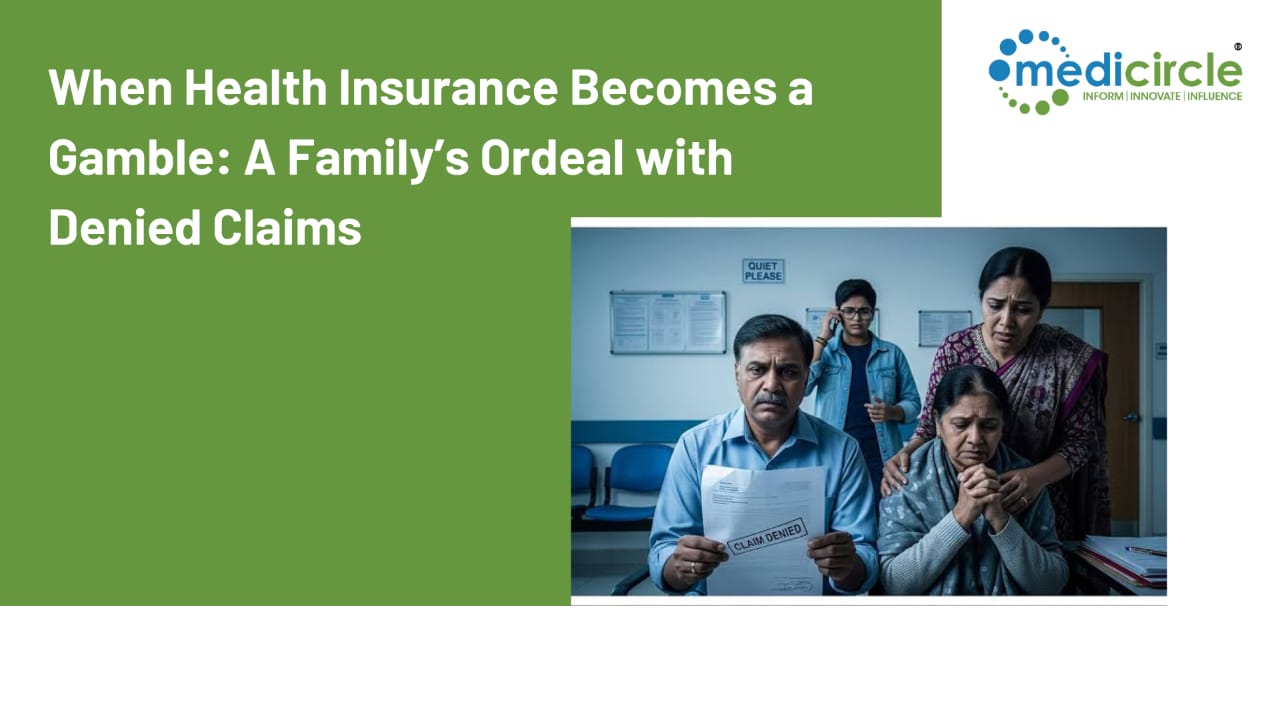
Health insurance is often described as a safety net, a shield against financial ruin when medical emergencies strike. Families purchase these policies with the belief that their hard-earned premiums will protect them during their darkest hours. Yet, for many in India, the promise of security remains fragile, sometimes collapsing precisely when it is needed most. The story of Vipin Vishnu Ajayan and his family captures this unsettling reality, where the assurances of a health policy turned into a prolonged battle of denials, delays, and disillusionment.

In April 2024, Vipin’s father developed severe chest pain, a symptom no family dares to take lightly. With a comprehensive policy worth Rs 5 lakh purchased just months earlier, the family expected the insurer’s support without hesitation. They had paid nearly Rs 32,000 in annual premiums, confident that the coverage would offer both financial relief and peace of mind. Instead, what followed was a painful lesson in how insurance companies can reduce human suffering into a maze of technicalities.

Initial medical tests revealed critical blockages in his father’s heart, requiring stent procedures without delay. The family admitted him to a hospital listed under the insurer’s network, hoping for cashless treatment that would spare them the agony of arranging funds during a crisis. Yet, rather than easing their burden, the insurer rejected the cashless claim, citing insufficient documentation, and instructed them to seek reimbursement later. This denial forced Vipin, the sole breadwinner of his family, to borrow money from friends and his married sister to cover the steep bills upfront.

Star Health, the insurer in question, later explained that one of the most common reasons for rejections lies in undisclosed pre-existing diseases at the time of purchase. According to them, complete disclosure ensures fair pricing, transparency, and appropriate risk assessment. In Vipin’s case, however, their argument went further. They pointed to “medical improbability,” arguing that a man in his sixties could not have developed triple vessel coronary artery disease within a month of showing symptoms. For the company, such a claim seemed implausible and therefore suggested prior non-disclosure.

This reasoning, however, clashed with the evidence on hand. Vipin had submitted every possible record, including a handwritten note from the treating cardiologist confirming that his father had no prior history of heart disease. Despite this, the insurer repeatedly rejected the claim, raising fresh demands for documents, only to return with the same standard denial each time. For Vipin, this was nothing short of harassment dressed as procedure. As he put it bitterly, “A heart attack doesn’t come with prior appointment it just happens.”

The contradiction became sharper when the insurer eventually offered a settlement before the Ombudsman hearing. If the company truly believed in the medical improbability of the case, why choose to settle without requesting fresh documents? For Vipin, this reversal revealed not a matter of fairness, but a calculated delay aimed at wearing him down. His persistence had forced movement, but at the cost of immense stress and financial strain.

The ordeal did not end there. In September 2024, Vipin discovered that his father had been quietly removed from the policy without any notification. Shocked and dismayed, he reached out to both the insurer and the regulator, only to receive confused responses. At one point, the IRDAI’s reply even stated that his mother had been reinstated though she had never been removed in the first place. It took another round of escalations and interventions before his father’s coverage was restored.

Star Health maintained its stance throughout, reiterating that their medical interpretation still leaned toward pre-existing disease. However, they clarified that the Ombudsman’s directions had been honored, with the risk reinstated and the settlement processed. Yet the larger concern for policyholders like Vipin remains: if trust is questioned so easily after purchase, how can families rely on insurers during moments of true vulnerability?

For customers, this episode reveals systemic cracks in the functioning of the health insurance industry. While policies are aggressively marketed, the service during claims often exposes families to a brutal mismatch between promises and reality. Vipin recalls how calls went unanswered, emails were ignored, and agents who once eagerly sold the policy began blocking his attempts to reach them. Even during the Ombudsman process, he felt brushed aside with remarks that the service was free and therefore slow. For a son desperately seeking justice for his father’s treatment, this indifference was as painful as the financial stress.

Cancellation of policies, too, is bound by strict rules. Insurers are allowed to cancel only after proving fraud or misrepresentation, and they must provide at least seven days notice. Policyholders can demand reinstatement if such cancellation is unjustified. Yet, as Vipin’s case illustrates, the implementation of these protections is often messy, leaving families scrambling for clarity.

The financial and emotional costs of such disputes are enormous. For Vipin, the settlement of just over Rs 1 lakh, with added interest, came after an exhausting year-long struggle. It was far from what he had expected when he purchased the policy. The supposed lifeline became an uphill battle that tested his family’s resilience. At its heart, this case shows that the real value of a premium lies not in glossy brochures but in how responsibly insurers respond when crises strike.

The story also resonates with countless other families across India. Every day, households place their faith in health insurance, believing it will protect them against skyrocketing hospital bills. Yet, too often, they encounter shifting goalposts, ambiguous clauses, and endless requests for paperwork. Instead of reassurance, they find themselves locked in a tug of war, their energy drained at a time when all focus should be on the patient’s recovery.

Health insurance is meant to be more than a financial product; it is a promise of support during medical emergencies. When that promise is broken, it leaves not just a financial wound but a deeper loss of trust. In India, where awareness of insurance is still growing, such experiences can discourage families from purchasing policies altogether, pushing them back into the dangerous cycle of out-of-pocket healthcare expenses.

For insurers, cases like this should serve as a wake-up call. Transparency in claim processing, consistency in communication, and genuine empathy for policyholders are the foundation of credibility. An industry that thrives on fear of medical emergencies must also shoulder the responsibility of alleviating that fear, not amplifying it through bureaucratic delays and conflicting decisions.

Vipin’s struggle reflects the crossroads at which India’s health insurance sector stands today. With rising healthcare costs, policies are no longer luxuries but necessities. Yet their worth will be judged by how faithfully they serve the people who pay for them. As Vipin himself experienced, what families need during a crisis is not suspicion or silence, but swift, fair, and transparent action. Anything less reduces health insurance to a gamble, where survival depends on luck rather than rights.

The lessons from this ordeal should not be lost on either regulators or insurers. Stronger enforcement of service standards, stricter penalties for unjustified delays, and proactive communication can rebuild public faith. For families like Vipin’s, these changes cannot come soon enough. Until then, the gap between what policies promise and what they deliver will continue to haunt patients and their loved ones, turning moments of vulnerability into prolonged battles for dignity.

As the healthcare landscape in India evolves, with rising demand for hospitalisation, costly treatments, and greater dependence on private facilities, the role of insurance will only expand. The question remains whether insurers are ready to evolve with it. Vipin’s fight should remind us that health insurance cannot remain a business of selling dreams, it must honor its commitment when life and health hang in the balance.



Source: indiatoday.in

Tags : #InsuranceReality #PatientRights #HealthcareTrust #MedicalClaims #InsuranceAwareness #PatientFirst #FinancialProtection #HealthcareJustice #IRDAI #RightToHealth #InsuranceStories #HealthcareInIndia #HealthInsurance #HealthCoverage #HealthcareCosts #smitakumar #medicircle

Related Stories

Loading Please wait...

-Advertisements-


Trending Now

Manipal Hospital Bhubaneswar Successfully Treats Rare Brain Injury Caused by Post-Traumatic Workplace AccidentJuly 16, 2026
Immuneel Therapeutics and Tata Memorial Centre Sign Strategic MoU to Advance Cell and Gene Therapy Research in India July 16, 2026
Breast Cancer Early Warning Signs: What Every Woman in India Needs to KnowJuly 16, 2026
HbA1c Test Explained: What It Measures, Normal Range, and Why It Matters for IndiansJuly 16, 2026
Not Just Weight Loss: How Bariatric Surgery Improves Diabetes, PCOS, and Thyroid-Related Health ChallengesJuly 15, 2026
Leiutis Pharmaceuticals announces CDSCO approval for Global-First Synthetic CBD Therapy for Mild to Moderate Anxiety DisordersJuly 15, 2026
Dr Agarwals Institute of Optometry and SASTRA University Jointly Launch Optometry ProgrammeJuly 15, 2026
SIMS Hospital Treats Spinal Compression in 84-Year-Old with Pacemaker Through Single-Incision Endoscopic SurgeryJuly 15, 2026
Apollo Hospitals Secunderabad Successfully Treats Achalasia Cardia Patients with Advanced POEM ProcedureJuly 15, 2026
Happiest Health Announces Entry into Healthcare Publishing BusinessJuly 15, 2026
Indian Stroke Association Expands ‘Save the Brain’ Campaign with Stroke 360° Scientific Conference in SalemJuly 15, 2026
Milann Successfully Overcomes a Hidden Fertility Barrier: Chronic Endometritis Diagnosed and Treated, Leading to Successful IVF PregnancyJuly 15, 2026
Forus Health Launches FH eyepal, a Connected Digital Eye Clinic Designed to Expand Access to Comprehensive Eye CareJuly 15, 2026
Adult ADHD Diagnostics: Why Evaluations Are Rising Later in LifeJuly 15, 2026
Healthcare Apps Changing Patient Care: How Digital Health Tools Are Reshaping India's Healthcare LandscapeJuly 15, 2026
How Stress Affects Physical Health: Understanding the Body's Response and What You Can Do About ItJuly 15, 2026
Pediatric Immunity: Realities of Seasonal Vaccines & DevelopmentJuly 14, 2026
Hormonal Imbalances in Women: PCOS and Perimenopause July 14, 2026
Erectile Dysfunction and Overall Health: Why It Is a Signal, Not Just a SymptomJuly 14, 2026
PCOS and Fertility Connection: What Every Woman Trying to Conceive Should KnowJuly 14, 2026















