 Thursday, October 08, 2026
 As medical inflation rises and public health systems remain stretched, private insurance will play an even larger role. If trust continues to erode, participation will suffer, and the very purpose of insurance will be undermined.




At a time when health insurance is marketed as a safety net, a growing number of Indian policyholders are discovering that the moment they need it most is when the real struggle begins. The sharp rise in grievances against insurance companies in FY25 is not just a data point buried in a regulatory report. It is a signal of a widening trust gap between insurers and insured, a gap that is becoming impossible to ignore.
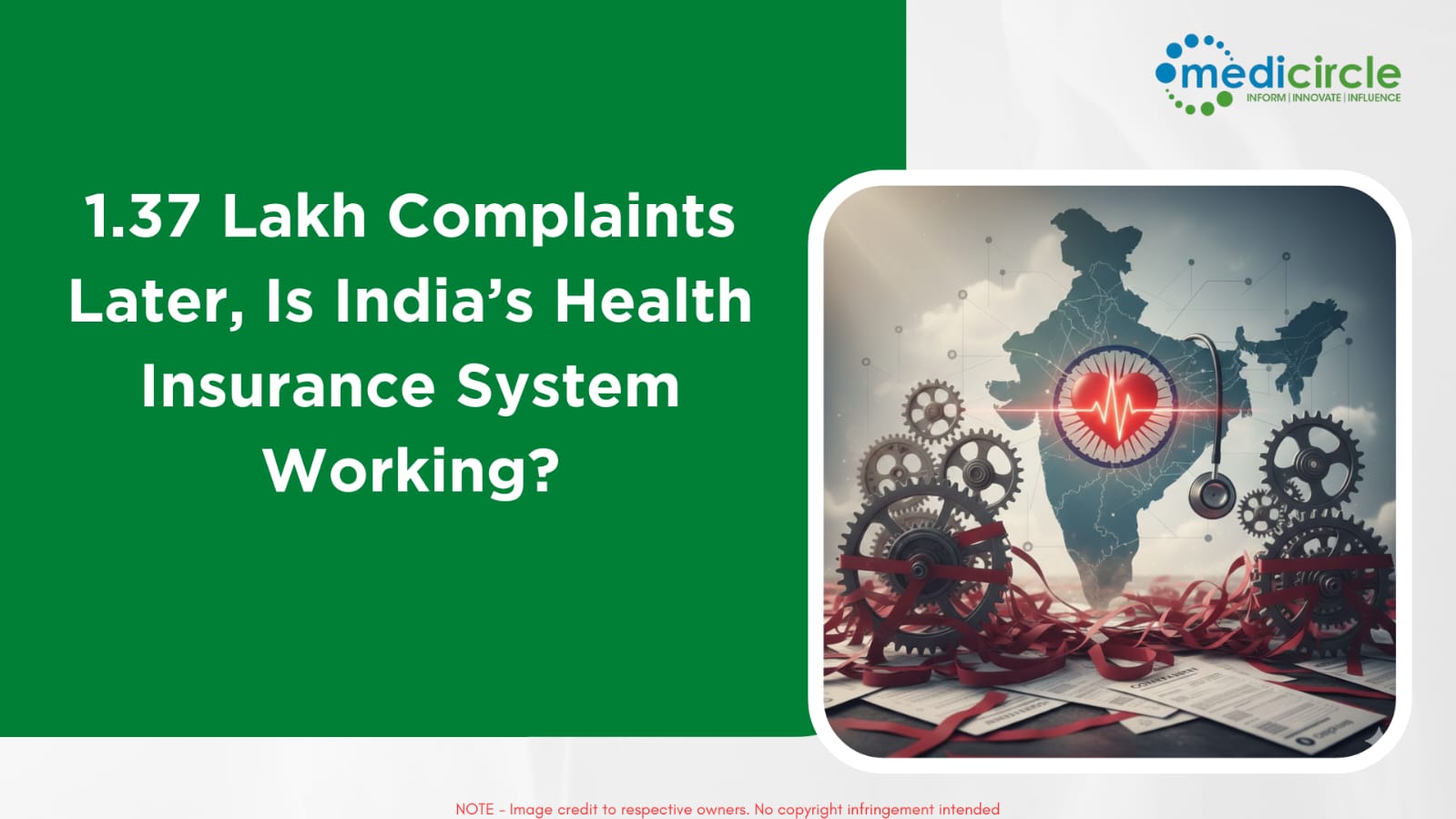
Fresh figures released by the Insurance Regulatory and Development Authority of India tell a concerning story. Complaints in the general and health insurance segment jumped by more than 41 percent in a single year, crossing 1.37 lakh grievances in FY25. This is not a marginal increase that can be brushed aside as a post-pandemic adjustment. It is a surge that reflects deeper structural stress within India’s health insurance ecosystem, affecting patients, hospitals, insurers, and regulators alike.
For many families, buying a health insurance policy is an act of financial responsibility. It is meant to protect savings, preserve dignity during illness, and reduce dependence on loans or charity. Yet, for a rising number of policyholders, filing a claim has become an emotionally draining experience marked by delays, deductions, and outright rejections. The grievance numbers suggest that disappointment is no longer an exception. It is steadily becoming part of the insurance journey.
Standalone health insurers are at the centre of this storm. Complaints against these companies rose by 33 percent in FY25, touching over 46,000 cases. Large names in the sector reported significant increases, with some seeing grievance volumes jump by nearly 50 percent in just one year. These are not small players with limited systems. They are well-known brands with extensive reach, aggressive marketing, and millions of policyholders.
Behind every grievance number lies a human story. A delayed discharge because the insurer has not approved the claim. A family arguing with a hospital billing desk while worrying about a loved one’s recovery. A policyholder discovering that a treatment they assumed was covered has been classified as partially payable or excluded. These moments are where trust is built or broken, and increasingly, it is the latter.
Claims-related issues remain the single biggest trigger for complaints in health and general insurance. Nearly seven out of ten grievances in this segment are linked to claim repudiation, delays, or partial settlements. This pattern has remained consistent over the years, but the scale is now far larger. As medical costs rise and hospital bills become more complex, the friction at the claims stage has intensified.
Industry executives often point to rising claim costs as the underlying reason. In health insurance, insurers argue that the total cost of claims and associated expenses can reach 120 to 140 percent of the premium collected. In simple terms, this means insurers are paying out more than they earn from premiums in certain portfolios. From a business perspective, settling every claim without scrutiny is financially unsustainable.
This financial pressure shapes how insurers interpret policy terms and process claims. Greater scrutiny, tighter documentation requirements, and stricter application of exclusions are seen as necessary controls. Yet, from the policyholder’s side, these controls often feel like shifting goalposts. What was sold as comprehensive coverage suddenly appears full of conditions when illness strikes.
Hospital behaviour further complicates the picture. Insurance-linked hospitalisation has long been associated with higher billing. Once a patient is identified as insured, treatment patterns can change, sometimes subtly, sometimes dramatically. Additional investigations, longer stays, and higher procedure costs push up bills, placing insurers on the defensive. This dynamic creates a triangle of tension between hospitals, insurers, and patients, with the patient often caught in the middle.
Unlike life insurance, where most policies result in a single claim over a lifetime, health insurance can generate multiple claims in a single year. Chronic illnesses, repeat hospitalisations, and follow-up procedures add layers of cost and complexity. Each claim becomes another potential point of conflict, especially when coverage limits, sub-limits, and waiting periods come into play.
The contrast with life insurance grievances is telling. While the life insurance sector also recorded a large number of complaints, the nature of these grievances is different. Many are linked to survival claims, policy servicing issues, or concerns around unfair business practices. In health insurance, the grievance often emerges in a moment of vulnerability, when the policyholder is already under physical and emotional stress. This makes the fallout far more personal and intense.
Public sector general insurers have not been immune either. Some reported more than double the number of complaints compared to the previous year. This suggests that the problem is not confined to private players or specific business models. It is systemic, cutting across ownership structures and market segments.
The regulator has taken note. Irdai has repeatedly flagged mis-selling as a serious concern in the insurance sector. Policies are often sold with an emphasis on low premiums and high coverage figures, while exclusions, sub-limits, and waiting periods receive far less attention. When claims are denied based on these fine-print clauses, policyholders feel cheated, even if the insurer is technically within the contract.
To address this, the regulator has advised insurers to conduct regular root cause analyses of grievances. The idea is to move beyond firefighting individual complaints and identify patterns that point to deeper issues in product design, sales practices, or claims processing. Strengthening controls across distribution channels is another key focus, especially as digital platforms and third-party intermediaries play a growing role in policy sales.
Yet, regulation alone cannot fix a trust deficit. The health insurance industry in India is at a crossroads. On one side is the undeniable need for financial sustainability. On the other is the promise made to millions of policyholders who believe they are buying peace of mind. Bridging this gap requires more than compliance. It requires a shift in how insurance is communicated, sold, and serviced.
Transparency is a starting point. Policy documents are often dense, legalistic, and difficult for the average consumer to fully understand. Simplifying language, clearly highlighting exclusions, and using real-world examples can help align expectations. When policyholders know what is and is not covered, the shock at the claims stage is reduced.
Claims communication also needs reform. Delays and partial settlements are not just financial issues. They are communication failures. Clear timelines, proactive updates, and accessible grievance redressal mechanisms can ease frustration even when outcomes are not favourable. Silence and ambiguity, by contrast, amplify anger.
Hospitals, too, have a role to play. Standardised treatment protocols, transparent billing, and closer coordination with insurers can reduce disputes. The current adversarial model, where hospitals push for higher bills and insurers push back, is unsustainable. Patients should not have to negotiate between two powerful institutions while recovering from illness.
Technology offers some hope. Data analytics can help insurers detect genuine fraud without casting suspicion on every claim. Digital health records and standard treatment guidelines can bring more objectivity into claims assessment. Over time, these tools could reduce arbitrary decisions and improve consistency.
Buying health insurance is necessary, but it is not enough. Understanding the policy, choosing the right coverage, and being prepared for documentation requirements are now essential parts of the process. The rise in grievances shows that blind trust is risky.
The surge in complaints during FY25 should be seen as a warning, not an anomaly. Health insurance is a cornerstone of India’s healthcare financing future. As medical inflation rises and public health systems remain stretched, private insurance will play an even larger role. If trust continues to erode, participation will suffer, and the very purpose of insurance will be undermined.
This moment calls for introspection across the industry. Insurers must balance prudence with empathy. Regulators must enforce accountability without stifling innovation. Hospitals must recognise their influence on costs. And policyholders must demand clarity and fairness.
Health insurance should not feel like a courtroom battle fought at the bedside. It should function as a quiet assurance in the background, stepping in when health fails. The grievance numbers tell us that this promise is under strain. Whether the industry responds with reform or denial will determine whether health insurance in India evolves into a trusted partner or remains a source of conflict in times of need





.jpeg)








.jpg)
.jpg)
.jpg)
.jpg)
.jpg)
.jpg)


.jpg)
.jpg)
.jpg)