 Wednesday, November 18, 2026
 Globally, road traffic crashes claim approximately 1.19 million lives every year, making them one of the leading causes of mortality and disability worldwide. Good sight is essential for detecting hazards, judging distances, and reading road signs, yet it remains an often-overlooked risk factor in road safety measures.





Mumbai, March 24, 2026: Globally, road traffic crashes claim approximately 1.19 million lives every year, making them one of the leading causes of mortality and disability worldwide. Good sight is essential for detecting hazards, judging distances, and reading road signs, yet it remains an often-overlooked risk factor in road safety measures.
Research shows that drivers with cataracts are 2.5 times more likely to be involved in at-fault crashes. Studies also show that over 26% of truck drivers have refractive error, yet only 47% of those prescribed glasses actually use them. Despite having only about 1% of the world’s motor vehicles, India accounts for nearly 11% of global road traffic deaths. In 2024, India witnessed 4.87 lakh road accidents causing 1.77 lakh fatalities, contributing to an estimated economic loss of approximately 3% of GDP. Studies further reveal that 81% of drivers with at least one visual function defect have been involved in a road traffic accident, underscoring the urgent need to address eyesight as a critical component of road safety.
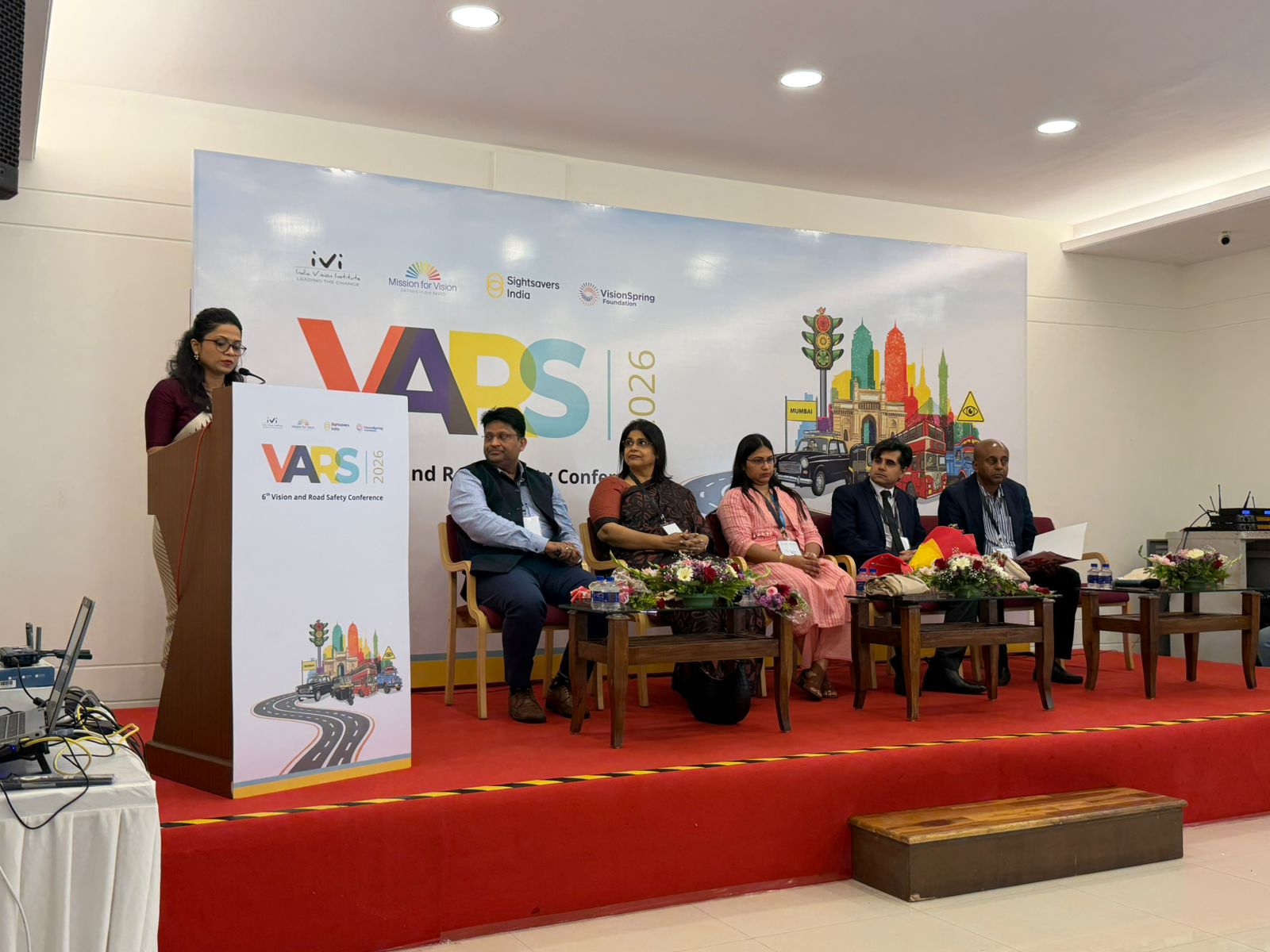
To address this gap, the Vision and Road Safety (VARS) Conference, a collaborative initiative by India Vision Institute, Mission for Vision, Sightsavers India, and VisionSpring Foundation, convened experts and stakeholders from the transport, health, research, and development sectors. The conference was held in Mumbai at the Yashwantrao Chavan Centre.
A central focus of the conference was advocating for the recognition of eye health and clear vision as the fifth “E” of Road Safety, alongside Engineering, Enforcement, Education, and Emergency Medical Services. Experts highlighted that addressing vision gaps through screening, corrective eyewear, and policy integration could play a crucial role in reducing preventable road crashes.
The collective efforts of the VARS network have translated into tangible action on the ground. To date, the four organisations have screened about 2.5 million drivers for vision impairments and dispensed more than 1.17 million pairs of eyeglasses. Additional screenings planned for 3,00,000 drivers across India aim to further expand access to essential eye care and improve road safety outcomes.
The conference also explored ways to embed vision screening and eye health considerations into national and state road safety frameworks, aligned with the UN Decade of Action for Road Safety 2021–2030, which targets a 50% reduction in road traffic deaths and injuries.
Through expert discussions and knowledge exchange, the conference served as a platform for sharing research insights, implementation experiences, and best practices, while identifying opportunities for stronger collaboration between transport authorities, health systems, employers, and civil society organisations.
Representatives of the VARS Alliance said, “Safe driving begins with clear vision, yet eye health is still often overlooked in road safety systems. The VARS Conference brings together stakeholders from the health, transport, and development sectors to advance this conversation. If we are serious about preventing road crashes and protecting lives, vision screening and access to corrective care must become a routine part of driver health and road safety mechanisms. By working together to strengthen vision screening programmes and ensure drivers have access to quality eye health, we can help drivers see clearly and make our roads safer for everyone.”
The conference brought together over 100 participants, including government representatives, road safety experts, eye health professionals, public health specialists, transport authorities, researchers, and civil society organisations.





-23-300x250.png)





















