Wednesday, October 07, 2026
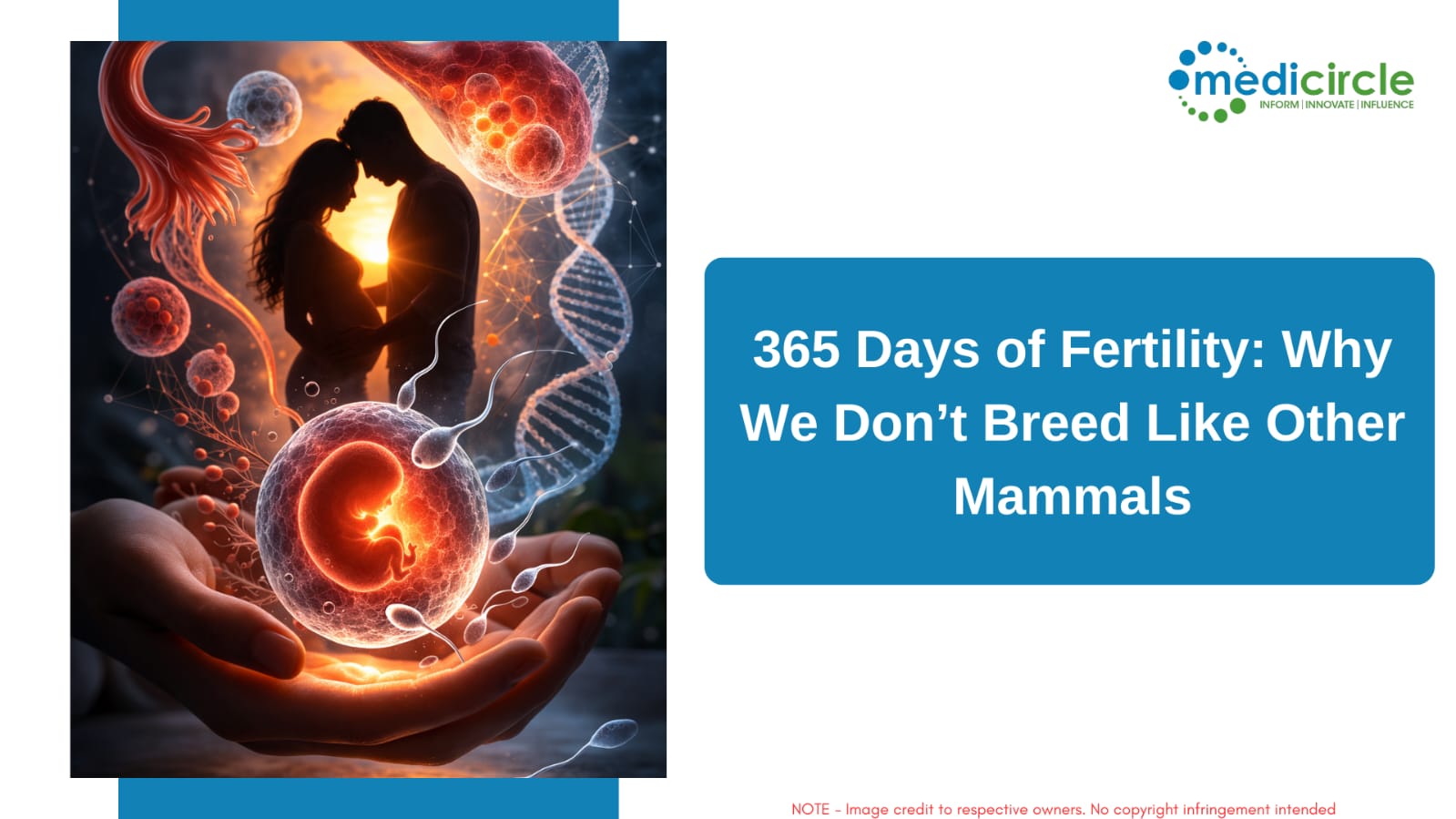
 Through concealed ovulation, extended parental investment, and cultural innovation, evolution charted a different path for our species.




In forests and grasslands across the world, reproduction follows a timetable. Deer gather when the air turns sharp. Wolves synchronize their breeding so pups arrive with the spring thaw. Countless species wait for a narrow window when food is abundant and survival prospects are high. Nature, in its efficiency, prefers precision. For most mammals, mating is a seasonal appointment.
Humans never signed that contract.
We do not wait for a change in temperature or longer daylight hours before becoming fertile. There is no annual surge that compels the entire species towards reproduction at once. Instead, human fertility operates on a continuous cycle. Women ovulate roughly every month during their reproductive years. Men produce sperm throughout adult life. The capacity to conceive exists in January as much as in July. From an evolutionary standpoint, this is unusual. From a biological standpoint, it is extraordinary.
The absence of a defined mating season in humans is not an accident. It is the outcome of millions of years of adaptation shaped by environment, social structure, brain development, and the fragile nature of human infancy. To understand why we diverged from the seasonal breeding pattern seen in so many animals, we must examine what makes human reproduction distinct.
In species with strict breeding seasons, timing is everything. Hormonal cycles are closely aligned with environmental cues. Females enter a short fertile phase, often accompanied by visible physical changes that signal readiness. Males compete intensely during this period. The entire reproductive strategy is compressed into a narrow window, ensuring offspring are born when resources are most plentiful.
Humans follow a different rhythm. Female fertility is cyclical, but not seasonal. Ovulation typically occurs once every 28 days, independent of climate or month. There is no dramatic outward display that unmistakably announces fertility. While subtle biological changes occur, they are not overt signals visible to the broader community. This evolutionary development often referred to as concealed ovulation has immense implications.
When fertility is hidden rather than publicly displayed, sexual behavior is no longer restricted to brief biological signals. Instead, intimacy can occur throughout the year, fostering long-term pair bonds. Evolutionary biologists have long suggested that this shift encouraged stable partnerships. When reproduction is not confined to a single season, relationships may center less on competition and more on cooperation. The focus moves from winning access during a short fertile window to sustaining connection over time.
The nature of human infants strengthens this argument. Human babies are among the most dependent newborns in the animal kingdom. They arrive neurologically immature, unable to walk, feed themselves, or survive without constant care. Brain development continues rapidly after birth, which contributes to our intelligence but requires prolonged nurturing. This extended dependency demands sustained parental investment.
Species that produce offspring capable of immediate mobility can afford brief mating seasons. Humans cannot. Our children require years of protection, teaching, and emotional support. Long-term caregiving arrangements offer a clear survival advantage. Continuous reproductive capacity aligns with this life strategy. It allows families to space births according to social and environmental stability rather than rigid biological deadlines.
Another key factor is the transformation of our environment. Many animals depend on seasonal food abundance. If reproduction occurred outside favorable months, offspring would face starvation. Early humans gradually reduced this dependency through innovation. The control of fire, development of tools, construction of shelter, and later the rise of agriculture allowed communities to buffer seasonal scarcity. Food storage and cooperative living lessened the direct impact of climate fluctuations on survival.
As humans learned to manage their surroundings, the pressure to synchronize reproduction with nature’s cycles weakened. Fertility no longer needed to align perfectly with spring vegetation or migratory prey. Cultural and technological progress created a buffer between biology and environment.
Modern research in reproductive biology confirms that while humans can conceive year-round, subtle seasonal variations in birth rates exist in many populations. These fluctuations are modest compared to true breeding seasons. Factors such as temperature, nutritional status, work patterns, and even daylight exposure may influence hormonal balance. But none of these variables eliminate the fundamental capacity for conception in any particular month.
Interestingly, social and cultural influences often shape reproductive timing more strongly than biological forces. Birth statistics frequently reveal clusters nine months after major holidays or vacation periods. Times of celebration, reduced stress, and increased intimacy can translate into higher conception rates. This pattern highlights a defining feature of human reproduction: it is deeply intertwined with emotional context and social structure.
The relationship between mood and intimacy is not trivial. Psychological well-being influences hormonal health. Stress can disrupt menstrual cycles and reduce sperm quality. Conversely, periods of relaxation and connection may enhance fertility. In humans, reproduction is influenced by both endocrine systems and lived experience. Biology provides the framework, but culture often directs the outcome.
From an evolutionary medicine perspective, the concept of continuous breeding offers insight into modern reproductive health challenges. Because fertility is not seasonal, access to contraception, family planning, and sexual health education must remain constant. There is no predictable “safe season” for reproduction in healthy individuals. Awareness of the menstrual cycle and ovulation timing becomes central to informed decision-making.
Human life history strategy also sheds light on this phenomenon. Compared to many mammals, humans follow a slower developmental path. We mature gradually, invest heavily in learning, and produce relatively few offspring. Each child represents a significant energetic and emotional investment. Continuous fertility allows flexibility in spacing pregnancies to align with available resources and parental readiness.
The comparison with other primates is revealing. Some of our closest evolutionary relatives do not adhere strictly to seasonal breeding either. Their social systems emphasize group cohesion and extended interaction. While differences exist, these patterns suggest that complex social living can reduce reliance on environmental reproductive cues. As social bonds strengthen, reproductive timing becomes more adaptable.
The evolutionary shift away from a mating season also reflects the importance of paternal involvement. When fertility is concealed and sexual activity occurs across the cycle, paternity certainty may increase within stable partnerships. This dynamic can promote male investment in offspring, enhancing survival rates. The interplay between concealed ovulation and pair bonding remains a subject of ongoing scientific discussion, still it shows how subtle biological changes can reshape social systems.
In contemporary society, the absence of a mating season intersects with global diversity. Birth seasonality differs across countries, influenced by climate, work schedules, cultural norms, and economic conditions. In some regions, more babies are born in late summer. In others, spring sees a rise. These patterns, however, reflect social trends rather than biological necessity.
The flexibility of human reproduction also enabled migration into diverse climates. From equatorial rainforests to arctic regions, humans adapted without restricting fertility to narrow environmental windows. Clothing, housing, and communal resource sharing allowed populations to thrive in conditions that would challenge many seasonal breeders.
It is worth considering how this evolutionary freedom shapes our understanding of sexuality itself. In species governed by estrus, sexual behavior centers almost exclusively on reproduction. In humans, intimacy extends beyond procreation. Emotional bonding, pleasure, stress relief, and social connection are integral components. Continuous fertility supports this broader role.
But this flexibility demands responsibility. Reproductive autonomy requires access to healthcare, accurate information, and social support systems. Fertility awareness, maternal health services, and safe pregnancy care are essential in a species where conception can occur at any time.
Advances in reproductive medicine further illustrate our departure from strict natural cycles. Assisted reproductive technologies, hormonal therapies, and fertility preservation techniques allow individuals to influence timing in ways unimaginable to our ancestors. While biology sets limits, human innovation continues to expand options.
Understanding why humans lack a mating season enriches conversations about public health, anthropology, and evolutionary biology. It reminds us that adaptation often involves trade-offs. Our extended childhood grants us intelligence and creativity, yet demands sustained caregiving. Our concealed ovulation fosters intimacy, yet complicates fertility prediction. Our environmental mastery provides stability, yet introduces new health challenges.
The story of human reproduction is ultimately one of integration. Hormones interact with emotion. Environment interacts with culture. Evolution interacts with innovation. Continuous breeding reflects a species that learned to reshape its world rather than wait for it to change.
In nature, strict mating seasons offer efficiency. For humans, flexibility proved more advantageous. Our reproductive system mirrors our broader evolutionary journey i.e. adaptive, socially embedded, and responsive to both biology and environment.
There is something radical about the fact that humans are never bound to a single reproductive season. It signals independence from narrow ecological constraints. It highlights the power of cooperation and intelligence. It highlights the central role of long-term caregiving in our survival.
We did not abandon nature’s clock; we rewrote it. Through concealed ovulation, extended parental investment, and cultural innovation, evolution charted a different path for our species. The result is a reproductive system that operates continuously, woven into the fabric of daily life rather than confined to a fleeting annual moment.
In the end, the absence of a mating season is not merely a biological curiosity. It is a reflection of who we are i.e. a species shaped by connection, adaptability, and the enduring commitment to nurture the next generation across every month of the year.






.jpeg)




.jpg)
.jpg)
.jpg)
.jpg)
.jpg)
.jpg)


.jpg)
.jpg)
.jpg)
.jpg)
.jpg)
.jpg)