 Thursday, October 08, 2026
 The recent analysis provides a more comprehensive view, combining data on disease patterns, treatment-seeking behaviour, clinical outcomes, and costs.




There was a time when typhoid fever was feared for its symptoms, persistent high fever, weakness that refused to leave the body, and a slow, exhausting recovery that could stretch for weeks. Today, the fear has changed shape. The disease still hovers in crowded neighbourhoods and areas with unsafe water, but what truly defines typhoid in modern India is something far more complex and far more dangerous: antibiotic resistance which has transformed a treatable infection into a financial and public health burden of staggering proportions.
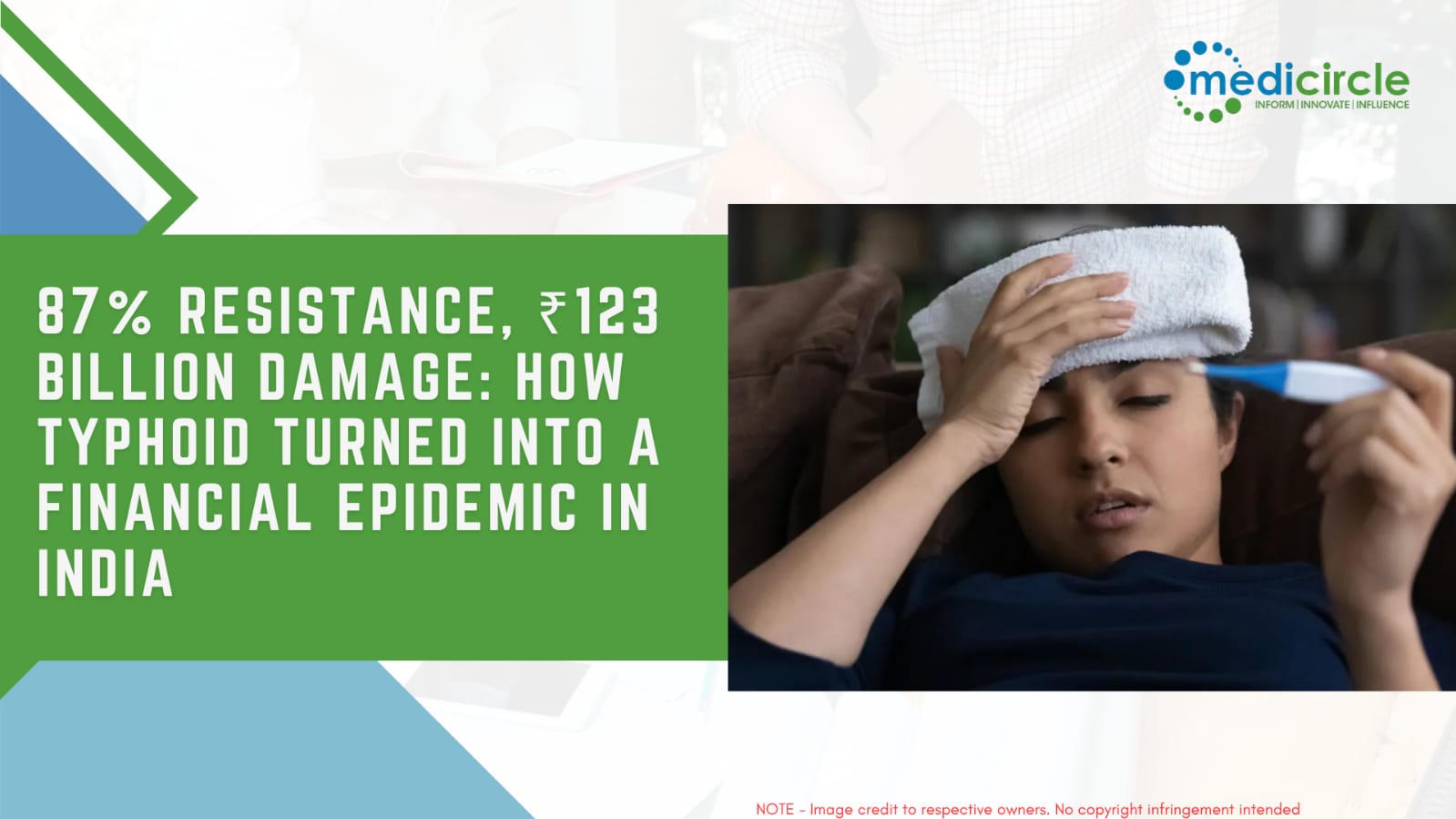
A recent study published in The Lancet Regional Health – Southeast Asia has brought this reality into sharp focus. The numbers are difficult to ignore. Typhoid fever is estimated to have imposed an economic burden of nearly ₹123 billion in India in 2023. This is not just a statistic; it is a reflection of lost incomes, rising medical bills, and families pushed to the edge. Even more striking is the role played by antibiotic-resistant infections, which account for about 87 percent of this burden. What was once manageable with a standard course of treatment has now become prolonged, expensive, and uncertain.
At the centre of this crisis lies resistance to a class of antibiotics known as fluoroquinolones. These drugs were once considered highly effective against typhoid, often bringing down fever within a few days. Over time, however, their widespread and often unregulated use has reduced their effectiveness. The bacteria have adapted, as they inevitably do when exposed repeatedly to the same medicines. The result is a situation where treatment becomes longer, more complicated, and significantly more expensive.
This shift is not just a clinical concern; it is an economic one. When antibiotics fail to work as expected, patients require additional tests, second-line medications, and sometimes hospitalisation. Each of these steps adds to the cost. For a country like India, where a large part of healthcare expenditure still comes directly from people’s pockets, this creates a heavy financial strain. According to the study, households bear around 91 percent of the total expenses related to typhoid treatment. This means that the burden is not absorbed by systems or institutions; it falls squarely on families.
For many, this translates into what health economists call “catastrophic expenditure.” Around 70,000 families in India are estimated to have faced such financial distress due to typhoid in a single year. These are not just numbers on paper. They represent households forced to borrow money, sell assets, or cut down on essential needs like food and education. Illness, in such cases, becomes more than a health issue; it becomes a trigger for long-term economic hardship.
Children are at the centre of this crisis. The study indicates that those under the age of ten account for more than half of the total economic burden. This is a deeply concerning trend. Children are more vulnerable to infections due to developing immunity, and in many parts of India, exposure to unsafe water and poor sanitation increases their risk. When a child falls ill with typhoid, the impact extends beyond medical costs. Parents often miss work to care for them, and in severe cases, prolonged illness can affect a child’s growth, education, and overall development.
The geography of the burden tells its own story. States such as Maharashtra, Uttar Pradesh, Andhra Pradesh (including Telangana), Tamil Nadu, and West Bengal together contribute to more than half of the national economic cost. These are regions with large populations and varying levels of healthcare access. Urban centres within these states may offer advanced treatment options, but rural and peri-urban areas often struggle with basic healthcare infrastructure. The result is delayed diagnosis, inappropriate treatment, and a higher likelihood of complications.
Typhoid is primarily a disease linked to contaminated food and water. In that sense, it is both preventable and predictable. Still its persistence highlights gaps in public health systems, particularly in sanitation, clean water supply, and hygiene practices. While India has made progress in improving sanitation through various initiatives, the uneven implementation and maintenance of these systems continue to create conditions where infections like typhoid can thrive.
The role of antibiotic resistance adds another layer of complexity. It is driven by multiple factors, including over-the-counter availability of antibiotics, incomplete treatment courses, and the use of antibiotics for conditions where they are not needed. In many cases, patients begin treatment without proper diagnosis, relying on local pharmacies or informal healthcare providers. When symptoms improve, they may stop taking medicines prematurely, giving bacteria the opportunity to survive and develop resistance. Over time, this cycle weakens the effectiveness of commonly used drugs.
The findings of this study arrive at a critical moment. There is ongoing consideration to include the typhoid conjugate vaccine in India’s national immunisation programme. Vaccination offers a proactive approach to reducing the incidence of the disease, particularly among children who are most at risk. By preventing infections in the first place, vaccines can reduce the need for antibiotics and, in turn, slow down the development of resistance.
However, vaccination alone cannot solve the problem. It must be part of a broader strategy that includes improved sanitation, better access to clean water, stronger surveillance systems, and responsible use of antibiotics. Public awareness plays a crucial role here. People need to understand that antibiotics are not a quick fix for every fever and that their misuse has consequences that extend beyond individual health.
Healthcare providers, too, are at the frontline of this challenge. Rational prescribing practices, accurate diagnosis, and patient education are essential components of antibiotic stewardship. Hospitals and clinics must adopt guidelines that promote the appropriate use of antibiotics, while also ensuring that patients complete their prescribed courses of treatment.
The economic dimension of the typhoid burden also raises important questions about healthcare financing in India. With such a high proportion of costs being paid out-of-pocket, there is a clear need for stronger financial protection mechanisms. Insurance coverage, government schemes, and subsidies can help reduce the financial impact on families. At the same time, investments in public healthcare infrastructure can improve access to affordable treatment, reducing the reliance on expensive private care.
What makes the current situation particularly concerning is that the available evidence on typhoid has historically been limited and fragmented. Many studies have focused on specific regions or populations, making it difficult to understand the national picture. The recent analysis provides a more comprehensive view, combining data on disease patterns, treatment-seeking behaviour, clinical outcomes, and costs. This kind of evidence is crucial for informed decision-making, allowing policymakers to allocate resources more effectively and design interventions that address the root causes of the problem.
But data alone cannot drive change. It must be accompanied by political will, institutional capacity, and community engagement. Tackling antibiotic-resistant typhoid requires coordination across multiple sectors, including health, water, sanitation, education, and finance. It demands a shift from reactive to preventive approaches, where the focus is on reducing risk factors rather than merely treating illness.
There is also a need to look beyond immediate solutions and consider the long-term implications of antibiotic resistance. If current trends continue, the effectiveness of existing drugs will continue to decline, making even common infections harder to treat. This could lead to longer hospital stays, higher medical costs, and increased mortality. In such a scenario, the burden of diseases like typhoid would extend far beyond what current estimates suggest.
In many ways, typhoid serves as a warning. It highlights the interconnectedness of health, environment, and economy. It shows how a disease rooted in basic issues like water quality can evolve into a complex challenge involving advanced medical treatment and significant financial impact. It highlights the importance of addressing health issues at their source, rather than waiting for them to escalate.
For families affected by typhoid, the experience is often deeply personal. It begins with a fever that does not subside, followed by visits to clinics, tests, and medications. As days turn into weeks, the uncertainty grows. Will the treatment work? How much will it cost? Can we afford it? These questions are not captured fully in statistics, yet they define the reality of the disease for millions.
The story of typhoid in India is no longer just about infection; it is about resilience, adaptation, and the consequences of inaction. It is about a healthcare system struggling with both old challenges and new threats. It is about the urgent need to rethink how diseases are prevented, treated, and financed.
Addressing antibiotic-resistant typhoid is not just about reducing one disease; it is about strengthening the entire system. It is about ensuring that progress in medicine is not undone by the misuse of its own tools. And it is about recognising that the cost of inaction is far greater than the investment required to bring about change.
The ₹123 billion burden is a reminder that health crises are not always visible in dramatic ways. Sometimes, they build quietly, spreading through communities, affecting the most vulnerable, and placing unseen pressure on families and systems. By the time they are fully recognised, the impact is already widespread.
The question now is whether this moment will lead to meaningful action. The tools are available including vaccines, better diagnostics, improved sanitation, and stronger policies. What remains is the commitment to use them effectively. Because if there is one lesson to be drawn from the rise of antibiotic-resistant typhoid, it is that diseases may evolve, but so must the systems designed to fight them.






.jpeg)










.jpg)
.jpg)
.jpg)
.jpg)
.jpg)
.jpg)


.jpg)