Tuesday, October 27, 2026
 The science to prevent many congenital conditions exists. The surgical expertise to correct several defects is available. What remains fragmented is coordination.




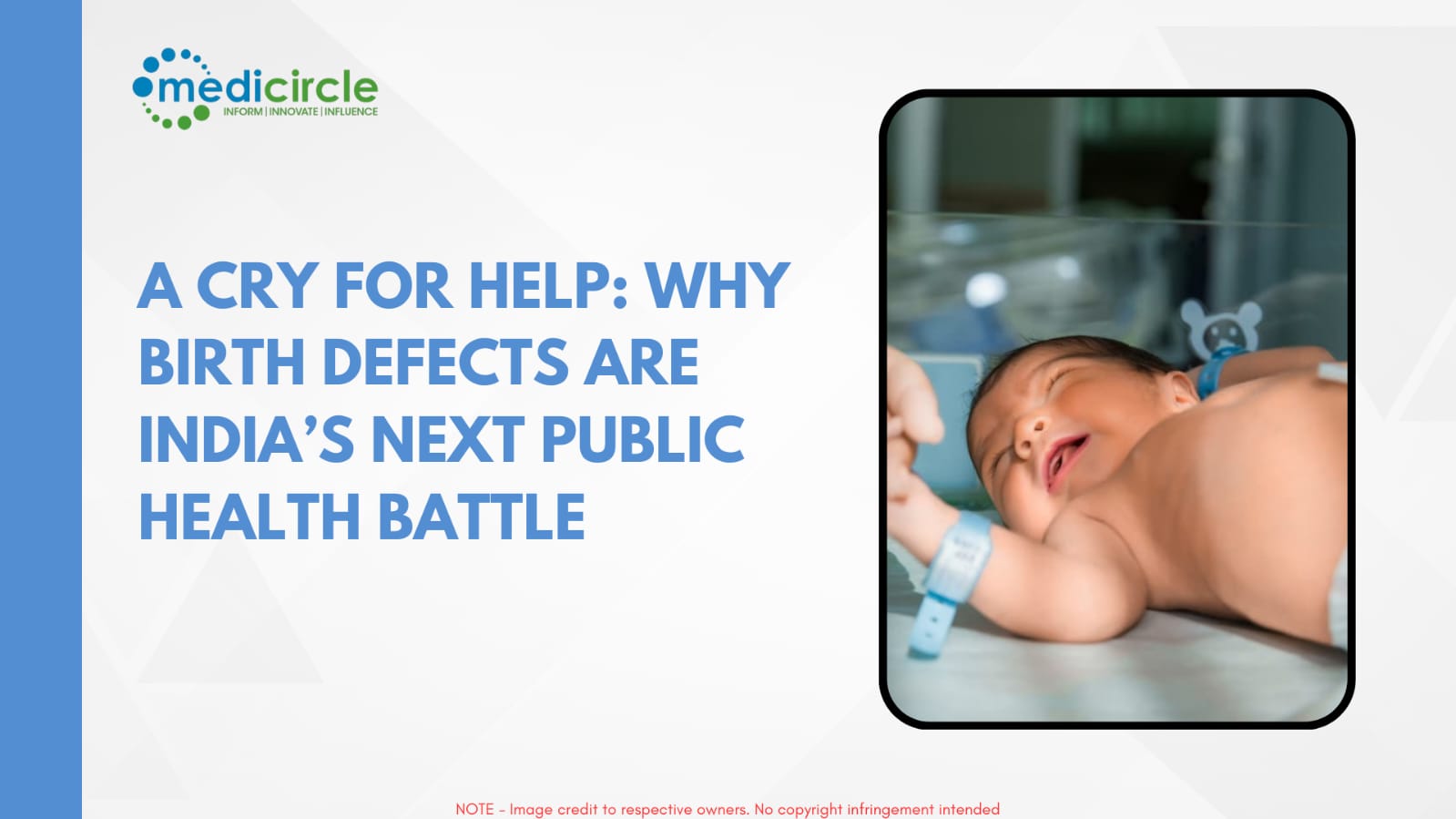
The first cry of a newborn is supposed to bring relief. It signals breath, life, promise. In thousands of homes across India each year, that cry arrives, but it is followed by a pause in the room, a frown on a doctor’s face, a sentence that changes everything. A murmur in the heart. A gap in the lip. A spine that did not close fully. Eyes that do not respond to light. Ears that do not register sound. For nearly six lakh families annually, childbirth becomes the beginning of a long and uncertain medical journey shaped by congenital anomalies.
In the fragile hours after delivery, parents are rarely prepared for such news. Many mothers blame themselves. Fathers oscillate between disbelief and silent panic. Grandparents search for explanations in fate, diet, stress, or destiny. What few families realize in that moment is that they are part of a much larger public health story that India has not fully confronted.
Congenital conditions, often referred to as birth defects, include structural and functional disorders that are present at birth. They can affect the heart, brain, limbs, hearing, vision, metabolism, or facial structure. Some are visible immediately. Others surface weeks or months later when a child fails to meet developmental milestones. While infectious diseases once dominated infant mortality in India, improvements in immunization and neonatal care have shifted the landscape. Today, congenital anomalies account for a growing share of infant and under-five deaths.
Despite this rising burden, India still lacks a unified national registry to systematically track birth defects. In a country that meticulously counts cases of tuberculosis and polio, the absence of a comprehensive National Birth Anomalies Registry reveals a critical blind spot in maternal and child health surveillance.
The emotional weight of this gap is carried by families. Consider the young couple in a tier-two town whose baby is born with congenital heart disease. The local hospital detects a problem but cannot provide specialized surgery. They are referred to a distant city. Travel costs mount. Accommodation becomes a concern. The father takes unpaid leave. The mother remains in a hospital corridor, learning medical terms she never expected to hear. There is no coordinated referral system, no structured follow-up plan. They navigate the system alone.
Congenital heart disease is one of the most common birth defects in India. Many cases require early surgical correction. Survival and quality of life depend on timely intervention. In metropolitan hospitals, pediatric cardiac units are equipped to manage complex cases. Outside major urban centers, diagnostic facilities and surgical expertise are unevenly distributed. The difference between survival and loss often depends on geography.
Cleft lip and palate present another example of the intersection between medical possibility and systemic limitation. Surgical repair can dramatically improve feeding, speech, and social integration. Organizations such as Smile Train India have expanded access to corrective surgeries. However, early detection and integrated post-operative care remain inconsistent. Speech therapy, audiology services, and psychological support are rarely bundled into routine newborn care in district hospitals.
Neural tube defects such as spina bifida highlight the preventive dimension of this crisis. Decades of global research have shown that adequate folic acid intake before and during early pregnancy significantly reduces risk. Yet preconception counseling is not deeply embedded in primary healthcare systems. Many pregnancies in India are unplanned, leaving little opportunity for nutritional optimization. Public health messaging tends to focus on antenatal visits after conception, by which time the neural tube has already formed.
Down syndrome, clubfoot, congenital hearing impairment, and visual disabilities add to the burden. Each condition demands a multidisciplinary approach. Pediatricians, surgeons, physiotherapists, audiologists, genetic counselors, and mental health professionals must work in coordination. In reality, care pathways are fragmented. Families shuttle between departments without a central coordinator.
This fragmentation stems from a structural weakness. India does not currently maintain a nationwide, standardized system to record and monitor congenital anomalies at birth. Data is collected in isolated pockets i.e. research projects, select tertiary hospitals, and limited state-level initiatives. Without harmonized reporting, policymakers cannot accurately estimate prevalence, identify regional clusters, or analyze long-term outcomes.
The proposed Birth Anomalies Network of India (BIND), launched by Birth Defects Research Foundation in collaboration with Smile Train India, signals recognition of this systemic gap. Unveiled at the India Habitat Centre, the initiative aims to advocate for prevention strategies, structured surveillance, and integrated care models. Central to its vision is the creation of a National Birth Anomalies Registry capable of generating reliable nationwide data.
A registry may sound bureaucratic, yet it is foundational to effective public health planning. Reliable data enables identification of preventable risk factors such as nutritional deficiencies, environmental exposures, maternal infections, or poorly controlled diabetes. It supports allocation of resources for specialized neonatal units. It informs medical education curricula and training programs.
India contributes a significant proportion of global deaths linked to congenital conditions. That statistic carries implications beyond numbers. It reflects how many families face grief or lifelong caregiving responsibilities that might have been reduced through early detection and coordinated treatment.
The epidemiological transition India is experiencing adds urgency. As communicable diseases decline, non-communicable conditions and congenital disorders represent a larger slice of pediatric mortality. Health systems built primarily around infection control must adapt to this new reality. Screening protocols need expansion. Referral networks require strengthening. Financial protection mechanisms must account for complex pediatric surgeries and rehabilitation.
Economic barriers remain a major obstacle. While government insurance schemes cover certain procedures, awareness and enrollment are inconsistent. Indirect costs such as transportation, accommodation and repeated follow-ups burden families heavily. In rural areas, specialized pediatric services may be several hours away. Delay in reaching tertiary centers can worsen outcomes.
Beyond medical logistics lies the psychological dimension. Parents of children with congenital anomalies often face stigma and social isolation. In communities where disability is misunderstood, mothers may bear disproportionate blame. Access to genetic counseling and mental health support is limited. Public health strategies must therefore integrate psychosocial care.
Environmental health also warrants scrutiny. Rapid industrialization and urbanization have increased exposure to pollutants. Though not all congenital anomalies are environmentally driven, certain toxins and unsafe living conditions can elevate risk. A national registry could help detect patterns linked to environmental hotspots, prompting regulatory intervention.
The digital transformation of healthcare presents opportunity. Electronic medical records and telemedicine platforms can facilitate standardized reporting and remote specialist consultations. If linked to a central registry, such systems could create real-time surveillance while improving referral efficiency. Implementation requires political commitment and investment in digital infrastructure.
Prevention must begin even before pregnancy. Preconception health education should become part of routine primary care. Awareness campaigns can promote folic acid supplementation, vaccination against rubella, and screening for chronic conditions such as diabetes and thyroid disorders. Empowering adolescent girls with reproductive health knowledge lays the groundwork for healthier pregnancies later.
Medical training programs should include structured modules on early recognition of congenital anomalies. Primary healthcare providers are often the first point of contact. Strengthening their diagnostic confidence can shorten referral timelines. Community health workers can play a role in tracking developmental milestones and flagging concerns early.
The absence of a unified national approach has consequences beyond mortality statistics. Children who survive with untreated or late-treated congenital conditions may face developmental delays, educational barriers, and reduced employment opportunities later in life. Early intervention programs, including physiotherapy and speech therapy, are critical for maximizing functional outcomes. Such services must be decentralized and affordable.
India has demonstrated capacity for ambitious public health initiatives. The eradication of polio and expansion of vaccination coverage reflect coordinated effort across government and civil society. Addressing congenital anomalies requires similar determination. Data collection, preventive nutrition policies, environmental monitoring, neonatal screening, and financial protection must converge within a coherent strategy.
Families living this reality cannot wait for incremental reform. When a newborn requires urgent cardiac surgery, bureaucratic timelines feel irrelevant. When a child’s hearing impairment goes undetected for years, speech development suffers irreversibly. The cost of delay is measured in lost potential.
The human impact of congenital anomalies is profound. A mother learning how to feed a baby with cleft palate through specialized techniques. A father commuting long distances for physiotherapy appointments. Siblings adjusting to hospital visits and financial strain. These stories rarely appear in national headlines, yet they form the quiet backbone of India’s pediatric health narrative.
India’s demographic advantage, often celebrated as a dividend, depends on the health of its youngest citizens. Ensuring early diagnosis, integrated treatment, and preventive maternal health strengthens that foundation. Public health success cannot be measured solely by reduced infection rates. It must include the capacity to address congenital disorders with equal seriousness.
The first cry of a newborn should signal hope without fear. For hundreds of thousands of Indian families each year, that hope is clouded by uncertainty. The science to prevent many congenital conditions exists. The surgical expertise to correct several defects is available. What remains fragmented is coordination.
The question confronting India is not whether congenital anomalies deserve priority. The scale of the burden has already answered that. The question is whether the country will build the surveillance systems, invest in preventive maternal health, and create structured care networks needed to support every child born with a congenital condition.
Six lakh newborns annually represent six lakh opportunities to act decisively. A registry can turn isolated cases into collective knowledge. Prevention programs can transform risk into resilience. Integrated newborn screening can convert late diagnosis into early intervention.
Behind each statistic stands a family waiting for clarity and care. The measure of a nation’s healthcare system lies in how it protects its most vulnerable. India’s response to congenital anomalies will define the next chapter of its maternal and child health journey.





-23-300x250.png)

.jpeg)






.jpg)
.jpg)
.jpg)
.jpg)
.jpg)
.jpg)
.jpg)
.jpg)
.jpg)