 Thursday, October 08, 2026
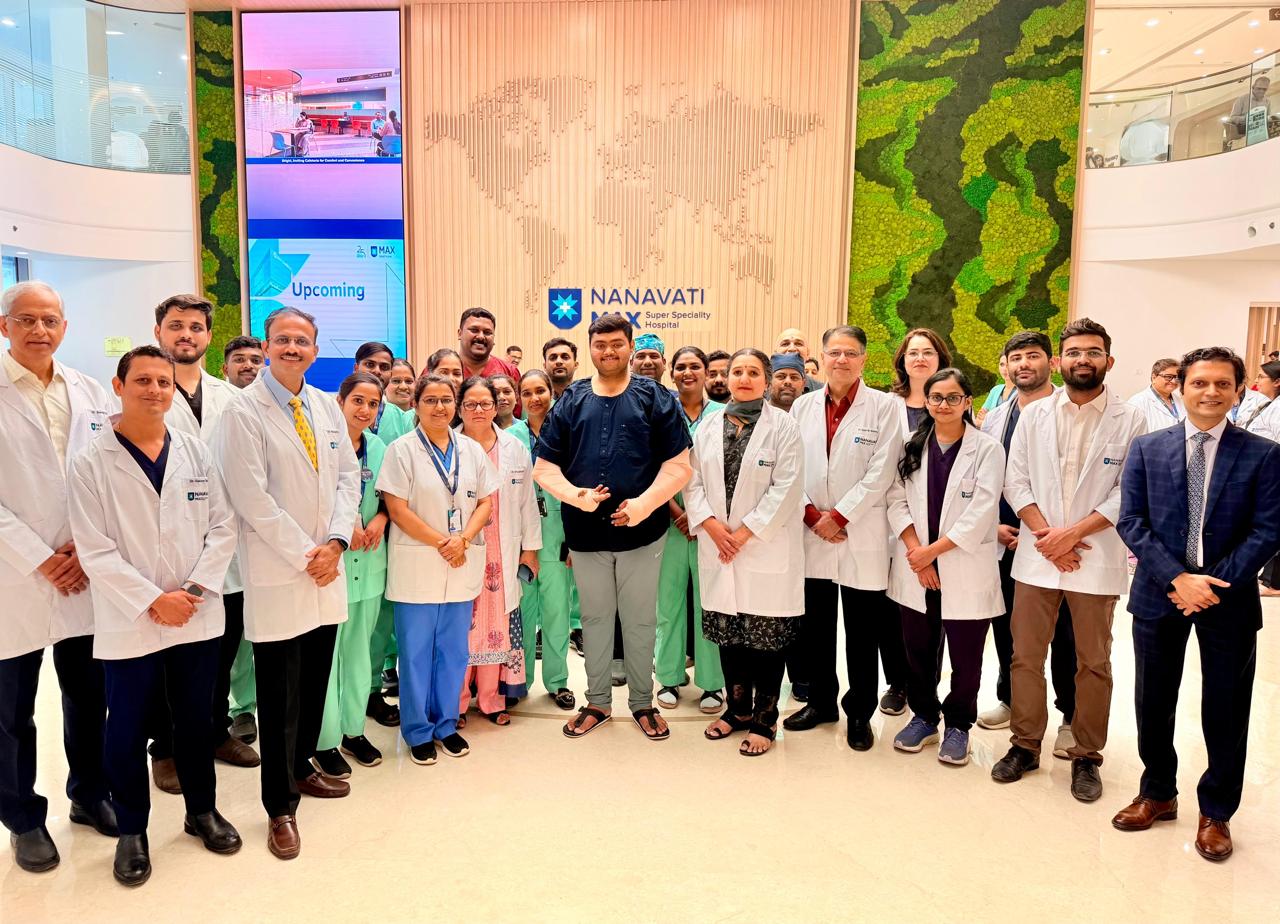
 This landmark bilateral hand transplant is a symbol of hope. It demonstrates that with the right combination of skill, technology, and human will, boundaries can be pushed and lives can be transformed




There are moments in medicine that go beyond clinical success and enter the realm of something deeply human, where science meets courage and loss transforms into life. One such moment unfolded recently in India, where an extraordinary act of organ donation and a complex surgical feat came together to restore not just physical ability, but dignity and independence to a young life that had been abruptly altered.
In a landmark achievement for reconstructive microsurgery in India, a rare bilateral hand transplant was successfully carried out at Nanavati Max Super Speciality Hospital. The procedure followed a powerful decision made by the family of a 50-year-old woman from Surat, who, in the midst of grief, chose to donate her organs. Along with her hands, her lungs, liver, and corneas were also donated, benefiting multiple recipients across Mumbai and Surat. It was a gesture that echoed one of the most significant truths of medicine: that even in death, life can continue in many forms.
At the core of this story is 18-year-old Priyank Aghera from Rajkot, whose life had taken a devastating turn in January 2024. A tragic farm accident had cost him both his hands, leaving him suddenly dependent on others for even the simplest daily activities. For a young man standing at the threshold of adulthood, the loss was not just physical; it carried emotional, psychological, and social weight. Everyday actions such as eating, writing and dressing, became challenges, and independence felt like a distant memory.
For over a year, Priyank remained on the transplant waitlist, navigating a period filled with uncertainty and hope. Hand transplantation is not as common as other organ transplants, largely due to its complexity and the need for a suitable donor. Unlike internal organs, hands must match not just medically but also in terms of skin tone, size, and structural compatibility. Every passing day was a reminder of both the possibility of restoration and the unpredictability of waiting.
That moment of possibility finally arrived in January 2026. Following the donor’s passing in Surat, a meticulous and time-sensitive process was set into motion. The donor hands were carefully retrieved and transported to Mumbai within a little over two hours. This swift movement was made possible through seamless coordination between medical teams, transport systems, and regulatory authorities across cities. Such precision reflects the growing strength of India’s organ donation and transplant network, where time is often the difference between success and failure.
The transplant surgery itself was a marathon of skill and endurance, lasting approximately 13 hours and spanning the night of 9th to 10th January. Leading the effort was Dr Nilesh Satbhai, Director of Plastic, Reconstructive Microsurgery and Hand Transplantation, along with a highly experienced multidisciplinary team. This was not their first such endeavor; the team has successfully performed 26 hand transplants across 14 patients, placing them among the most experienced in the country. Yet, each case brings its own set of challenges, particularly when dealing with bilateral transplantation, where both hands must be attached with extraordinary precision.
Hand transplantation is one of the most complex procedures in modern medicine. It requires surgeons to reconnect bones, tendons, muscles, blood vessels, and nerves with microscopic accuracy. Every structure must align perfectly for the hand to regain function. Blood flow must be restored within minutes to prevent tissue damage. Nerves, which take months or even years to regenerate, must be carefully joined to allow sensation and movement to gradually return. The procedure is as much an art as it is a science, demanding patience, coordination, and unmatched expertise.
The success of such a surgery does not rest on the operating table alone. It is the result of collaboration across specialties, plastic surgeons, orthopaedic experts, anesthesiologists, transplant coordinators, nurses, and rehabilitation specialists all working in harmony. In this case, the contributions of doctors including Dr Baliarsing, Dr Anshuman Manasvi, Dr Ashish Magdum, Dr Chirag Bhansali, Dr Akshay Deshpande, Dr Bharat Saxena, Dr Shruti, and Dr Shetty’s orthopaedics team were integral to the outcome. Each played a role in ensuring that the surgery progressed smoothly and that the patient’s recovery would begin on a strong foundation.
The story does not end with a successful transplant. In many ways, it is only the beginning. Recovery after a hand transplant is a long and demanding journey. The patient must undergo intensive physiotherapy to retrain muscles and relearn movements. The brain, too, must adapt to the new hands, gradually rebuilding neural connections that allow control and coordination. This process can take months, sometimes years, and requires immense determination from the patient.
There is also the lifelong commitment to immunosuppressive medication. Since the transplanted hands come from another individual, the body’s immune system may attempt to reject them. Medications help prevent this response, but they must be taken consistently and monitored closely. Regular follow-ups, careful observation, and adherence to medical advice are essential to ensure the long-term success of the transplant.
Despite these challenges, the impact of a successful hand transplant is transformative. It restores the ability to perform daily tasks independently, which in turn rebuilds confidence and self-esteem. For someone like Priyank, it means reclaiming a sense of normalcy that once seemed lost. The ability to hold a spoon, write a note, or simply shake someone’s hand carries emotional significance that goes far beyond physical function. It is about regaining control over one’s life.
This case also highlights the critical role of organ donation in India. While awareness has improved over the years, the demand for organs still far exceeds supply. Every successful transplant is made possible by a family that chooses generosity in a moment of immense grief. The decision by the donor’s family in Surat to donate multiple organs has impacted several lives, offering not just survival but a chance at a better quality of life. Their courage serves as a reminder of the power of collective humanity in healthcare.
India’s progress in transplant medicine has been remarkable, with increasing expertise, better infrastructure, and stronger coordination networks. Still, there remains a need to further strengthen awareness about organ donation, streamline legal processes, and ensure equitable access to advanced treatments. Stories like this play an important role in inspiring trust and encouraging more people to consider organ donation as a meaningful legacy.
This achievement reflects how far reconstructive microsurgery has come. Procedures that were once considered experimental are now becoming viable treatment options for select patients. Advances in surgical techniques, imaging, and postoperative care have significantly improved outcomes, making it possible to attempt and succeed in highly complex cases.
At the same time, such cases remind us that medicine is not just about technology or expertise. It is about empathy, resilience, and the human connections that make healing possible. The journey from loss to restoration involves not just the patient and the doctors, but also the donor family, the support systems, and the invisible network of people who contribute to each step.
This landmark bilateral hand transplant is a symbol of hope. It demonstrates that even in the face of devastating loss, recovery is possible. It shows that with the right combination of skill, technology, and human will, boundaries can be pushed and lives can be transformed.
In conclusion, what remains is a powerful narrative of renewal. A young man who once lost his hands now has the chance to rebuild his life. A family that experienced loss has given life to others. And a medical team has once again proven that innovation, when driven by purpose, can achieve the extraordinary.
In a country where millions still await organ transplants, this story serves as both inspiration and a call to action. It urges us to rethink how we view donation, to appreciate the impact of medical advancement, and to recognize that behind every successful procedure lies a story of courage, generosity, and hope that deserves to be told.





.jpeg)








.jpg)
.jpg)
.jpg)
.jpg)
.jpg)
.jpg)


.jpg)
.jpg)
.jpg)