A Doctor’s Forgotten Guide Wire in the Chest Exposes Cracks in India’s Surgical Safety

▴ India’s Surgical Safety
Medical errors must be taken seriously, not brushed under the rug. To heal the wound left by one wire, hospitals must stitch stronger safety nets around all patients.

Hello! If you're looking for high-quality genericmedications, fast delivery and excellent customer service, ourstore is the right choice for you. With over 20 years of onlineexperience, we guarantee safe, effective products that are alwaysin stock. Delivery within 48 hours, free shipping from $200, and 100% money-back guarantee if your order doesn't arrive on time.

👉 Order now at BestCheapPills and discover exclusive discounts for registeredcustomers!
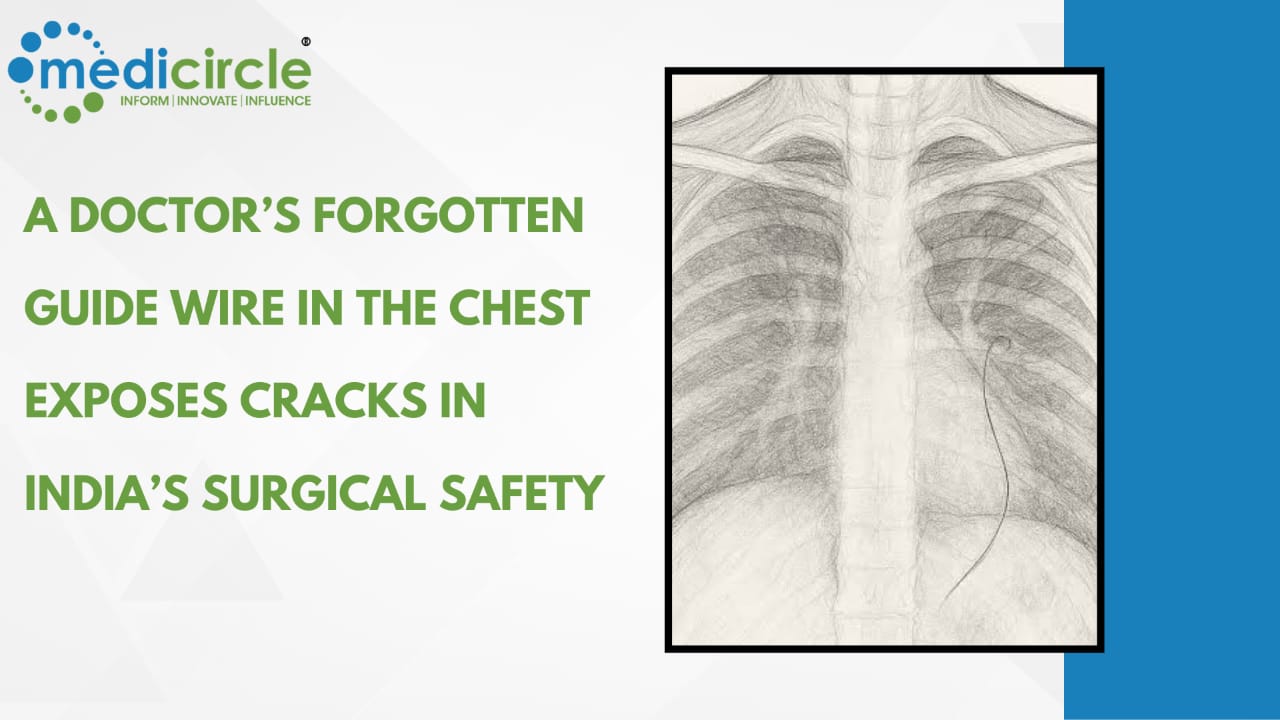
In the busy wards of a government hospital in Thiruvananthapuram, a medical error from two years past has suddenly become a loud alarm for India’s healthcare system. A 26-year-old woman, Sumayya, who underwent thyroid surgery in March 2023, discovered only months ago that a surgical guide wire i e. a thin instrument used to insert a central line was still stuck in her chest. This oversight wasn’t caught until she began suffering severe breathing issues and an X-ray revealed the wire lodged dangerously close to vital blood vessels. Today, a police case has been filed against the operating surgeon under charges of endangering life and medical negligence. Her case is more than a tragic incident; it's a warning sign.

The chain of events began when Sumayya entered the hospital complaining of persistent throat pain. The surgical team struggled to secure her veins, leading them to insert a central line using a guide wire to deliver medication and fluids. What should have been routine and cautious became regrettably careless: the guide wire was never removed. Months later, at Sree Chitra Tirunal Institute of Medical Sciences, scans detected the metallic strand embedded within her chest. Doctors declared removal too risky due to its proximity to vital vessels and its adhesion to them.

Sumayya developed worsening respiratory distress, and physical discomfort forced her to resign from her job as a laboratory assistant which is a heartbreaking blow for someone reliant on daily wages. Unlike the quick resolution such errors warrant, her ordeal translated into chronic trauma, uncertainty, and mounting medical anxiety.

Sumayya seeks justice, accountability, and fair treatment. Her family accused the surgeon of attempting to evade responsibility. A voice recording surfaced in which the doctor admitted, “It was indeed a mistake,” and shifted blame to the anaesthesia team. The hospital formed an expert committee and submitted the matter for review, but Sumayya’s grievances eventually led to a formal police complaint. The Cantonment police responded by filing an FIR under sections 336 and 338 of the Indian Penal Code, which cover acts that endanger life or safety through rash or negligent behavior.

This incident occurs against a backdrop of mounting concerns about patient safety in India. Surgical errors like retained sponges, forgotten clamps, or misplaced instruments are rare but devastating. Public confidence can erode with each headline. In towns and cities, patients already worry about the competence of understaffed or overburdened government hospitals. A single case like this becomes a symbol of deeper systemic flaws: training gaps, procedural fatigue, and the absence of fail-safes.

When a surgical task box fails, the hole it leaves isn’t just physical it is ethical, emotional, and procedural. Did the hospital conduct routine checks post-surgery? Was there a counting protocol in place to ensure no instrument was missing? Did fatigue play a role? Were there enough trained supervision and oversight during surgeries? Each unanswered query draws attention to a responsibility that extends beyond one doctor, it implicates hospital culture, audit practices, and institutional accountability.

At the core of this tragedy lies patient vulnerability compounded by bureaucratic opacity. Sumayya and her family had to protest outside the Director of Health Services office to be heard. Meanwhile, a government panel declared no “major harm” resulted from the retained guide wire, but this clinical verdict hardly comforts someone facing daily gasps for breath and ruined dreams. Many patients are not in a position to protest or demand justice. This incident is a rare amplification of voices that usually go unheard.

Moreover, rural and economically disadvantaged patients are most at risk. In a nation where access to private care remains out of reach for many, government hospitals serve as lifelines. Yet, if these institutions fail in basic safety, the gap between rural hope and urban care widens. As medical negligence cases surface, they threaten to shake trust in the system that average Indians depend on.

A pattern that needs urgent correction has three pillars: First, surgical safety protocols must be non-negotiable. Surgical checklists, instrument counts, post-op imaging when appropriate are all preventable measures that should be institutionalized rather than treated as optional. Second, systemic error reporting must be transparent. Accidents happen, but without open recording, investigation, and public accountability, lessons aren’t learned. Third, patient redress mechanisms must be accessible. Hospitals and health systems need clear channels for reporting harm, timely feedback, compensation, and support for rehabilitation or treatment.

As for Sumayya, she remains under medical management. Doctors decided not to remove the guide wire for fear of triggering complications. Instead, the plan is to monitor the problem continuously and alleviate symptoms. Meanwhile, she and her family press for compensation and for systemic reforms that ensure what happened to her doesn’t happen again.

In a nation struggling with rising healthcare demands and expensive private care, incidents like this reveal the perilous gap between policy and practice. Every surgical procedure should bring relief, not regret; every hospital visit should restore hope, not sow suspicion. Patient safety requires not just sterile instruments but a sterile culture clean of neglect, clot-free in oversight, and accountable to every vulnerable individual who walks in seeking care.

Kerala’s healthcare system, often held up as a model, must use this moment to deepen training, strengthen surgical protocols, and raise public trust. The filing of an FIR is less a punishment than a declaration: medical errors must be taken seriously, not brushed under the rug. To heal the wound left by one wire, hospitals must stitch stronger safety nets around all patients.


Ultimately, the case of the guide wire in the chest isn’t a medical mystery, it’s a moral question: when did medical care stop being about doing no harm and start being about covering up errors? Sumayya’s story is a plea for justice, yes, but also for a healthcare culture that never repeats what she had to endure

Tags : #PatientSafety #MedicalNegligence #HealthcareAccountability #RightToHealth #MedicalEthics #HealthcareJustice #SystemicReform #HospitalAccountability #PatientRights #HealthcareTransparency #SafetyInSurgery #PublicHealthIndia #TrustInHealthcare #HealthcareForAll #MedicalOversight #StrongerHealthcare #JusticeForPatients #HealthcareReform #smitakumar #medicircle

Related Stories

Loading Please wait...

-Advertisements-


Trending Now

Cholesterol Explained: Good vs Bad Cholesterol and What It Means for Your HeartJuly 11, 2026
Role of Technology in Hospitals: How Indian Healthcare is Being ReshapedJuly 11, 2026
175 years after ancestors left UP, Indo-Trinidadian infant receives rare liver transplant at Apollo DelhiJuly 10, 2026
Fortis Escorts Faridabad Strengthens Advanced Care Ecosystem with Launch of: Fortis Cancer Institute Institute of Neurosciences Centre of Excellence in Critical Care and ECMOJuly 10, 2026
India’s first focused health AI Conclave unites doctors and AI expertsJuly 10, 2026
University of Leeds Opens Applications for MSc Biotechnology with Business Enterprise for Indian StudentsJuly 10, 2026
How Doctors Are Changing the Face of Indian HealthcareJuly 10, 2026
Medical Innovations to Watch in 2026: How Technology Is Reshaping Healthcare in IndiaJuly 10, 2026
Government of India Notifies Polymatech Electronics’ Semiconductor and Electronic Components SEZ at Nava Raipur, ChhattisgarhJuly 09, 2026
Iswarya Fertility Center Raises Over INR 350 Crore from OrbiMed AsiaJuly 09, 2026
Happiest Health Announces Launch of Speciality Clinics Happiest Paediatrics, Happiest Orthopaedics, Happiest Gynaecology, Happiest Endocrinology & Your Personal PhysicianJuly 09, 2026
Cetaphil launches new AM/PM Antioxidant Serum Duo in India July 09, 2026
THIP Partners with ISSRF to Launch Digital Patient Education Programme for EndometriosisJuly 09, 2026
Blood Tests Everyone Should Understand: A Complete Guide for Indian AdultsJuly 09, 2026
CT Scan vs MRI: Understanding the Difference and Choosing the Right Diagnostic Imaging TestJuly 09, 2026
Robotic Surgery in Modern Urology and Gynecology: Precision, Recovery, and SafetyJuly 08, 2026
Apollo Hospitals Gives Filipino Twin Brothers a New Lease of Life Through Rare Twin Liver TransplantsJuly 08, 2026
Fibroheal Raises ₹14 Crore to Fuel Next Phase of Growth and Entry in Developed MarketsJuly 08, 2026
Veda Rehabilitation & Wellness Opens Himalayan Mental Health Recovery Retreat in Sikkim for Addiction Recovery and Mental WellbeingJuly 08, 2026