 Thursday, October 08, 2026
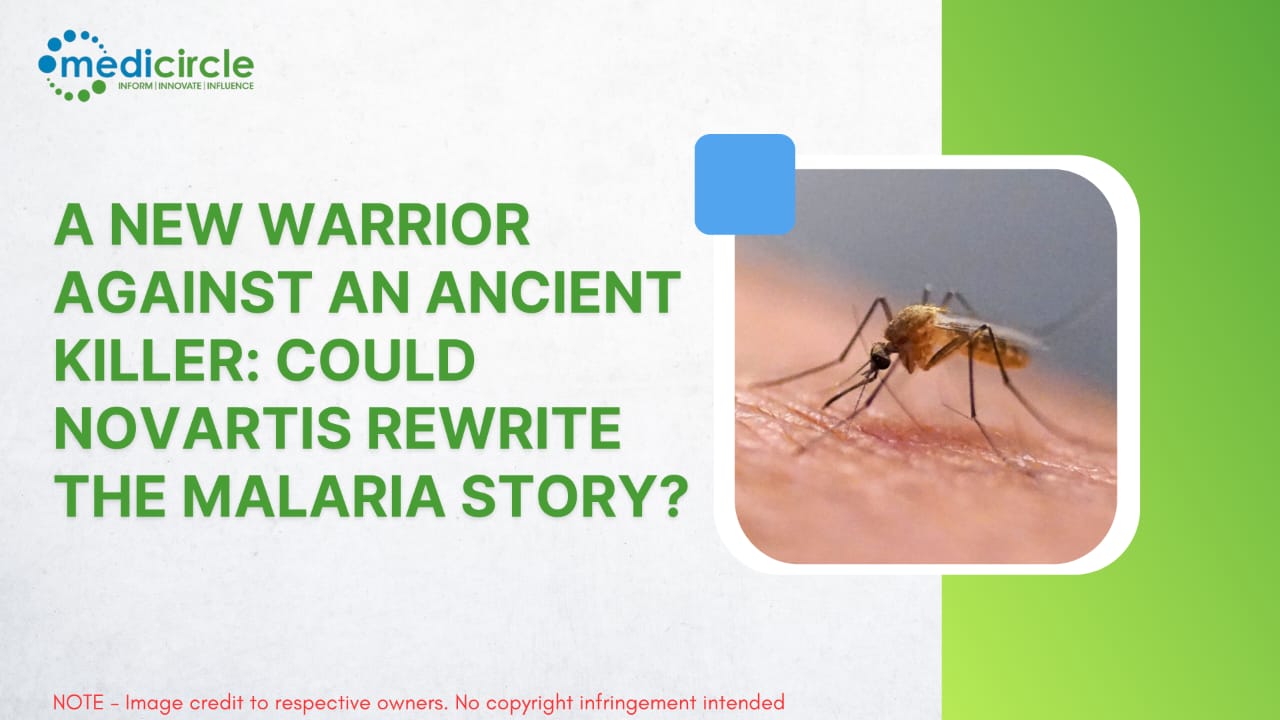
 If GanLum continues to perform with the strength seen in early results, the world may be entering a new chapter in the malaria story written with renewed courage.




For decades, malaria has lingered like a shadow over regions that have fought poverty, conflict, and fragile healthcare systems. It is a disease that quietly takes the lives of hundreds of thousands of children every year, a disease that weakens families, halts progress, and continually tests the strength of public health systems in Africa and parts of Asia. The parasite behind malaria has learned to outsmart medicines one after another, turning each breakthrough into a temporary victory. Yet every so often, the scientific world senses a shift, a moment where an old narrative may be ready to change. This time, that possibility is tied to a new drug candidate from Novartis. For the first time in more than twenty-five years, the world may be facing a therapy strong enough to challenge both the disease and the growing fear of drug resistance.
In the field of infectious diseases, few challenges are as complex as malaria. The parasite is cunning, adaptable, and deeply rooted in the bloodstream of human history. Long before the world talked about pandemics, long before antibiotics reshaped medicine, malaria was already altering the fate of empires, shaping migration patterns, and influencing human genetics. Even today, despite decades of global campaigns, insecticide-treated bed nets, antimalarial drugs, rapid testing, and better surveillance, the disease remains stubbornly persistent. Over 600,000 people (mostly children under five) continue to lose their lives to malaria each year. Every number in this statistic represents an unfinished childhood, a grieving parent, and a community pushed one step backward.
Against this backdrop, the arrival of any new therapy becomes a symbol of hope. The new Novartis drug, known as GanLum, has captured global attention because its results appear almost unbelievable in a field where progress is usually slow. Late-stage clinical data reveals that GanLum cleared more than 99% of malaria infections. For a disease that constantly pushes back against medicines, a result like this is rare enough to make the medical community stop and take notice. When a treatment reaches the point where it almost wipes out the parasite in controlled trials, the world cannot ignore the possibility that something truly significant is unfolding.
What has made this moment even more important is the rising fear of antimalarial resistance. In regions of Africa, the parasite has begun to develop reduced sensitivity to some frontline therapies. Drug resistance is one of the biggest threats to global malaria control, because it weakens the very tools public health programs depend on. For families in remote villages, clinics with limited resources, or children who cannot reach hospitals in time, the effectiveness of the available drugs can mean the difference between life and death. A treatment that brings a new mechanism of action or stronger clearance could reshape the future of malaria therapy, especially in high-burden areas.
It is true that GanLum is still a developing candidate, but its potential has sparked a rare moment of optimism. Researchers working in malaria-endemic regions have been waiting for a therapy that can overcome resistant strains before they spread even further. The science community has been expecting resistance to become a much larger problem if new drugs did not emerge soon. With this new candidate, there is a sense that the window for action may still be open. The chance to interrupt a dangerous trajectory where resistance becomes widespread now feels more realistic than it did even a few years ago.
But a drug alone cannot fight malaria. Behind every scientific milestone is a story of access, affordability, and equity. The world has seen antibiotics, vaccines, and life-saving drugs become extraordinary tools in wealthy countries while those who need them the most wait on the sidelines. For GanLum to truly change the course of malaria, the question of who receives it and when will be as important as how well it works. Sub-Saharan Africa remains the global epicenter of malaria deaths. Healthcare workers in rural clinics do not talk about percentages or trial results; they talk about children who arrive too late, mothers who collapse from severe infection, and families who walk miles to find help that may not arrive in time. A new drug will be meaningful only if it can reach these realities, not just sit proudly in scientific journals.
The story of malaria is also tied to environmental factors. Climate change is expanding mosquito habitats into areas that were not considered high-risk before. Rainfall patterns are shifting, temperatures are rising, and mosquitoes are thriving in places where they once struggled. Public health experts warn that global warming may increase malaria transmission in the coming decades if communities are not prepared. This makes the arrival of a new therapy even more timely. As the planet changes, diseases that were previously “tropical” may spread wider, affecting regions that lack the infrastructure to manage them effectively. A treatment like GanLum could become a stabilizing force in a world dealing with fast-moving environmental and epidemiological challenges.
Still, any new drug must confront the realities of implementation. For malaria control programs, treatment is just one part of a broader ecosystem that includes early diagnosis, vector control, community education, and continuous monitoring. A misdiagnosed case, a missing laboratory kit, a broken supply chain, or a shortage of trained health workers can reduce the impact of even the most powerful therapy. This is why experts emphasize that the success of GanLum will depend on how countries integrate it into national malaria strategies. The drug could bring a new wave of confidence to these programs, helping them strengthen their outreach and track outcomes more effectively.
One of the most important aspects of this discovery is the way it reinvigorates scientific curiosity. Research in malaria is notoriously challenging. The parasite has a complex life cycle, and studying its behavior inside the human body requires advanced resources, patience, and long-term funding. For years, many scientists felt that progress was being made only in small increments. The arrival of GanLum breaks that monotony. It reminds researchers that bold ideas and persistent efforts can still produce breakthroughs, even in fields that seem stuck. Young scientists entering the world of infectious disease research may find new inspiration in this milestone, knowing that a future free from malaria might not be a distant dream.
The conversation around this drug also strengthens global awareness. Malaria often sits in the background of global health discussions, overshadowed by newer threats or faster-spreading outbreaks. Yet the disease continues to be one of the world’s oldest and deadliest killers. An advancement like GanLum brings it back to headlines, prompting governments, donors, and organizations to reaffirm their commitment to malaria elimination. Media coverage, public health campaigns, and global conferences will inevitably revisit the urgency of ongoing efforts, which is essential for keeping funding and political attention alive.
For families living with malaria risk every day, the true test of progress lies in the reduction of suffering. A new drug can bring confidence to health workers who have fought too many battles with limited weapons. It can promise mothers that their children will have a better chance of recovery. It can support community health volunteers who move door to door with screening tools, encouraging them to keep going because the world is not giving up on them. Even if GanLum is not a final cure, it could be a turning point that changes how we approach treatment and how quickly we respond to emerging threats.
The malaria parasite has survived countless attempts to defeat it, constantly adapting to whatever humanity throws its way. But every new therapy weakens it a little more. GanLum may be the push that forces the disease into a corner it cannot easily escape from. If the results seen in trials can be replicated in real-world settings, the global malaria map could begin to shift in meaningful ways. Countries that have struggled to reduce case numbers may find renewed confidence. Nations that have made progress but fear resistance may gain a stronger defense. Global health agencies may feel more empowered to set ambitious targets.
The next phase will determine how quickly GanLum moves from research papers to real clinics. Regulatory approvals, manufacturing capacity, collaborations with international health agencies, and pricing decisions will define the path ahead. If these pieces fall into place, the world may soon witness the arrival of a treatment that reshapes malaria care for an entire generation. The idea of a drug that cures more than 99% of cases is extraordinary. The idea of delivering this drug to every region that needs it is even more extraordinary. But history has shown that when the world believes in the possibility of change, remarkable things can happen.
Malaria, so often treated as an inevitable tragedy, suddenly faces a new competitor backed by science, determination, and global anticipation. If GanLum continues to perform with the strength seen in early results, the world may be entering a new chapter in the malaria story, one written with renewed courage.
A world where malaria no longer steals childhoods or shapes destinies is not impossible. It is a world waiting to be created, one breakthrough at a time. And looking at what has just emerged, one question feels full of hope: Could this truly be the warrior that finally forces an ancient killer to retreat?
If Novarti’s new candidate keeps its promise, that question may soon have an answer the world has waited a long time to hear.





.jpeg)








.jpg)
.jpg)
.jpg)
.jpg)
.jpg)
.jpg)


.jpg)
.jpg)
.jpg)