Tuesday, October 27, 2026
 The capacity to research, manufacture, and distribute essential vaccines within national borders strengthens a country’s preparedness against both routine diseases and unforeseen outbreaks




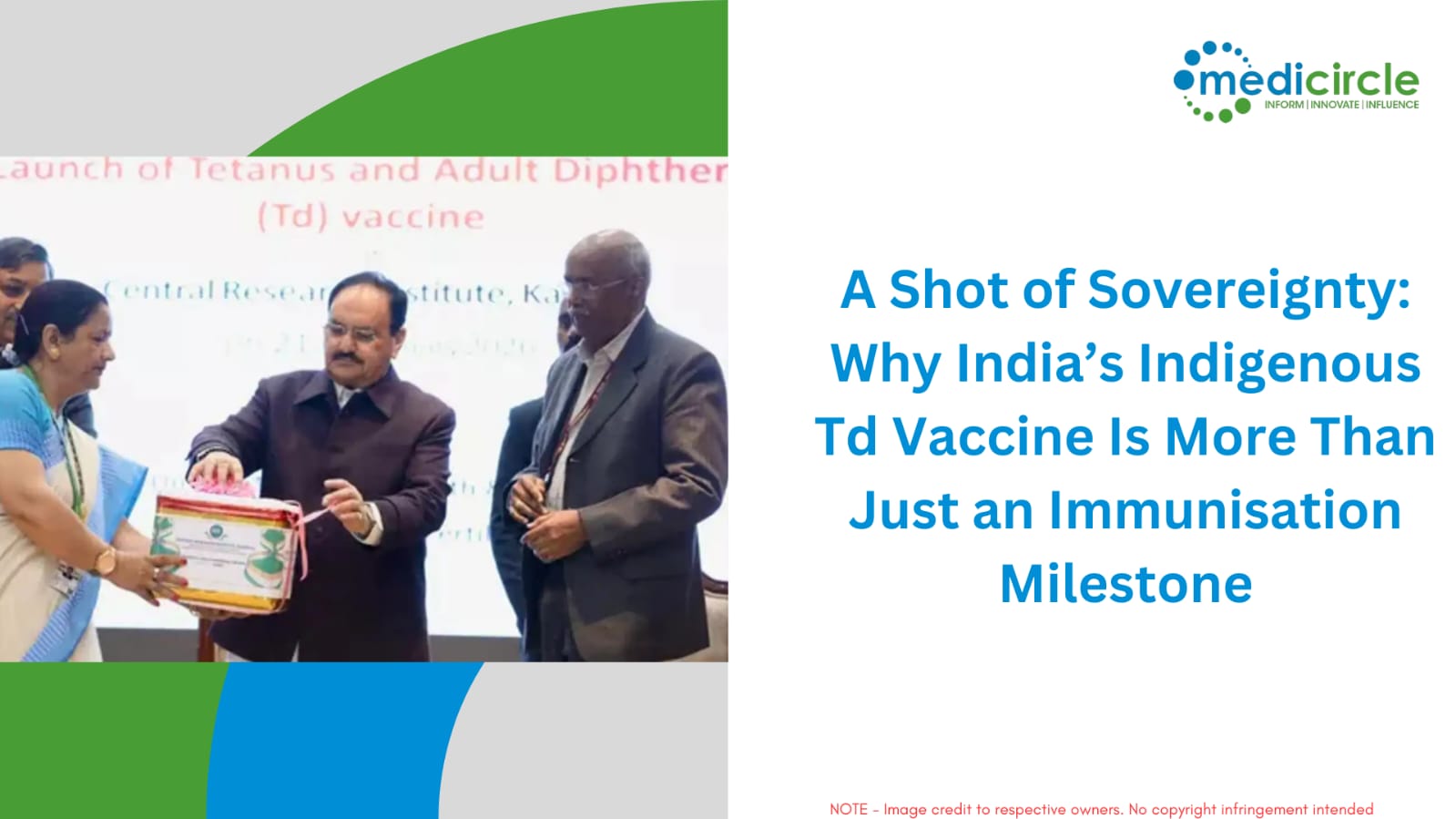
In the hills of Himachal Pradesh, a development unfolded that carries implications far beyond the gates of a research institute. When Union Health Minister J. P. Nadda introduced an indigenously produced tetanus and adult diphtheria vaccine at the Central Research Institute in Kasauli, the moment symbolised a deeper national ambition to secure India’s public health future through scientific self-reliance, robust vaccine manufacturing, and a strengthened immunisation ecosystem.
The tetanus and adult diphtheria vaccine, commonly known as the Td vaccine, plays a crucial role in preventing two potentially fatal bacterial infections. Tetanus, caused by Clostridium tetani, can lead to painful muscle stiffness and life-threatening complications. Diphtheria, once a major childhood killer, attacks the respiratory system and can damage the heart and nerves. Although both diseases are preventable through vaccination, they remain a public health concern in many regions where immunisation gaps persist. Ensuring steady and affordable access to high-quality vaccines is therefore essential to national disease control strategies.
The launch at the historic Central Research Institute, Kasauli, marks India’s move towards greater independence in vaccine production. Established during the colonial era, the institute has witnessed the evolution of medical science in India. Today, it stands as a symbol of the country’s efforts to modernise public sector vaccine manufacturing units and align them with international Good Manufacturing Practices. By producing the Td vaccine domestically, the institute strengthens India’s capacity to meet its own immunisation demands while reducing reliance on external suppliers.
In recent years, healthcare policy in India has increasingly focused on resilience. The pandemic revealed vulnerabilities in global supply chains, particularly in pharmaceuticals and essential medical supplies. For a country that vaccinates millions each year, the ability to manufacture critical vaccines within its borders is not merely a matter of prestige. It is a matter of preparedness. Indigenous vaccine production enhances health security by ensuring that routine immunisation programmes continue uninterrupted, even during global crises.
The newly launched Td vaccine will be integrated into the Universal Immunisation Programme, one of the largest public health initiatives in the world. The programme provides protection against multiple vaccine-preventable diseases and covers beneficiaries from pregnancy through adolescence. Every year, India sees the birth of nearly two to two and a half crore children, alongside a comparable number of pregnancies. Each of these lives enters a system designed to track, protect, and monitor health outcomes through structured immunisation schedules.
The Universal Immunisation Programme currently offers protection against a wide spectrum of diseases, with multiple doses administered at different stages of childhood and adolescence. The Td vaccine holds particular importance for pregnant women and older children, reinforcing immunity against tetanus and diphtheria. Maternal immunisation safeguards mothers and also provides passive protection to newborns during their earliest weeks of life. In rural and semi-urban settings, where access to emergency medical care may be limited, such preventive measures can make a decisive difference.
What sets this development apart is the scale at which it is being operationalised. The Central Research Institute is expected to supply millions of doses within the first phase of distribution. Over time, production capacity is projected to expand, reinforcing the government’s commitment to strengthening domestic vaccine manufacturing infrastructure. This aligns with the broader vision of Aatmanirbhar Bharat in healthcare, where scientific innovation and industrial capacity converge to reduce dependency on imports.
India’s position in the global pharmaceutical landscape adds further weight to this initiative. Often referred to as the pharmacy of the world, the country has long been a major supplier of generic medicines and vaccines to international markets. Its regulatory systems have achieved recognition through global benchmarking processes, reflecting adherence to rigorous quality and safety standards. Public sector institutions such as the Central Research Institute have contributed to this credibility by upgrading facilities, improving compliance frameworks, and investing in skilled human resources.
The transformation of India’s vaccine ecosystem has been particularly visible over the past decade. Historically, vaccine development timelines stretched across decades. Scientific progress was steady but slow. The COVID-19 pandemic changed that narrative dramatically. Within months, Indian scientists and manufacturers developed indigenous vaccines and executed one of the largest vaccination drives in human history. Over 220 crore doses were administered nationwide, supported by digital certification systems that demonstrated the country’s growing technological capabilities in healthcare delivery.
The digital backbone supporting immunisation efforts has evolved significantly. Platforms such as U-WIN are designed to track beneficiaries from pregnancy registration through childhood and adolescence. Expectant mothers are scheduled for antenatal visits, including specialist consultations. Vaccination records are maintained systematically, reducing the risk of missed doses. The integration of digital health records enhances transparency and accountability while enabling policymakers to identify coverage gaps in real time.
In this context, the introduction of a domestically manufactured Td vaccine becomes part of a larger story that intertwines vaccine manufacturing, digital health infrastructure, and public health outreach. It reflects a layered approach to healthcare reform, where production, distribution, and monitoring operate in tandem.
The global dimension of India’s vaccine diplomacy also deserves attention. During the COVID-19 crisis, India supplied vaccines to nearly a hundred countries under international cooperation initiatives. Several nations received doses as grants, reinforcing India’s role as a responsible global health partner. Strengthening domestic manufacturing capacity ensures that such contributions can continue without compromising national immunisation needs.
Public sector vaccine manufacturing units once faced stagnation due to outdated facilities and regulatory challenges. Revitalisation efforts have aimed to modernise these institutions, aligning them with international Good Manufacturing Practices standards. The Central Research Institute’s progress reflects how strategic policy support and scientific expertise can rejuvenate legacy institutions.
The public health impact of tetanus and diphtheria prevention cannot be overstated. Although vaccination campaigns have significantly reduced incidence rates, sporadic outbreaks still occur in areas with incomplete coverage. Tetanus cases linked to unsafe childbirth practices or contaminated wounds highlight the need for continuous immunisation efforts. Diphtheria outbreaks in certain states have reminded authorities that complacency can reverse gains achieved over decades. Strengthening routine immunisation with reliable domestic supply chains is therefore a proactive measure against resurgence.
From an economic standpoint, preventive healthcare yields substantial returns. Vaccines reduce hospitalisation costs, prevent productivity losses, and lessen the burden on tertiary care facilities. A robust immunisation programme contributes to healthier communities, enabling children to attend school consistently and adults to participate fully in the workforce. By investing in indigenous vaccine manufacturing, India reinforces the economic logic of preventive medicine.
The symbolism of launching the Td vaccine in Himachal Pradesh carries historical resonance. The Central Research Institute has been associated with vaccine research for over a century. Its revival as a modern manufacturing hub represents continuity and renewal. It connects India’s scientific heritage with contemporary aspirations in biotechnology and pharmaceutical innovation.
For many citizens, immunisation remains an unseen shield. A vaccine administered in infancy or during pregnancy rarely commands headlines. Yet its quiet protection prevents suffering that would otherwise strain families and healthcare systems. The Td vaccine exemplifies this silent safeguard. Its availability under the Universal Immunisation Programme ensures equitable access, regardless of geography or income.
As India advances towards greater self-sufficiency in pharmaceuticals and vaccines, collaboration between government agencies, research institutions, and private manufacturers will remain essential. Public health security depends on integrated systems that combine scientific rigour, regulatory oversight, efficient logistics, and community engagement. The introduction of the indigenously manufactured Td vaccine reflects progress across these dimensions.
The larger narrative unfolding in India’s healthcare sector suggests a country intent on strengthening its public health architecture. From digital immunisation tracking platforms to upgraded research facilities, the emphasis is on resilience. The Td vaccine launch is one chapter in this evolving story.
For expectant mothers in remote villages, for adolescents receiving booster doses in government schools, and for healthcare workers managing immunisation camps, the availability of a domestically produced vaccine translates into practical assurance. It means fewer uncertainties in supply. It means continuity in protection. It means trust in the system.
In a world where health security has become inseparable from national security, vaccine sovereignty acquires strategic importance. The capacity to research, manufacture, and distribute essential vaccines within national borders strengthens a country’s preparedness against both routine diseases and unforeseen outbreaks.
The story of the indigenous Td vaccine is therefore not limited to tetanus and diphtheria prevention. It speaks to India’s broader journey toward scientific confidence and healthcare self-reliance. It signals that public sector institutions can adapt to modern standards. It reinforces the principle that preventive healthcare remains the foundation of national well-being.
The launch at Kasauli shows that progress in medicine often takes the form of incremental strengthening rather than sudden revolution. Each domestically produced vial contributes to a stronger immunisation network. Each safeguarded child or mother adds to the nation’s collective resilience. In that sense, the indigenous Td vaccine is more than a pharmaceutical product. It is a statement of intent, reflecting a healthcare system determined to secure its future through innovation, self-reliance, and commitment to public health.





-23-300x250.png)

.jpeg)







.jpg)
.jpg)
.jpg)
.jpg)
.jpg)
.jpg)
.jpg)
.jpg)
.jpg)