 Thursday, October 08, 2026
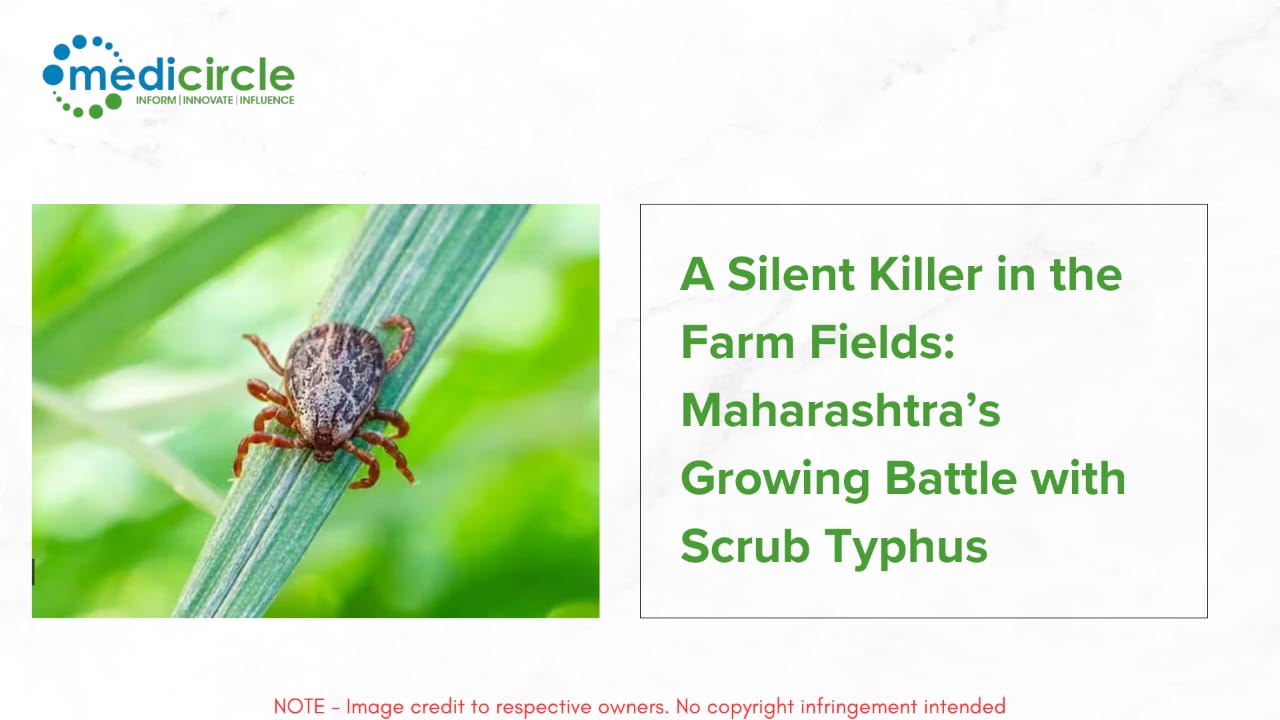
 Scrub Typhus might not make headlines like swine flu or COVID-19, but its resurgence tells a deeper story about the state of rural healthcare and environmental neglect.




The fields of Maharashtra, once symbols of harvest and hope, are today quietly breeding a deadly threat of a disease that creeps unnoticed and kills without warning. Scrub Typhus, an infection often overlooked in rural health conversations, has emerged as one of the state’s gravest public health challenges in 2025. For decades, it was seen as a sporadic illness confined to the countryside, but now, the rise in cases and deaths has forced the Maharashtra Public Health Department to sound an alarm louder than ever before.
In what has become the highest death toll from the disease in a single year, Maharashtra has recorded five lives lost to Scrub Typhus and over a hundred confirmed infections across multiple districts. The state’s health authorities have acted swiftly, urging district officers, civil surgeons, and deputy directors to heighten disease surveillance, strengthen diagnostic readiness, and intensify control measures to contain its spread. This warning is not just administrative but a wake-up call to the hidden danger that festers within rural landscapes, silently threatening both lives and livelihoods.
Behind the statistics are human stories of farmers, daily wage laborers, and forest workers who risk their lives every day amid the unseen menace of infected mites. Scrub Typhus, caused by the bacterium Orientia tsutsugamushi, is transmitted through the bite of infected chigger mites that live in dense vegetation and moist soil. The disease begins quietly, masquerading as a simple fever or flu, but can rapidly turn fatal if left untreated. The symptoms includes fever, chills, body ache, and headaches which often go unnoticed or misdiagnosed, leading to severe complications such as brain inflammation, lung damage, kidney failure, or even multi-organ failure.
This year, two deaths were reported from Yavatmal and one each from Chhatrapati Sambhaji Nagar, Chandrapur, and Nanded districts where agriculture remains the backbone of life. These are not just numbers; they are reflections of vulnerability in regions where healthcare access is limited, awareness is minimal, and exposure to the elements is constant. The disease, once restricted to isolated regions, is now making its presence felt in new territories, signaling a shift that demands serious attention.
The Public Health Department’s recent directive emphasizes aggressive surveillance and early diagnosis. Officials have been asked to treat all fever cases persisting for more than five days as suspected Scrub Typhus and ensure immediate testing. Diagnostic facilities like the Weil-Felix test and ELISA, which help confirm infection, are being made mandatory in district hospitals and medical colleges. These measures, though crucial, highlight a larger issue of the growing gap between disease awareness and timely intervention at the grassroots level.
Dr. Sandeep Sangale, Joint Director of Health Services, Maharashtra, has reiterated the need for vigilance, stressing that early identification is key to survival. His words reflect a deeper truth that in the case of Scrub Typhus, delay often becomes the difference between life and death. The disease does not discriminate, but it thrives where poverty, ignorance, and environmental neglect coexist. Rural households surrounded by overgrown vegetation, uncollected garbage, and unkempt surroundings provide a perfect breeding ground for the mites that carry this infection.
The department’s guidelines are clear; vector control must be strengthened at the village level. This means clearing thick vegetation near homes, spraying insecticides in vulnerable areas, and ensuring proper disposal of organic waste that attracts mites. Citizens are being urged to wear full-sleeved clothes while working in fields, apply insect repellents, and wash their clothes and bedding in hot water after outdoor activity. These preventive measures may seem simple, but they are critical in breaking the chain of transmission. Yet, the real challenge lies in consistent implementation across districts with varying levels of resources and awareness.
The sharp increase in Scrub Typhus cases over the past few years paints a concerning picture. In 2023, Maharashtra recorded 196 cases and one death. The following year, 2024, saw 130 infections and one death. But in 2025, even before the year’s end, 132 cases and five deaths have been confirmed. The trend indicates not only an increase in fatality but a potential underestimation of the disease’s spread. Health experts believe that the real number of infections could be much higher since many mild cases go undiagnosed, especially in remote villages where healthcare access remains a distant privilege.
For farmers in Marathwada and Vidarbha, the disease adds another layer of despair to an already fragile existence. They battle erratic monsoons, unpredictable crop yields, and financial stress, and now they face an invisible predator that lurks in their fields. The irony is that the very soil that sustains them has turned into a silent source of danger. When one farmer dies of fever in a distant village, it rarely makes headlines. Yet, collectively, these deaths expose a deep flaw in India’s rural health monitoring system i.e. a structure still struggling to detect and respond swiftly to diseases that flourish outside city limits.
The Maharashtra government’s decision to direct all detected cases to be reported daily to the Director of Health Services reflects a new urgency. Health surveillance units across districts have been instructed to coordinate closely with laboratories and regional offices for prompt testing and reporting. But such efforts, while commendable, must be sustained beyond the cycle of crisis response. Public health experts argue that unless consistent monitoring and community awareness programs are institutionalized, Maharashtra will continue to see such recurring spikes.
Scrub Typhus is not new to India. It has existed for decades, particularly in regions with dense vegetation, but its rise in Maharashtra is a warning sign of how climate change, deforestation, and shifting agricultural patterns are altering disease dynamics. Warmer temperatures and prolonged monsoons create ideal conditions for mite populations to thrive. The expansion of agriculture into forested areas brings humans and vectors into closer contact. The result is a perfect storm of environmental change meeting human vulnerability.
Healthcare professionals on the ground face their own set of challenges. Limited testing kits, delayed results, and lack of awareness among primary healthcare workers often lead to late diagnoses. Many patients visit local clinics only after several days of persistent fever, by which time complications have already set in. Antibiotic treatment, when administered early, can be life-saving. But the absence of timely medical attention often turns manageable infections into fatal ones.
The disease’s deceptive nature further complicates detection. Its symptoms mimic those of dengue, malaria, or viral fever i.e. common ailments in India’s tropical landscape. Without specific tests, many cases slip through unnoticed. The underreporting of such diseases not only skews public health data but delays the mobilization of resources. For a state as vast and diverse as Maharashtra, such lapses can have severe consequences.
Public awareness, therefore, becomes as vital as medical intervention. Campaigns in local languages through radio, television, and community health workers can go a long way in sensitizing people to the risks. The role of Accredited Social Health Activists (ASHAs) and local health volunteers is crucial in spreading information about preventive practices and encouraging people to seek prompt treatment.
This battle against Scrub Typhus is not one that can be fought in laboratories or through orders alone. It requires community involvement, administrative consistency, and a sense of shared responsibility. The disease might be rural in its roots, but its implications extend to the entire public health ecosystem. A surge in such infections strains already burdened hospitals, drains limited resources, and exposes the need for a robust, integrated disease surveillance network.
While Maharashtra’s directive to create a coordinated reporting structure is a step in the right direction, the effort must be accompanied by improved diagnostic capacity at the block level. Rural hospitals and primary health centers need to be equipped with testing kits, trained personnel, and sufficient stock of life-saving antibiotics. Periodic health check-up camps in high-risk zones can ensure early detection. The government must also consider integrating Scrub Typhus awareness into school and agricultural training programs empowering communities from within.
What makes the rise of Scrub Typhus particularly concerning is its quietness. It doesn’t spread in dramatic waves like dengue or COVID-19. It lurks, waiting for the unaware to cross its path. This silent behavior allows it to go unnoticed until tragedy strikes. Public health narratives often revolve around urban epidemics, but the reality is that many of India’s deadliest diseases still live in its villages where surveillance is thin and response slower.
In this context, Maharashtra’s renewed focus on the disease should set a precedent for other states. The health of a nation begins in its villages, and diseases like Scrub Typhus are a reminder that rural healthcare deserves as much urgency as any urban crisis. The state’s commitment to monitor cases daily, engage field workers, and launch awareness drives is an encouraging sign. Yet, what will truly define success is consistency where a steady, year-round effort to ensure that awareness, prevention, and medical readiness become permanent parts of the system rather than reactive measures to yearly outbreaks.
The rising number of cases in regions like Marathwada and Vidarbha should push policymakers to prioritize environmental management as part of health strategy. Overgrown bushes, stagnant water, and unmanaged waste are not mere civic issues; they are breeding hubs for deadly diseases. The coordination between health, environment, and rural development departments becomes essential to build healthier, safer surroundings.
As the year draws to a close, Maharashtra’s battle with Scrub Typhus stands as a lesson that diseases do not wait for systems to catch up. They exploit every gap, every delay, and every oversight. The deaths of five individuals this year may seem few in number compared to other public health emergencies, but they represent a growing pattern that cannot be ignored. In each of those deaths lies a story of delayed care, missed diagnosis, and systemic gaps that need urgent redressal.
Scrub Typhus might not make headlines like swine flu or COVID-19, but its resurgence tells a deeper story about the state of rural healthcare and environmental neglect. Maharashtra has the expertise, infrastructure, and leadership to curb this menace but what it now needs is commitment. The real test for public health lies not in reacting to crises but in preventing them.
In the end, Scrub Typhus serves as a reminder that health is not confined to hospitals; it begins in the fields, the forests, and the homes of the people. The disease is silent, but its message is loud i.e. prevention is the only real cure. As Maharashtra mobilizes its “war room” against this rising threat, the hope is that vigilance will not fade with the headlines. For in the quiet corners of its villages, another bite, another fever, and another life may already be at risk waiting for the system to act in time.





.jpeg)








.jpg)
.jpg)
.jpg)
.jpg)
.jpg)
.jpg)


.jpg)
.jpg)
.jpg)