Wednesday, October 07, 2026
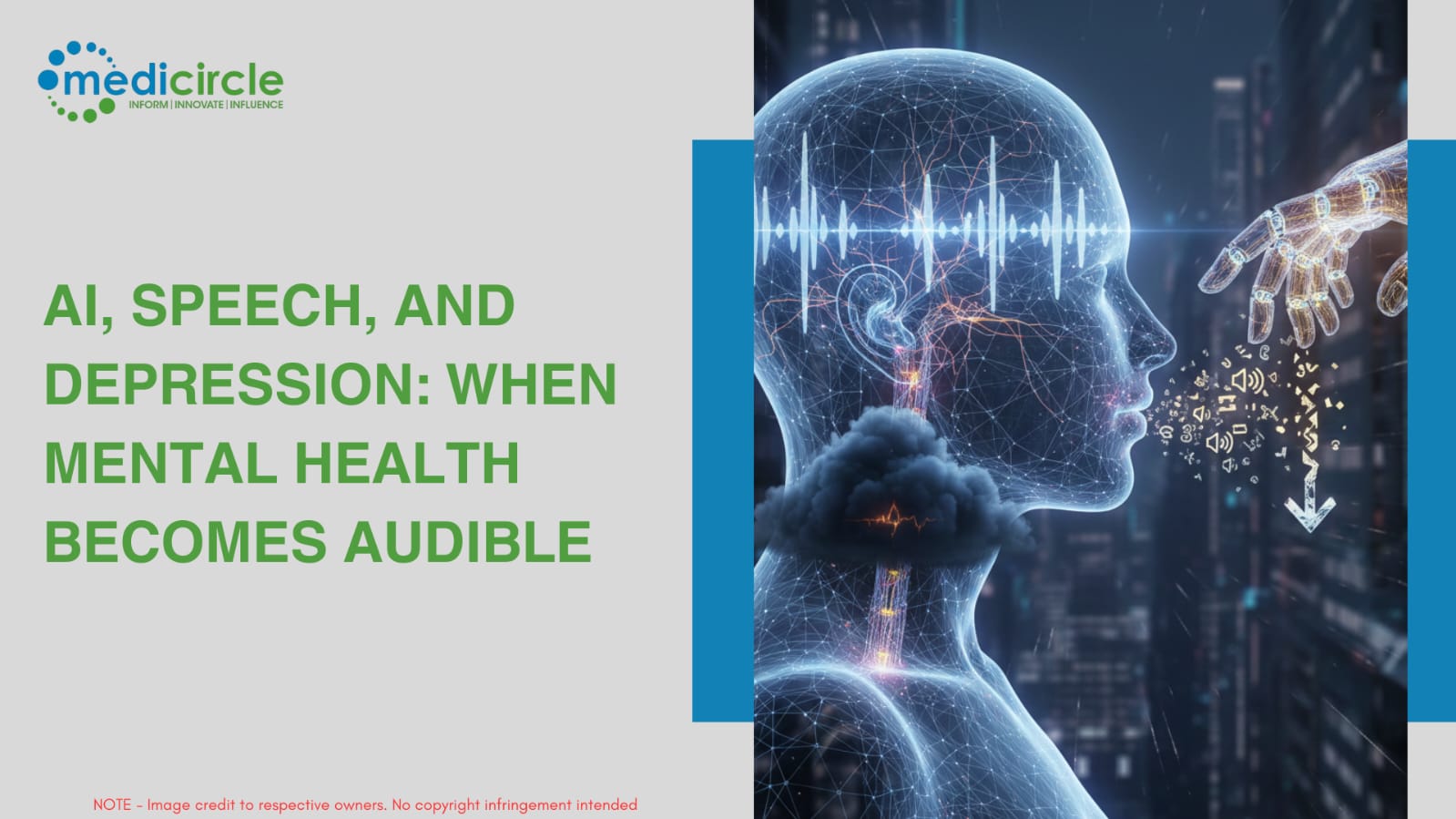
 The hope is not to medicalise every pause or flat tone, but to create tools that notice patterns over time, prompting timely conversations rather than silent suffering.




Depression rarely announces itself clearly. It does not always arrive as visible tears, dramatic withdrawal, or open despair. More often, it slips in quietly, reshaping thoughts, dulling emotions, and slowing the mind in ways that even the person experiencing it may not fully recognise. In a country like India, where mental health conversations still struggle for space and access to care remains uneven, this quietness can be dangerous. Now, emerging research from the All India Institute of Medical Sciences (AIIMS), Delhi, suggests that the human voice may be giving away these inner struggles long before words do.
At AIIMS Delhi, scientists are exploring an idea that feels intuitive yet radical at the same time: the way a person speaks may carry early signals of depression. Not what is being said, but how it is said. The tone, rhythm, pauses, emotional colour, and energy embedded in everyday speech may act as subtle markers of a mind under strain. This research is unfolding at an advanced Speech Health Lab, set up with corporate social responsibility support, where technology meets psychiatry in a bid to make mental health screening more accessible and objective.
Speech is not just a vehicle for language; it is a reflection of cognitive effort, emotional state, and neurological function. When a person is depressed, their thinking often slows, motivation drops, and emotional expression flattens. These changes do not stay confined to the mind. They spill into speech, altering fluency, pitch, and vocal strength in ways that can be measured and analysed.
To explore this connection, researchers at AIIMS analysed speech samples from 423 individuals who had complete clinical and demographic records. The average age of participants was around 24 years, with a large majority falling between 18 and 25 years. Nearly two-thirds were under 23, and about three-quarters were younger than 25. This age distribution is telling. Younger people appear far more willing to engage with low-barrier, technology-driven mental health tools, especially those that do not require face-to-face disclosure or lengthy questionnaires.
Participants spanned a wide age range, from adolescents to older adults, yet engagement steadily declined after the mid-30s. This pattern mirrors a broader reality in mental healthcare: younger generations are more open to digital platforms for emotional support, while older adults often remain cautious, sceptical, or simply less exposed to such tools. In a country where stigma around mental illness persists across age groups, speech-based screening offers a quieter, less confrontational entry point into mental health conversations.
Standard psychiatric assessments revealed that around 32 percent of participants showed clinically meaningful symptoms of depression. When researchers compared these findings with results from automated speech analysis, they found prediction accuracy ranging from 60 to 75 percent. When longer speech samples were analysed, accuracy rose to nearly 78 percent. These are not perfect numbers, and the researchers are careful to acknowledge that. Yet they are significant enough to suggest that speech can act as a reliable early signal, especially when used as a screening or assistive tool rather than a diagnostic authority.
Inside the Speech Health Lab, researchers examine both linguistic and paralinguistic features of speech. Linguistic features relate to the structure of language itself, such as fluency, articulation, and word flow. Paralinguistic features, on the other hand, capture how speech sounds beyond words. This includes tone, pitch variation, emotional resonance, pauses, and vocal effort. Together, these elements form a complex acoustic signature that reflects the speaker’s mental and emotional state.
Depression often leaves a distinct imprint on this signature. Speech may become slower, with longer pauses between words. Fluency can drop, and sentences may trail off or sound effortful. The natural rise and fall of tone, known as prosody, often flattens, giving speech a monotonous quality. Vocal energy may reduce, making the voice sound softer, tired, or emotionally distant. These changes are rarely deliberate. They emerge from the cognitive and emotional load that depression places on the brain.
Dr Nand Kumar, professor in the department of psychiatry at AIIMS Delhi, explains that these speech patterns reflect deeper shifts in brain function. Depression affects attention, memory, and executive processes, all of which play a role in speech production. When these systems are strained, speech becomes less dynamic and more effortful. Analysing these changes offers a way to detect distress that might otherwise remain hidden.
The promise of speech-based mental health screening lies in its objectivity. Traditional mental health assessments rely heavily on self-reporting. Patients are asked to describe how they feel, how often they feel low, or whether they have lost interest in daily activities. While these tools are clinically validated, they depend on insight, honesty, and comfort with disclosure. Many people struggle to articulate their feelings or may minimise symptoms due to fear, stigma, or lack of awareness.
Speech analysis bypasses some of these barriers. A short voice sample, recorded during a routine interaction or through a digital platform, can be analysed without requiring the person to label their emotions or admit distress. This makes it especially valuable in community settings, colleges, workplaces, and primary care centres where mental health specialists may not be readily available.
The need for such tools in India is urgent. Depression affects over 264 million people worldwide, and India carries a substantial share of this burden. According to the National Mental Health Survey conducted in 2015, around one in 20 Indians experiences depressive disorders. Suicide remains one of the most devastating outcomes, often linked to untreated or poorly recognised depression.
Among young people, the picture is even more concerning. A large study by the National Institute of Mental Health and Neurosciences involving over 8,500 college students across 15 Indian cities found that nearly one-third had moderate to severe depressive symptoms. Almost one in five reported suicidal thoughts. These numbers reveal a silent crisis unfolding in classrooms, hostels, and homes across the country.
Early detection can change this trajectory. When depression is identified in its early stages, interventions are often simpler, more effective, and less disruptive. Counselling, lifestyle changes, peer support, and, when needed, medication can prevent symptoms from deepening into severe impairment. Yet early detection remains elusive, particularly in settings where mental health literacy is low and professional resources are stretched thin.
This is where speech-based screening could make a meaningful difference. Imagine a college mental health programme where students can speak into an app for a few minutes, receiving a gentle prompt to seek support if risk markers are detected. Picture primary care clinics where routine consultations include optional speech analysis to flag emotional distress alongside physical symptoms. Consider helplines and telemedicine platforms where speech cues help counsellors prioritise high-risk callers more effectively.
Researchers at AIIMS are careful to emphasise that speech analysis is not meant to replace clinical diagnosis or human judgement. Depression is complex, shaped by personal history, social context, and biological factors that no algorithm can fully capture. Speech models are designed to support early screening and referral, acting as an assistive layer rather than a final authority.
There are also ethical considerations that must be addressed as this field evolves. Privacy and consent are paramount when dealing with voice data, which is deeply personal and identifiable. Clear safeguards are needed to ensure that speech samples are collected, stored, and analysed responsibly. Users must understand how their data will be used and have control over participation.
Bias is another concern. Speech patterns vary across languages, regions, cultures, and social backgrounds. India’s linguistic diversity presents both a challenge and an opportunity. Models trained on limited datasets may not perform equally well across different accents or dialects. Expanding research to include diverse populations is essential to ensure fairness and accuracy.
Despite these challenges, the direction of this research reflects a broader shift in mental healthcare. The focus is moving from crisis response to early recognition, from reactive treatment to proactive support. Technology is not being positioned as a cold replacement for human care, but as a bridge that helps people reach that care sooner.
The human voice has always been a mirror of inner life. We instinctively sense when someone sounds tired, anxious, or low, even if they insist they are fine. What science is now doing is translating this intuition into measurable patterns that can be used at scale. In doing so, it offers a new way to listen, one that pays attention to what is often missed in the rush of daily life.
For a healthcare system struggling with limited mental health resources and a growing burden of depression, this approach holds promise. It aligns with the realities of modern life, where smartphones and digital platforms are deeply embedded in communication. It respects the reluctance many people feel about openly discussing mental health, offering a quieter path to recognition and support.
As research at AIIMS Delhi continues, it adds to a growing global effort to rethink how depression is detected and addressed. The hope is not to medicalise every pause or flat tone, but to create tools that notice patterns over time, prompting timely conversations rather than silent suffering.
Depression does not always shout. Sometimes, it whispers through a slower sentence, a flatter tone, a tired voice that carries more weight than words reveal. Learning to hear those whispers may be one of the most important steps in closing the gap between distress and care





.jpeg)




.jpg)
.jpg)
.jpg)
.jpg)
.jpg)
.jpg)


.jpg)
.jpg)
.jpg)
.jpg)
.jpg)
.jpg)